
.%204%20retos%20en%201%20minuto%20con%20pistas%20visuales.%20¿Quién%20tomó%20el%20pastel?%20🍰%20Printable%20gratis%20|%20Actividades%20preescolar%20|%20Juegos%20educativos)
Free Printable Download
Free
Spanish & English
What’s Inside This Collection
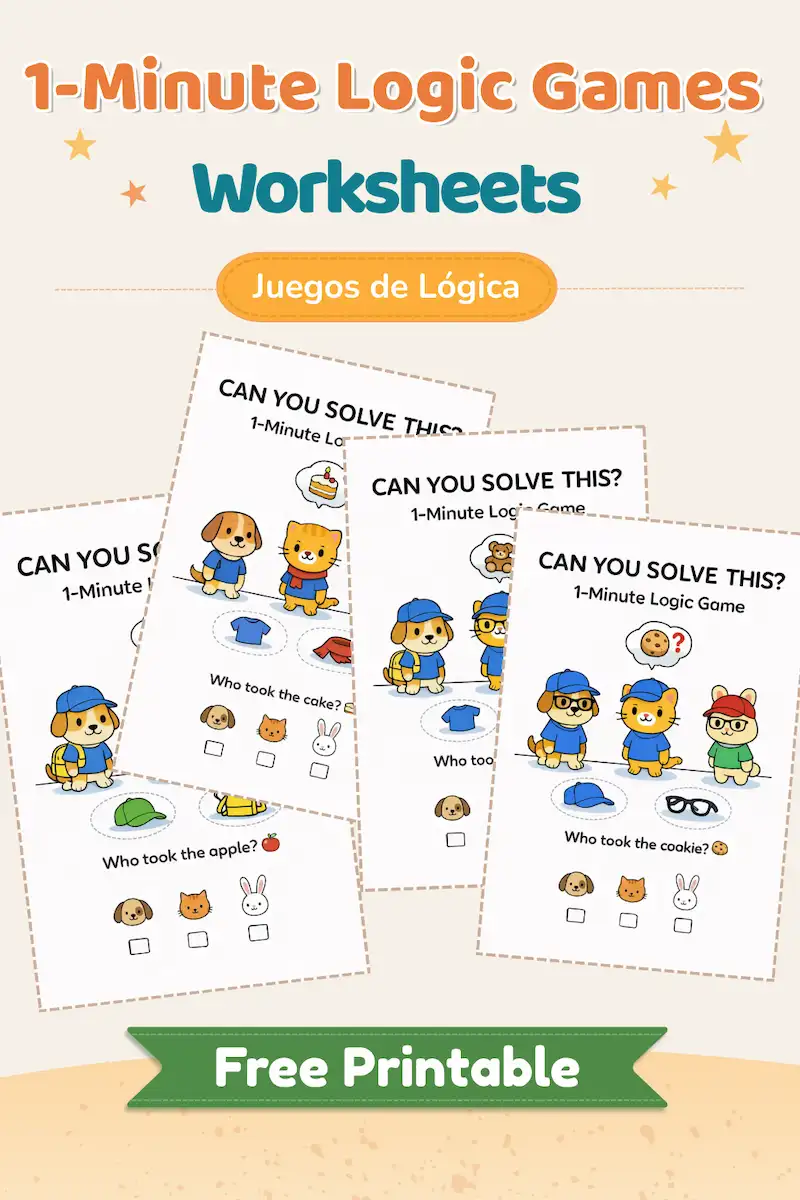
4 detective-style logic puzzles (same difficulty level)
Bilingual instructions on every page (English + Español)
3 consistent characters: Dog, Cat, and Rabbit (easy to recognize)
Visual clue system to build matching logic
Sibling mode: one reads the clues, the other solves the mystery
Designed for home or classroom use
Optimizado para: hogar o aula • Calidad Profesional
Inside this Worksheet
Children observe three characters, read two visual clues, and find the one character that matches both conditions. Then they circle the correct answer.
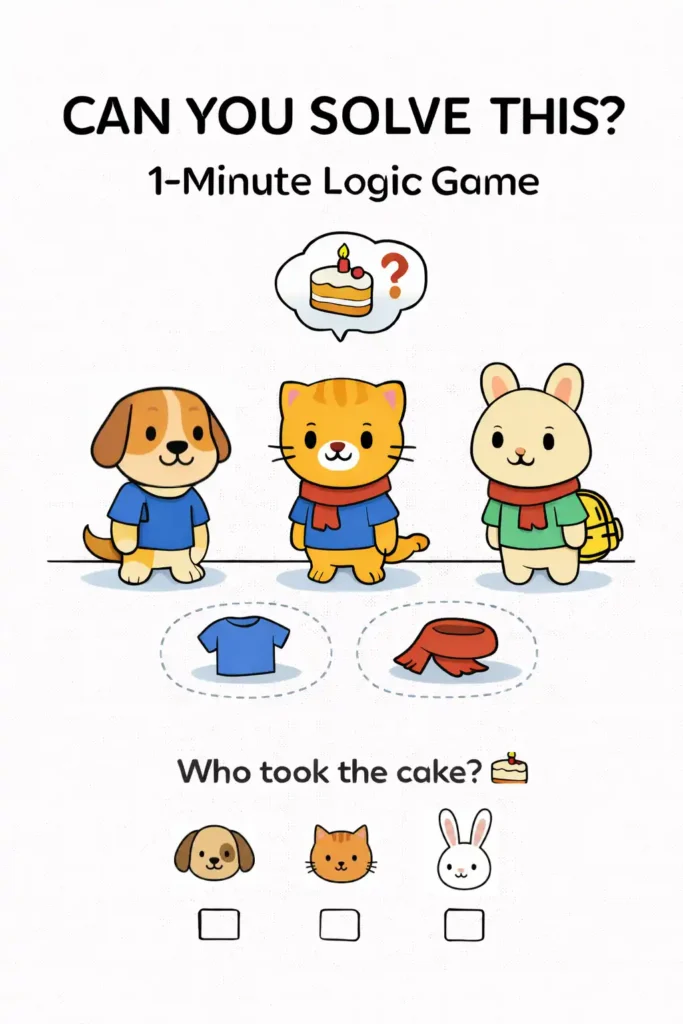
🎂 LD-01 · Who Took the Cake? (Ages 3–6)
Clues: blue shirt + red scarf.
Only the Cat matches both.
👉 Skills developed:
Visual observation, multi-condition matching, logical reasoning
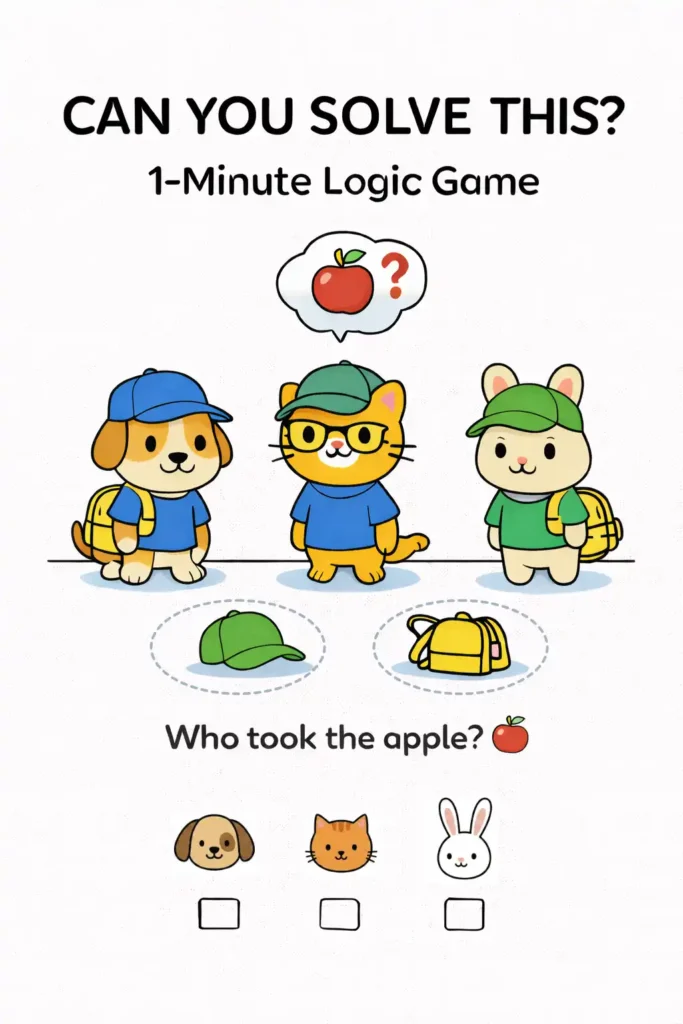
🍎 LD-02 · Who Took the Apple?
Clues: green hat + yellow backpack.
Children must identify the character with both.
👉 Focus: color + object recognition together
👉 Skills developed:
Attention to detail, classification, verification
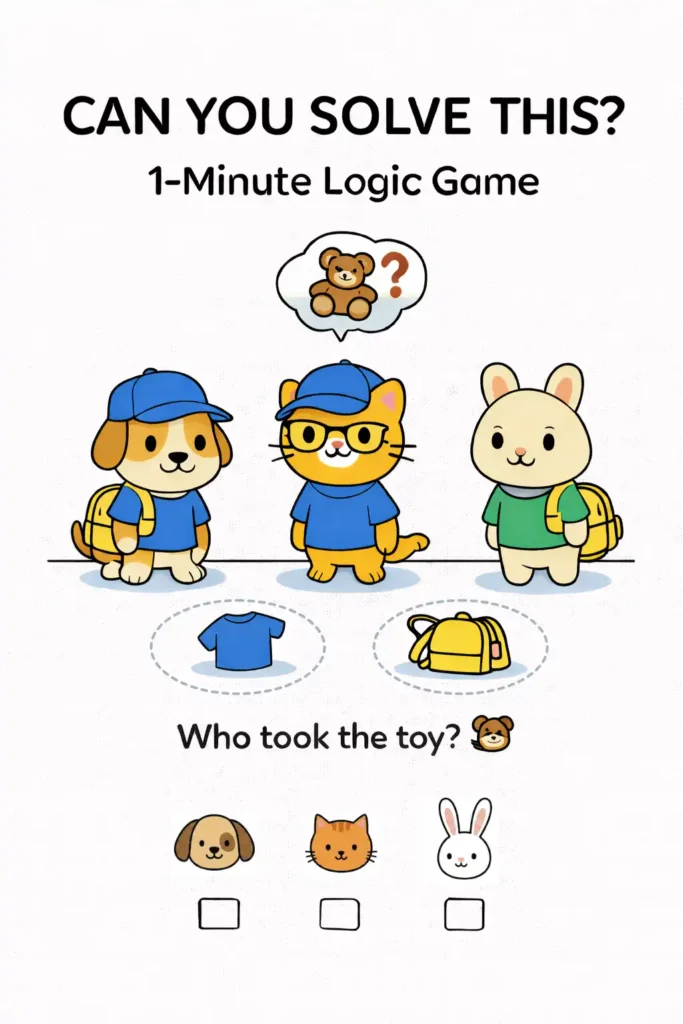
🧸 LD-03 · Who Took the Toy?
Clues: blue shirt + yellow backpack.
👉 Skills developed:
Visual focus, dual-attribute reasoning, early logic
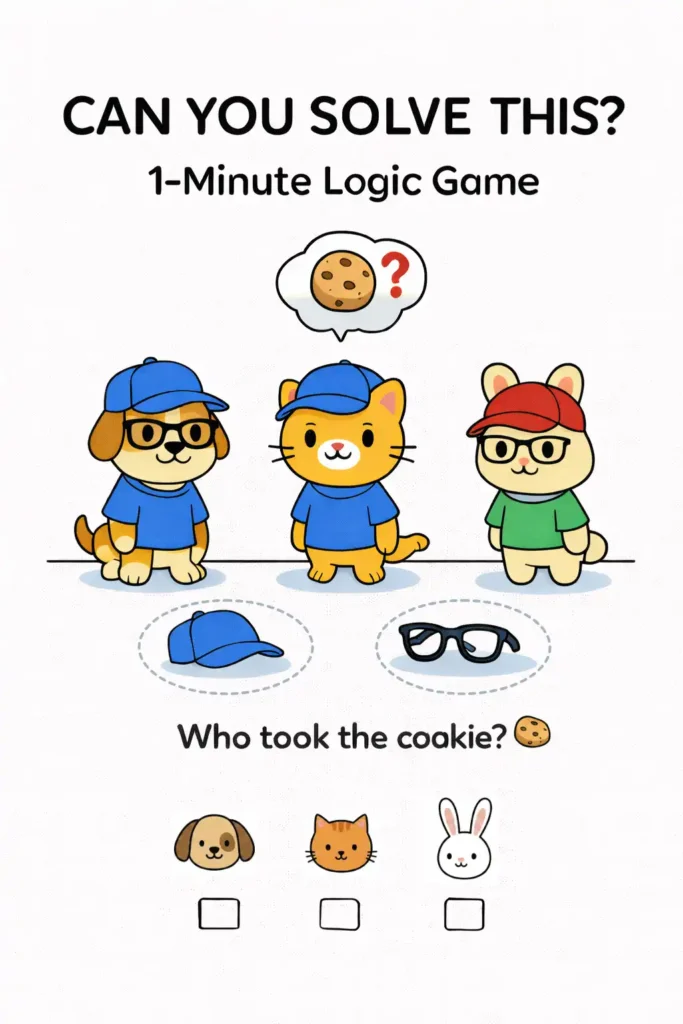
🍪 LD-04 · Who Took the Cookie?
Clues: blue hat + black glasses.
Some characters share one attribute, but only one matches both.
👉 Skills developed:
Condition verification, sustained attention
What Is Matching Logic — and Why It Matters?
Matching logic is one of the earliest forms of reasoning a child can learn.Children must:Observe clues,Compare options,Confirm both conditions.Not just guess.This skill is foundational for:✔ Math✔ Science thinking✔ Problem-solving.And it can start as early as age 3.
👉 Read more: How to Develop Logical Thinking in Preschoolers
Built for Siblings — Not Just One Child
Each worksheet includes a sibling play mode.
Together, they:
✔ Communicate
✔ Reason
✔ Learn collaboratively
Two kids. One worksheet. No waiting. No boredom.
👉 [How to Use Learning Activities with Siblings of Different Ages]
How to Use This Worksheet at Home
👉 Pro tip:
Instead of correcting immediately, ask:
“Does this character have BOTH clues?”
🧸 Want to take the learning further? The right hands-on toy can reinforce what these worksheets build — and keep the momentum going between sessions. See our full guide: Best Toys for Building Concentration in Children Ages 3 to 6
Frequently Asked Questions
Is this collection completely free?
Yes, all 4 worksheets are free. No signup required.
What do I need to print this?
Standard printer + US Letter paper (8.5×11).
Can I use these in my classroom?
Yes, for personal and classroom educational use. Commercial redistribution is not permitted.
What If My Child Finds This Easy?
They’re ready for the next level: