
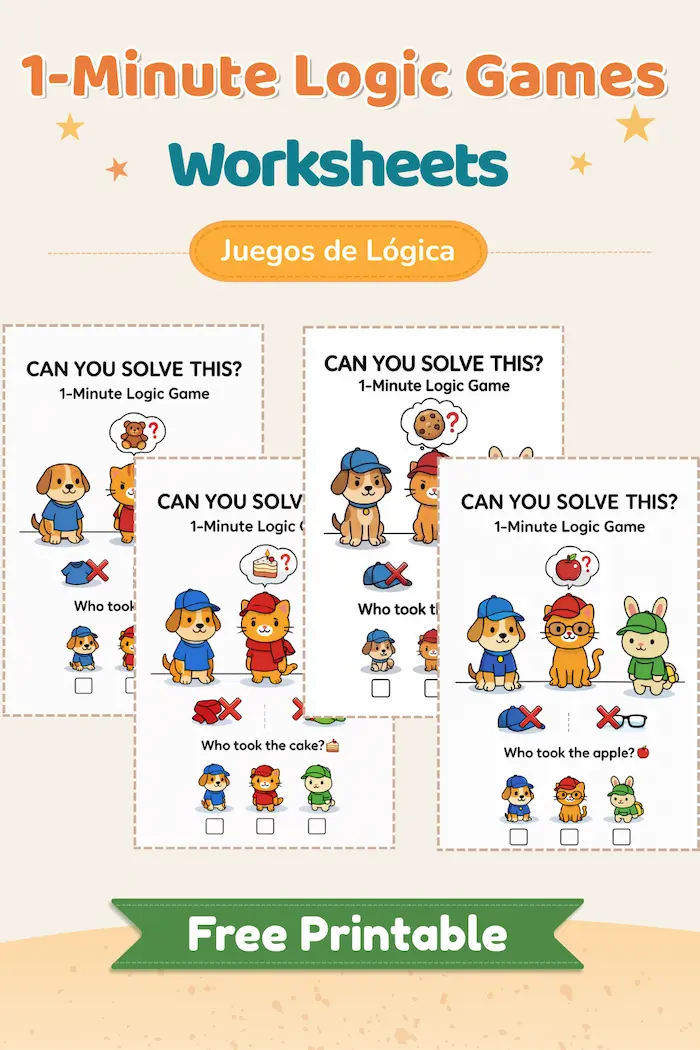

Free Printable Download
Free
Spanish & English
What’s Inside This Collection
A collection of short, focused logic games
One activity per page (clean and simple layout)
Bilingual instructions (Spanish first, English below)
Visual clues and step-by-step thinking prompts
Designed for quick play (1–3 minutes per activity)
Designed for home or classroom use
Optimizado para: hogar o aula • Calidad Profesional
Inside this Worksheet
Master logical deduction! Study the three characters and their items. Read the provided clues to eliminate the wrong choices. This critical thinking activity challenges kids to find the “odd one out” and circle the correct character.
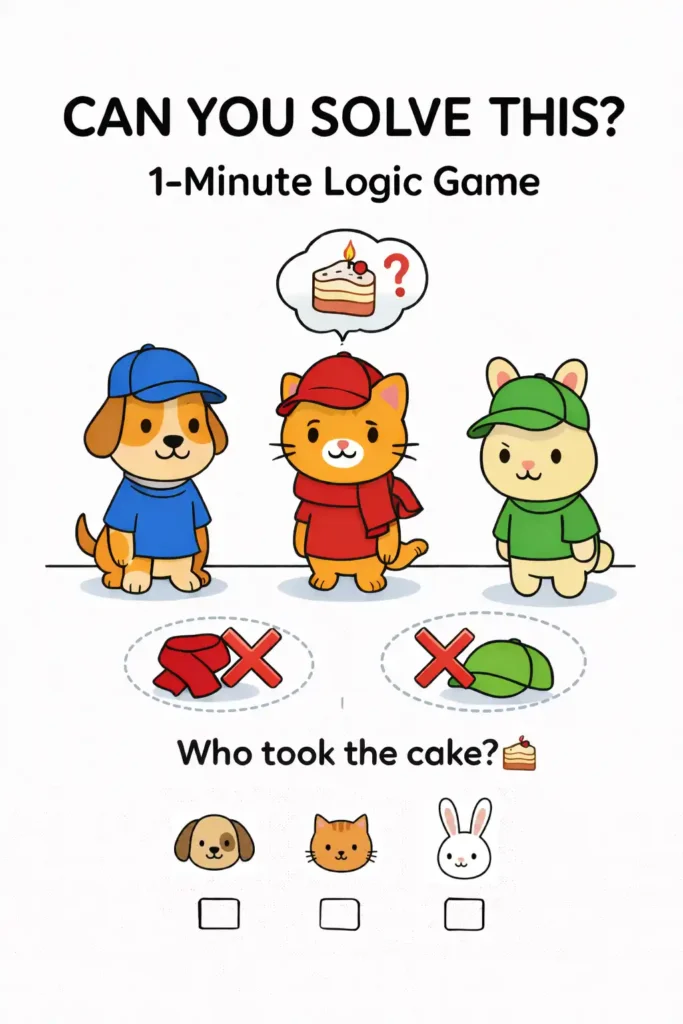
🎂 LD-05 · Who Took the Cake?
Visual Observation: Identifying specific details and colors.
Feature Recognition: Distinguishing between different items and characters.
Deductive Reasoning: Mastering the basic process of elimination.
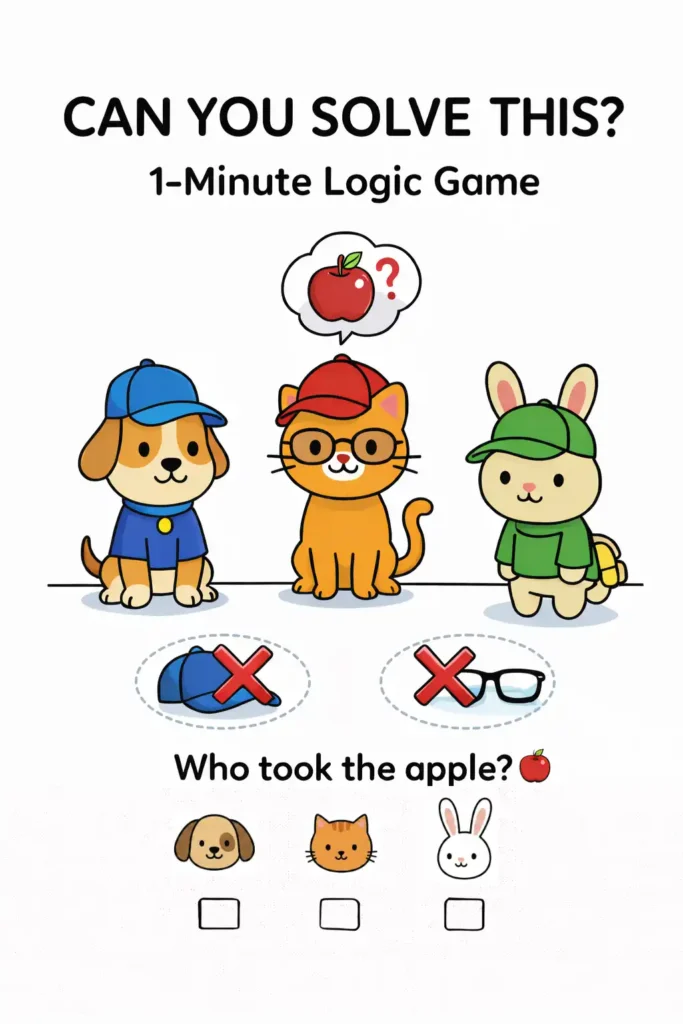
🍎 LD-06 · Who Took the Apple?
Attention to Detail: Noticing subtle differences in accessories.
Sequential Elimination: Following a step-by-step “rule-out” process.
Logical Generalization: Applying a known logical framework to new visual elements.
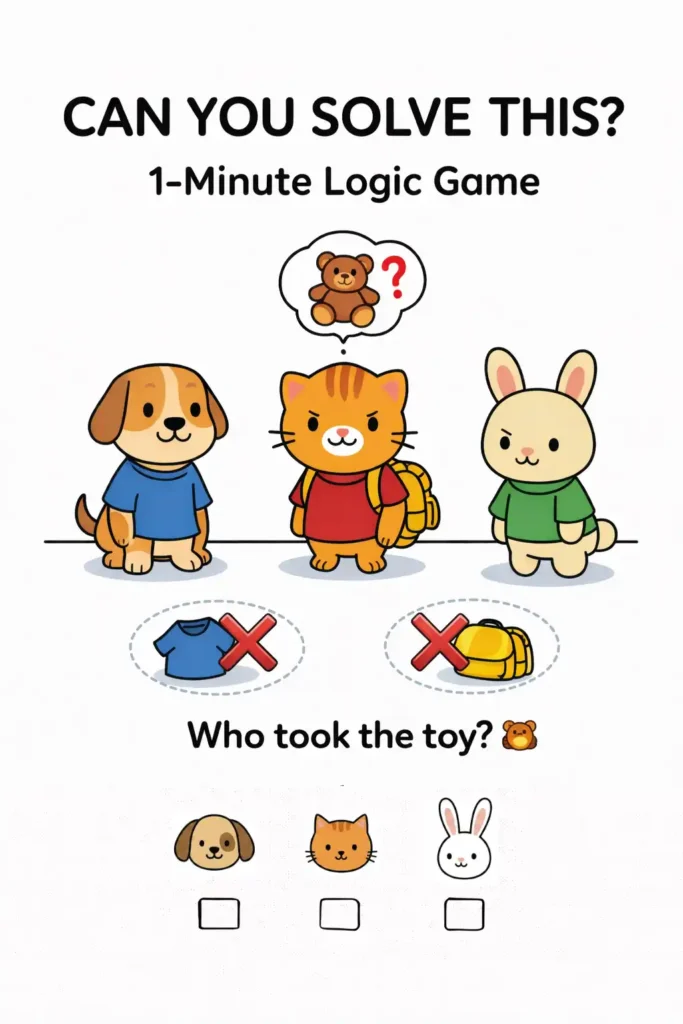
🧸 LD-07 · Who Took the Toy?
Comprehensive Visual Scanning: Learning to look at the “whole picture” from front to back.
Multi-Attribute Elimination: Identifying and ruling out specific features in different positions.
Sustained Concentration: Developing the focus needed to solve multi-step logic puzzles.
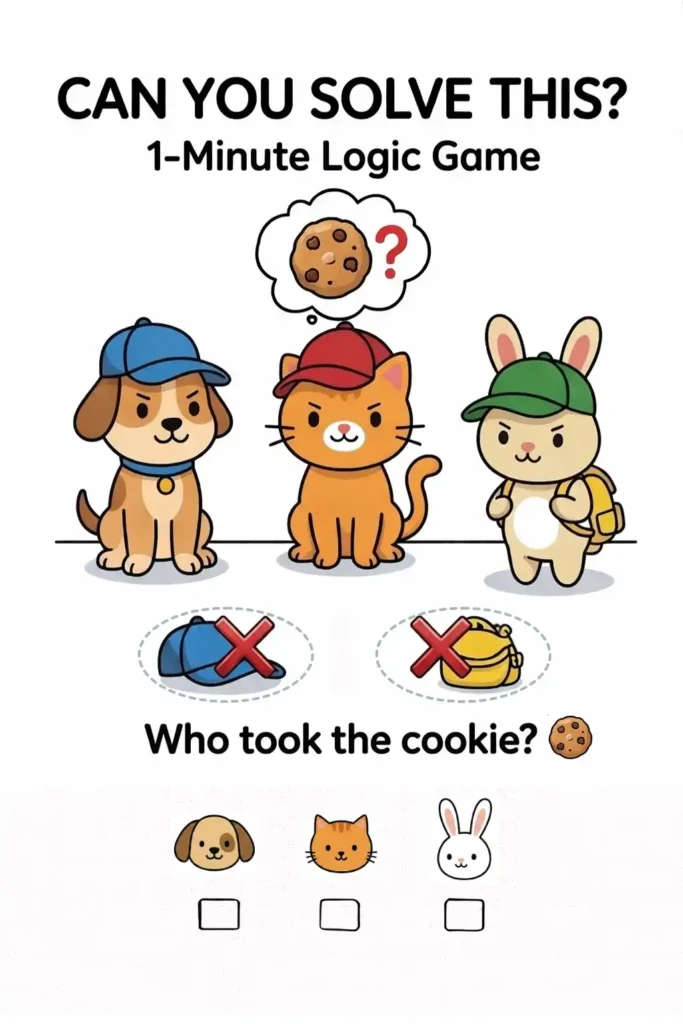
🍪 LD-08 · Who Took the Cookie?
Double-Verification Logic: Learning to check multiple criteria before making a final decision.
Sustained Attention: Building the focus required for multi-step tasks.
Applied Reasoning: Transitioning from simple visual matching to complex logical deduction.
Looking for simple logic games your child will actually enjoy?
These printable logic games are designed for preschoolers ages 3 to 6 — short, engaging, and easy to use at home or in the classroom.
Each activity takes just a minute to understand, but helps build real thinking skills over time.
👉 Read more: How to Develop Logical Thinking in Preschoolers
Built for Siblings — Not Just One Child
Each worksheet includes a sibling play mode.
Most preschool activities focus on repetition.These are different.
Each page challenges your child to:
👉 observe carefully
👉 think before acting
👉 solve a small problem independently
That’s how real thinking skills are built.
Together, they:
✔ Communicate
✔ Reason
✔ Learn collaboratively
Two kids. One worksheet. No waiting. No boredom.
👉 [How to Use Learning Activities with Siblings of Different Ages]
How to Use This Worksheet at Home
👉 Tip: Don’t rush to correct mistakes
Ask: “Why did you choose that?”
That conversation is where the learning happens.
🧸 Want to take the learning further? Worksheets are a great start — but hands-on play makes learning stick.Consider combining these with:
👉 building toys
👉 matching games
👉 simple board gamesSee our full guide: Best Toys for Building Concentration in Children Ages 3 to 6
Frequently Asked Questions
Is this collection completely free?
Yes, all 4 worksheets are free. No signup required.
What do I need to print this?
Standard printer + US Letter paper (8.5×11).
Can I use these in my classroom?
Yes,for personal or educational use.
Difficulty level
Designed for ages 3–6.