Inside this Worksheet

Download Free Printable PDF
What’s Inside This Collection
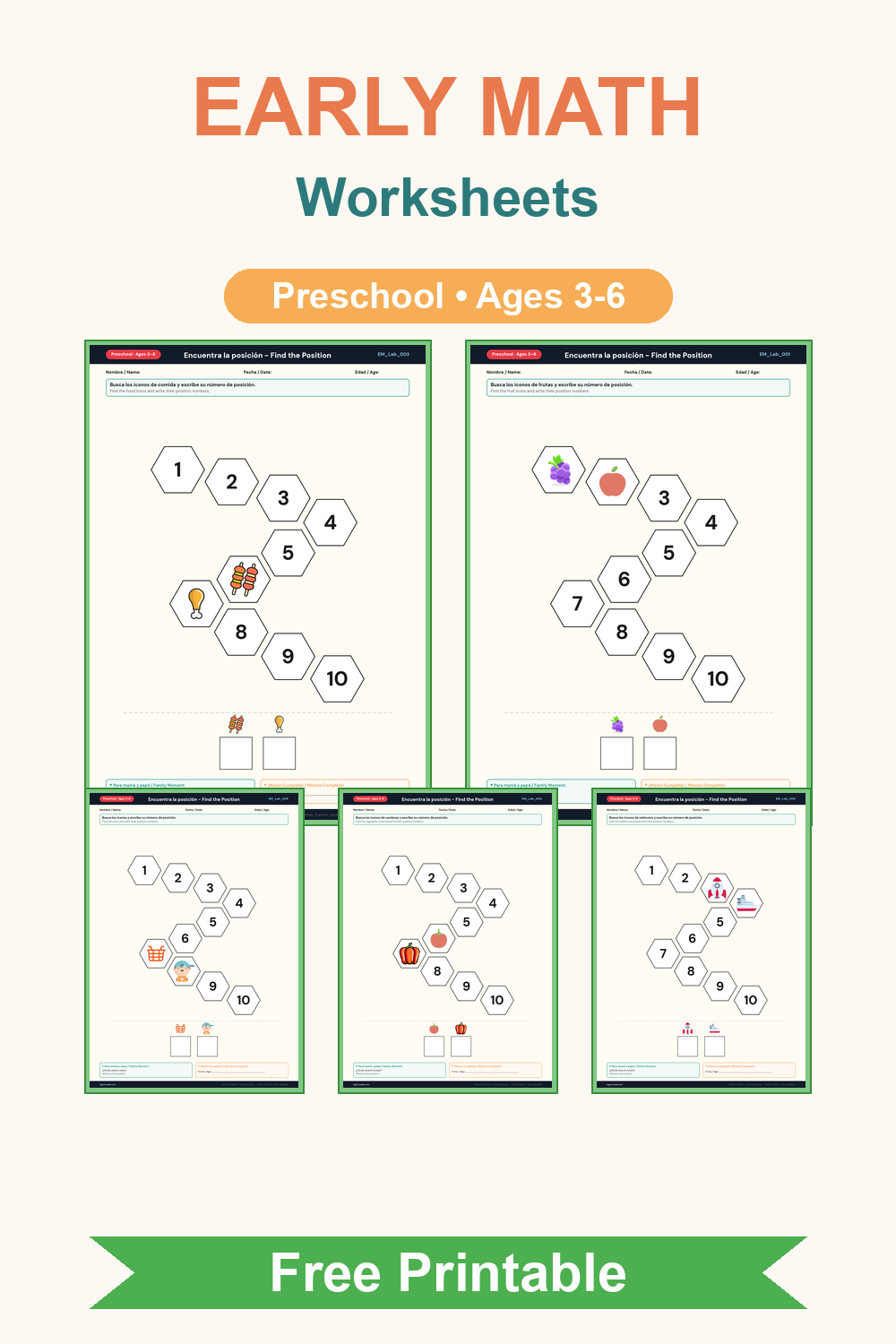
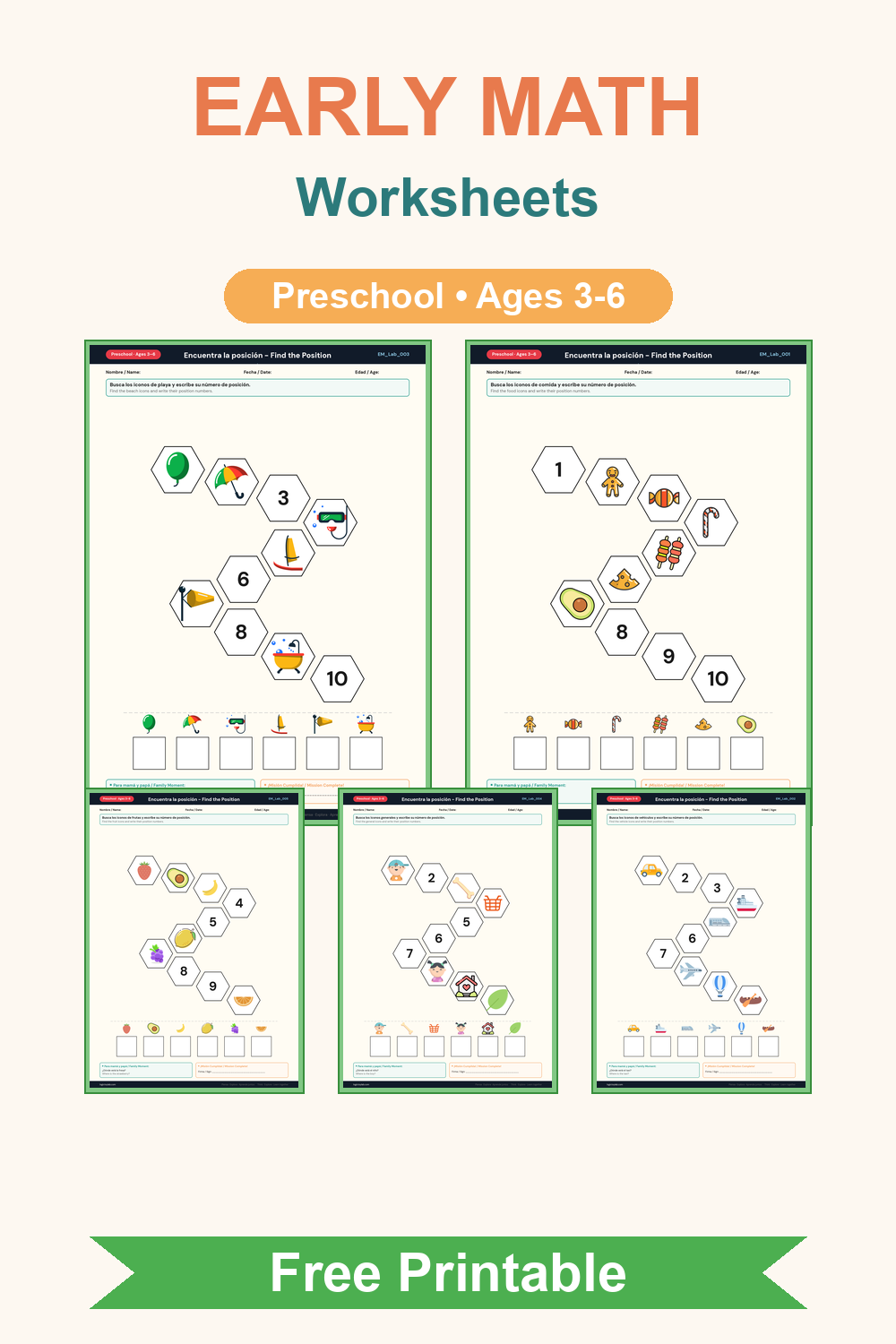
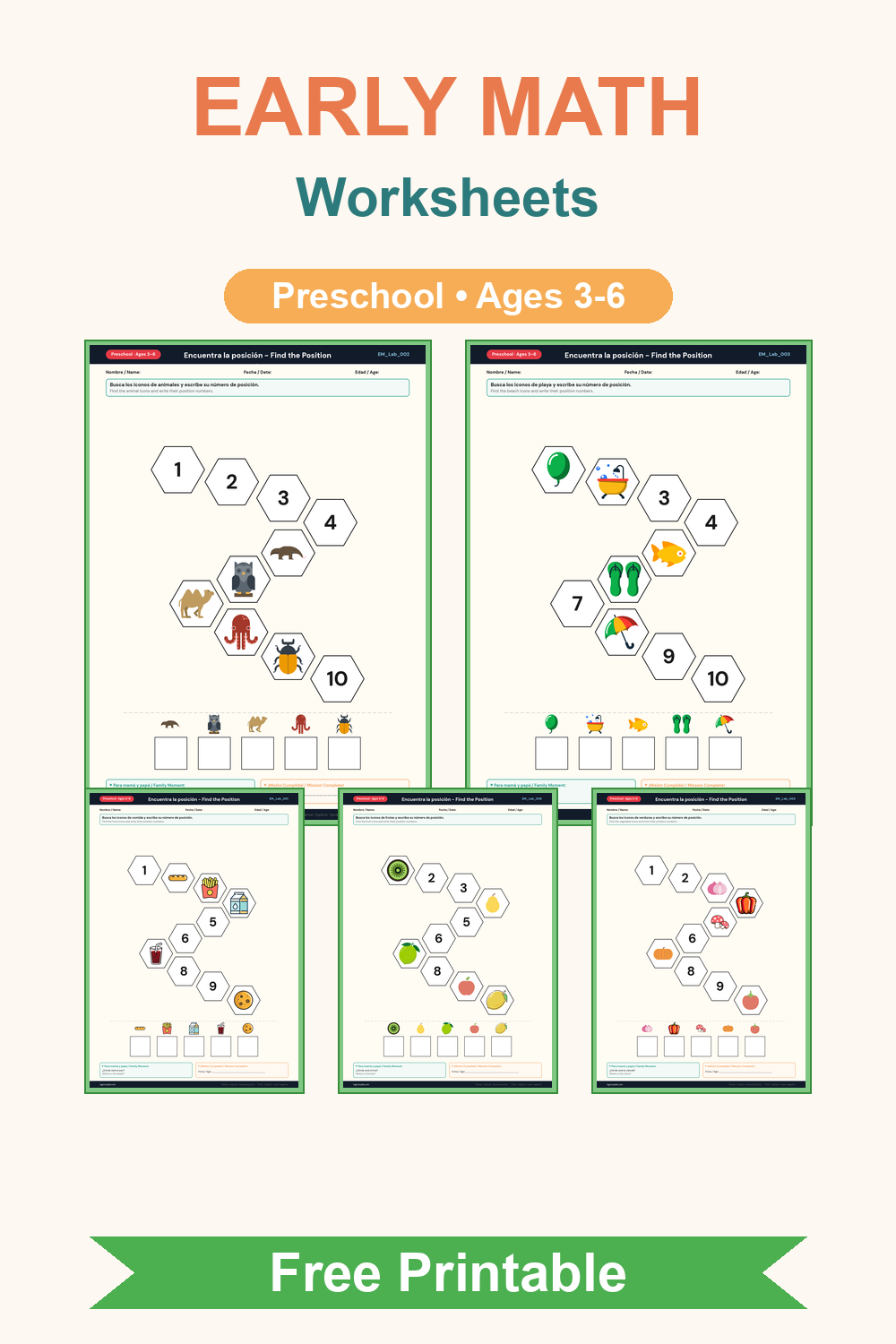
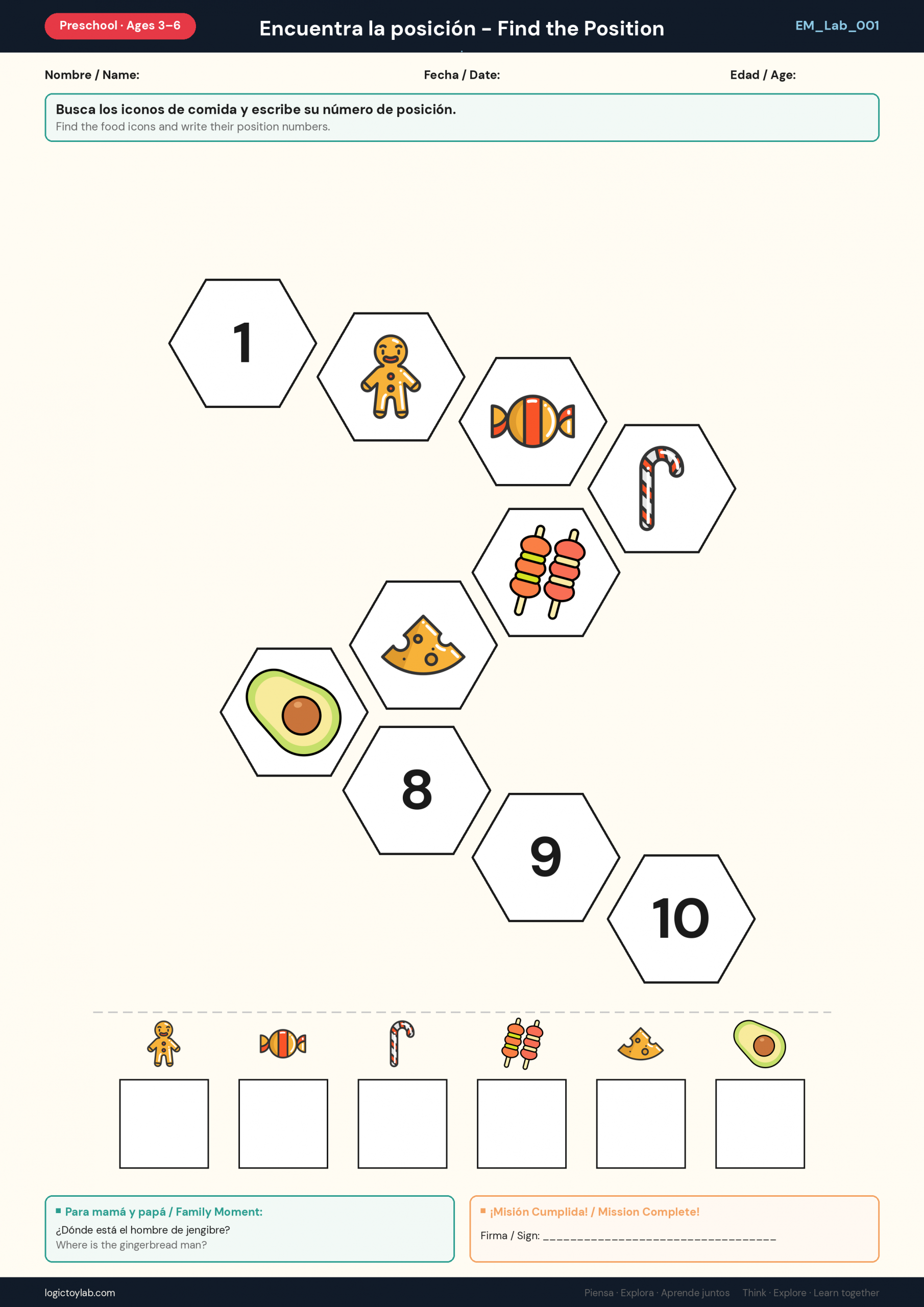
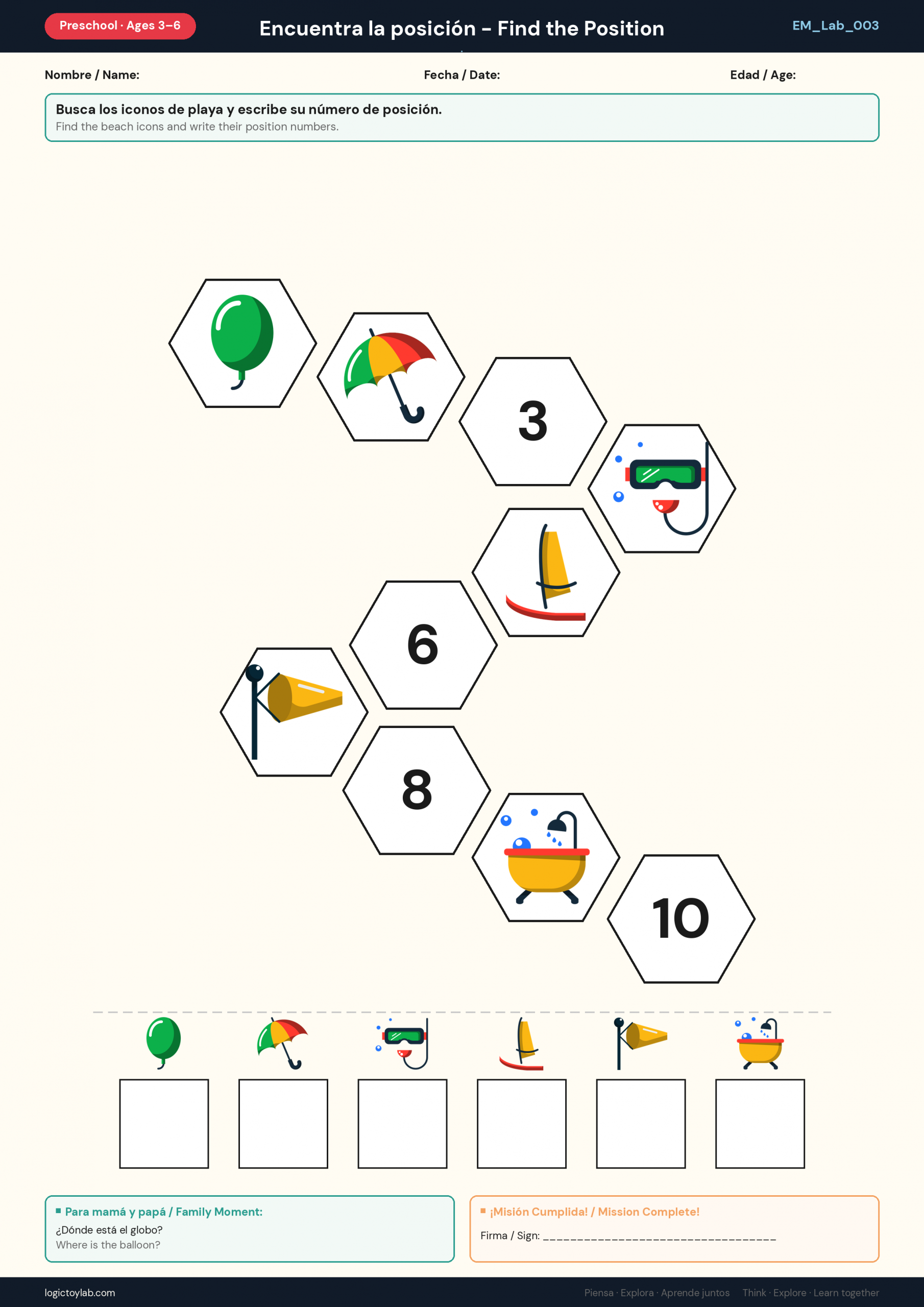
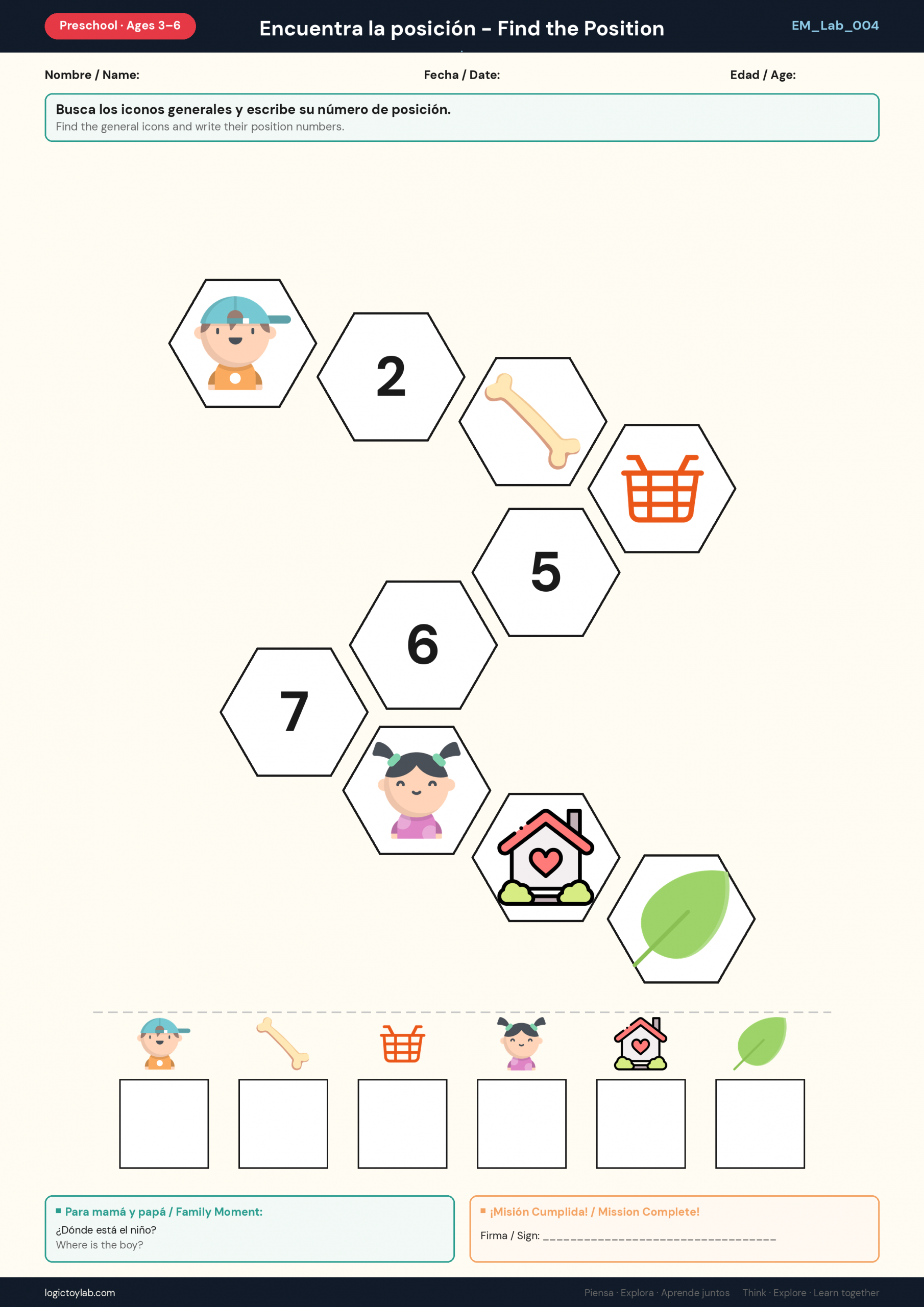
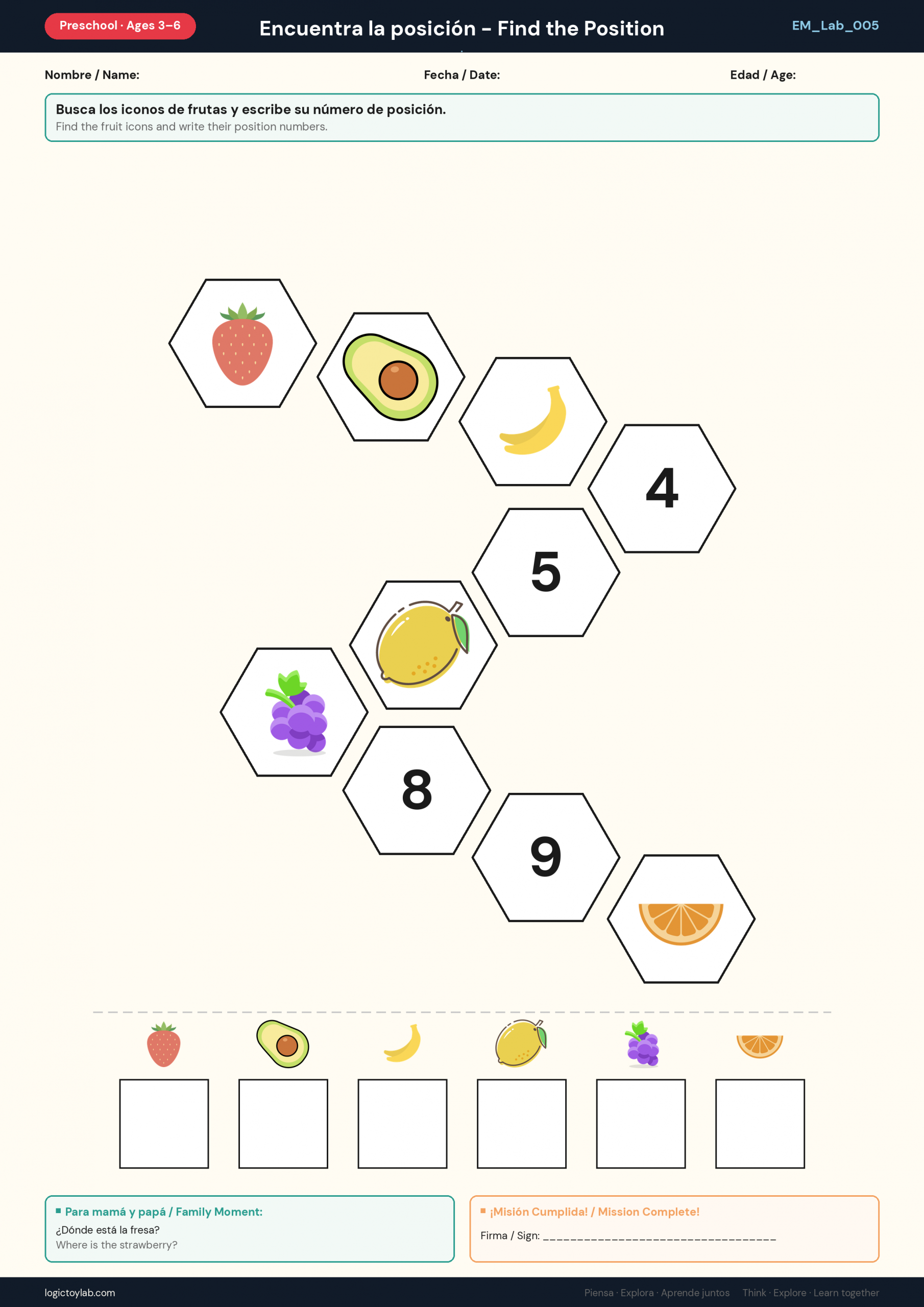
This printable collection includes 5 pages of honeycomb-themed number position activities. On each page, your child will see a honeycomb grid with cells containing different number icons. The task is simple: look at each icon, identify the number it represents, and understand how its position in the grid relates to that number.
Here’s how it works step by step:
- Your child looks at the honeycomb cells.
- They see number icons placed in various positions.
- They identify each icon and determine the number it represents based on its position in the grid.
- They connect each visual position with the correct number answer.
This is a number recognition and spatial reasoning activity—not a counting or tracing worksheet. It’s designed to help preschoolers make sense of symbols and their placement in a structured layout.
What Are These Worksheets and Why Are They Important?
These worksheets give your preschooler a hands-on way to practice recognizing number icons and understanding how position matters. Instead of just seeing numbers in isolation, your child learns to interpret them within a grid—a foundational skill for later math and reading.
The activity is straightforward: your child examines the honeycomb grid, spots the number icons, and figures out what each one represents based on its position. This might sound simple, but it’s a big step in developing visual discrimination and logical thinking.
For parents, this is a no-prep, print-and-go activity. Just download the PDF, print the pages, and let your child explore at their own pace. It’s perfect for quiet time, morning work, or a fun break from screen time.
What Skills Does This Activity Build?
This worksheet targets several key preschool skills:
- Number Recognition: Children identify number icons and associate them with their numerical value.
- Visual Attention: Focusing on the honeycomb grid helps children notice details and differences.
- Spatial Awareness: Understanding how position in a grid relates to meaning is a core spatial reasoning skill.
- Position Recognition: Children learn that the same symbol can have different meanings depending on where it appears.
These skills are building blocks for math, reading, and problem-solving. By practicing them early, your child gains confidence and a stronger foundation for future learning.
How to Use This Worksheet at Home
Using this worksheet at home is easy and flexible. Here are some practical tips:
- Start with one page: Begin with a single page to avoid overwhelming your child. You can always print more later.
- Talk it out: Ask your child to describe what they see. “What number is this icon?” “Where is it placed?” This reinforces their understanding.
- Use a pencil or pointer: Have your child point to each icon as they identify it. This keeps them engaged and focused.
- Keep it positive: Celebrate effort, not just correct answers. The goal is to build confidence and curiosity.
- Repeat for mastery: Print extra copies and use them again after a few days. Repetition helps solidify the skills.
This worksheet is also great for on-the-go learning—print a few pages for a restaurant or car ride.
Designed for Siblings — Not Just One Child
If you have more than one child, this worksheet can easily be used together. Here are some sibling-friendly ideas:
- Take turns: Have each child complete a page in turn, or take turns pointing to icons and naming them.
- Discuss answers: Siblings can compare their answers and talk about why they chose a certain number. This encourages communication and reasoning.
- Older siblings can help: If an older child understands the activity, they can explain the instructions to a younger sibling. This builds leadership and patience.
- Separate copies: Print a copy for each child so they can work independently side by side. This is perfect for quiet time.
Remember, the goal is shared learning time, not competition. Let each child work at their own pace and offer help when needed.
My Child Finished These Worksheets. What’s Next?
Once your child has completed these honeycomb number position worksheets, you can extend the learning with simple follow-up activities:
- Create your own honeycomb grid: Draw a simple grid on paper and place number stickers or magnets in different cells. Ask your child to identify the numbers and their positions.
- Use everyday objects: Arrange toys or blocks in a grid pattern and ask your child to point to a specific position (e.g., “Which toy is in the middle?”). This reinforces spatial language.
- Read number-themed books: Look for picture books that feature numbers in grids or charts, like counting books with arrays.
- Play “I Spy” with numbers: Point to numbers in the environment (e.g., on a clock, a calendar, or a cereal box) and ask your child to find them.
These activities keep the learning going without needing more printables. Just a little creativity and everyday items can make a big difference.
Frequently Asked Questions
What age is this honeycomb number position worksheet suitable for?
This worksheet is designed for preschool children ages 3-6. It’s perfect for early learners who are beginning to recognize numbers and understand spatial relationships.
How do I print these worksheets?
Simply download the PDF file and print it on standard letter-size paper. You can print as many copies as you need for personal or classroom use.
What does my child learn from this worksheet?
Your child will practice number recognition, visual attention, spatial awareness, and position recognition. They’ll learn to identify number icons and understand how their position in a grid relates to the number they represent.
Can I use this worksheet with multiple children at home?
Absolutely! You can print a copy for each child, or have siblings take turns completing the activity. It’s also a great way for older siblings to help younger ones.
Is this worksheet a counting activity?
No, this worksheet focuses on number recognition and position understanding. Children identify number icons and their positions in the honeycomb grid, not counting objects.
Continue Learning with Hands-On Activities
After completing these printable activities, children can keep building their skills through hands-on play and engaging learning experiences.