
Inside this Worksheet

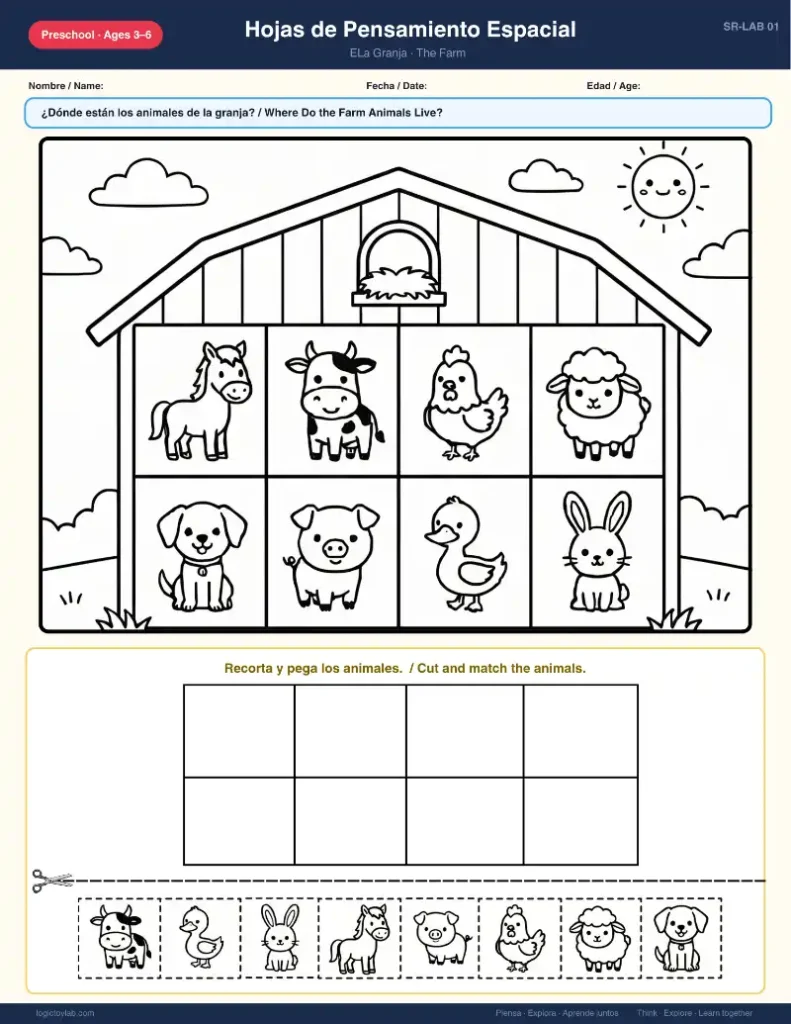
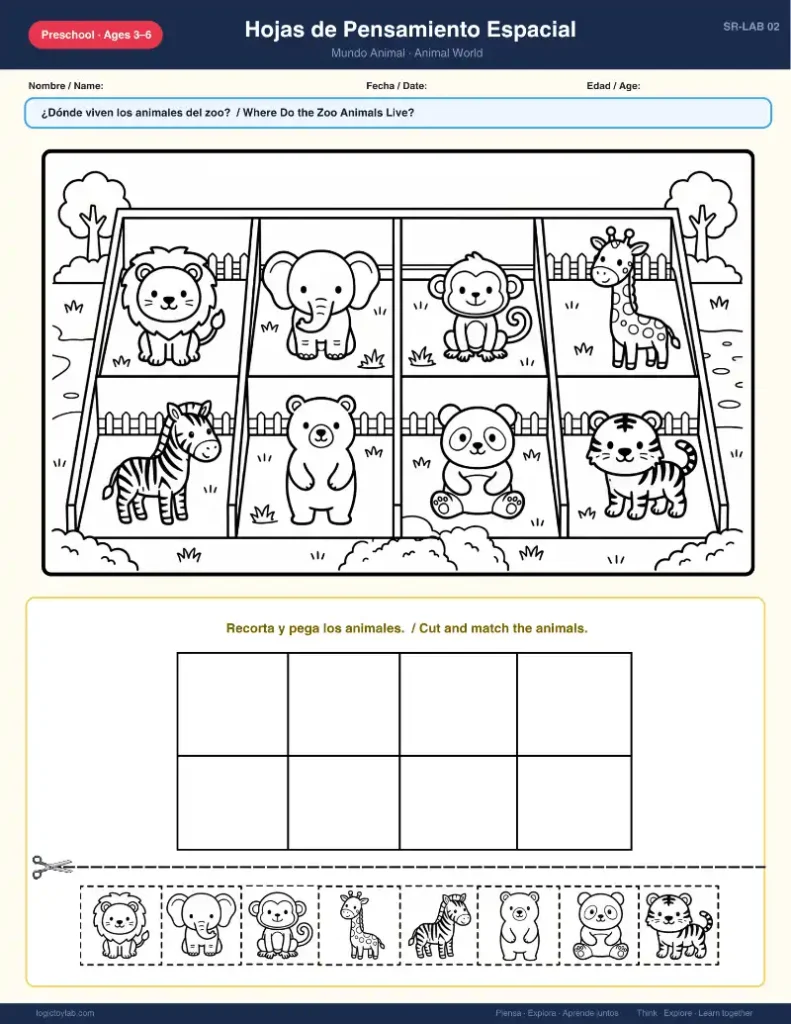
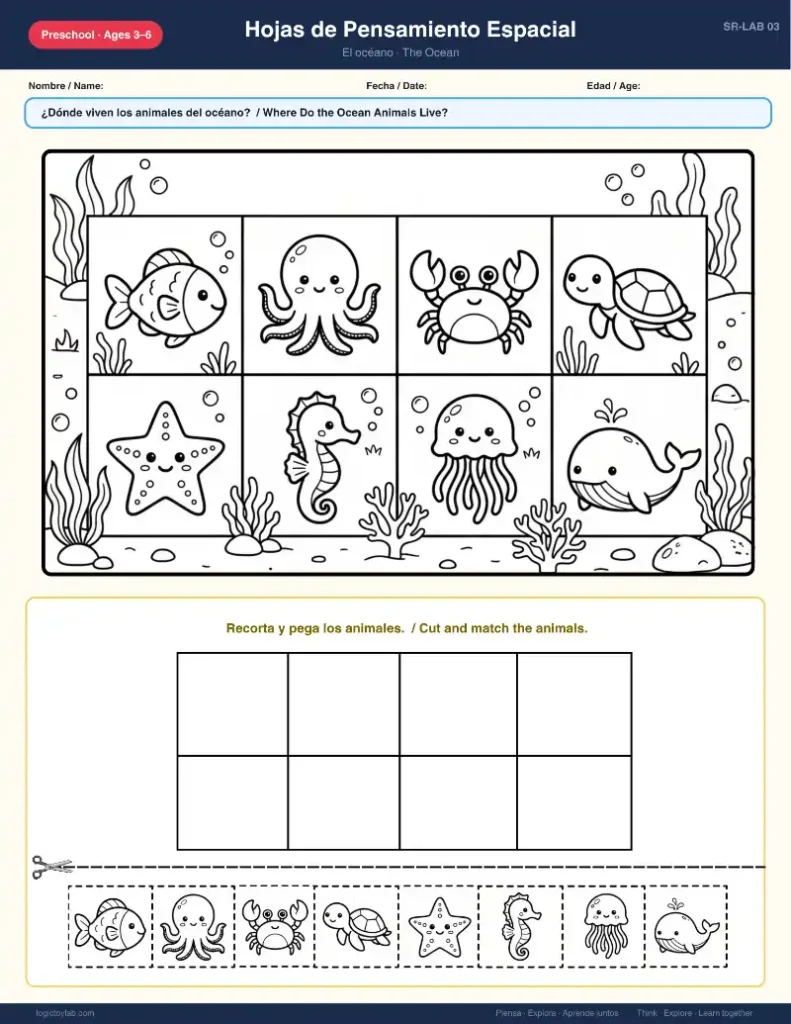
Farm animals matching worksheet Zoo animals matching worksheet Ocean animals matching worksheet
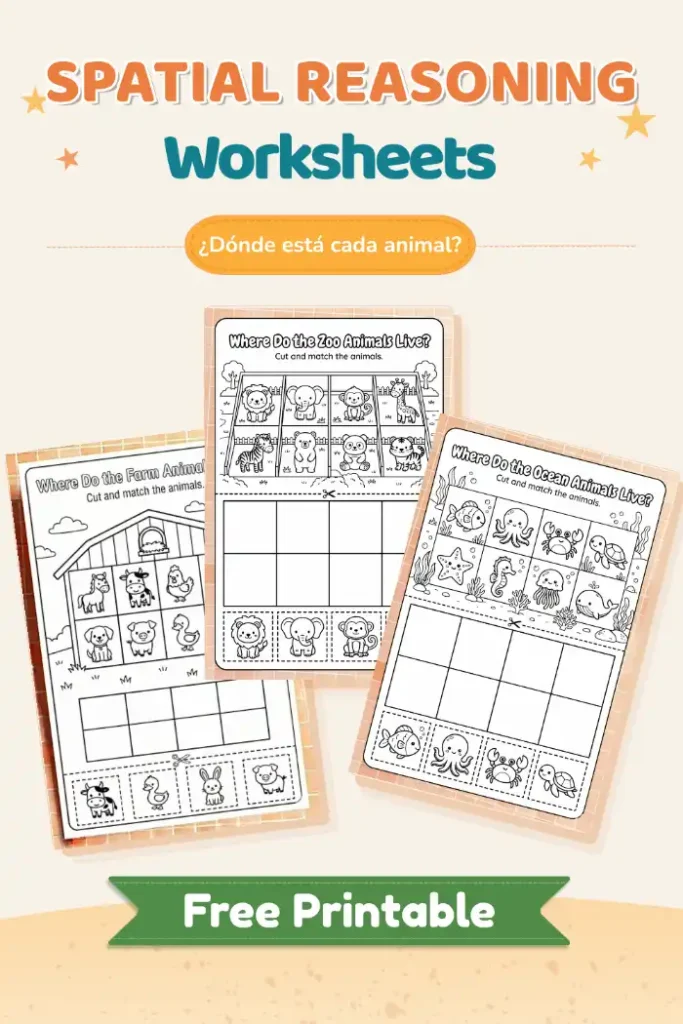
Free Printable Download
Free
Spanish & English
What’s Inside This Collection
3 spatial thinking worksheets with detailed scenes to observe
Cut-and-paste activity: children place each animal in its correct location
Bilingual instructions on every sheet — Spanish first, English below
3 distinct habitats: The Farm, The Zoo, and The Ocean
8 animals per sheet to cut out and classify
Print-ready US Letter format — straight from download to activity
Optimizado para: hogar o aula • Calidad Profesional
Does Your Child Know Where Each Animal Lives?
In these spatial thinking activities, children observe a scene with animals in their natural habitats — a farm, a zoo, or the ocean floor — and then reconstruct that same layout by cutting out the animal cards at the bottom and pasting them into the correct positions on the empty grid.
Every animal has its place. Only your child can find it.
These printable worksheets are fully bilingual, with instructions written in Spanish first and English below on every sheet — designed for Hispanic families in the United States who want to support learning in both languages at the same time.
🧸 Want to take the learning further? The right hands-on toy can reinforce what these worksheets build — and keep the momentum going between sessions. See our full guide: Best Toys for Building Concentration in Children Ages 3 to 6
A Note for Parents:
Before your child picks up the scissors, ask them to study the scene for a full minute and try to remember where each animal is. Ask: “Where is the cow? Which part of the farm does she live in?” That moment of active observation — before cutting anything — is where the deepest learning happens.
What Skills Does This Activity Build?
This activity looks simple, but it quietly develops several foundational skills at once:
How to Use This Worksheet at Home
One tip that makes a real difference: If your child rushes through without checking the reference scene, ask them to compare their grid with the original image before calling it done. That habit — verifying before finishing — is exactly what this activity is designed to build.
👉 [How to Use Learning Activities with Siblings of Different Ages]
Frequently Asked Questions
Is this worksheet completely free?
Yes. Download it at no cost, no sign-up required.
Do I need any extra materials?
Just print and go. Colored pencils are optional but make the activity more engaging.
Can I use this in a classroom?
Yes, for personal or classroom educational use. Commercial redistribution is not permitted.
What Age Is This For?
SR-LAB 01–03 is designed for children ages 3 to 6.
👉 [Explore the full Spatial Reasoning Series — free printables organized by level]