
I sat in my minivan for twenty minutes after the IEP meeting, gripping the steering wheel. The school parking lot was almost empty. I couldn’t make myself turn the key.
Inside, I had listened to a team of professionals describe my four-year-old son like he was a list of problems. Non-compliant. Difficulty with transitions. Aggressive during circle time. Each word landed like a small stone in my chest. By the end, I couldn’t breathe.
Then the teacher said something I will never forget. She leaned forward, her voice soft like she was doing me a favor. ‘Have you considered that maybe he just isn’t ready for a structured environment? Some kids need more time at home.’
I nodded and smiled. But inside, I was crumbling. I heard: You brought a broken child to our school. Take him home and fix him before you try again.
That night, I cried into a sink full of dishes while my son sat on the kitchen floor, lining up his toy cars in perfect rows, humming a tune from his favorite show. He looked peaceful. He looked like himself. And I realized he had been disappearing at school, piece by piece.
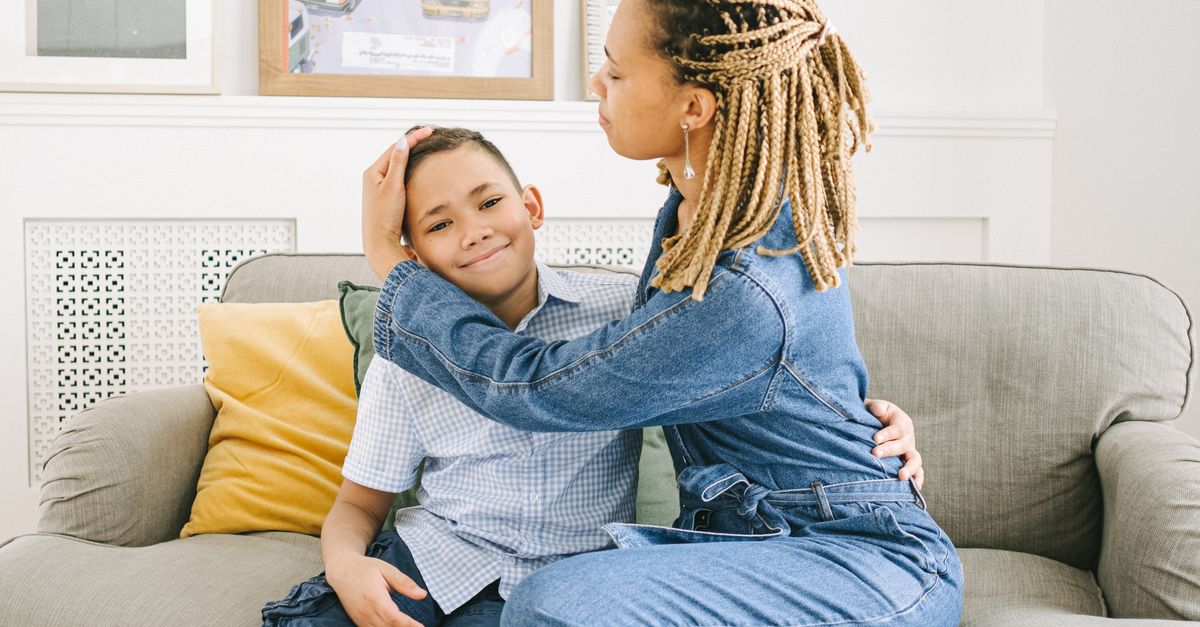
Some kids don’t hate school. They hate the feeling of being misunderstood all day long.
For months, I had been getting emails from his teacher. Meltdown during snack. Refused to join the group. Hit a friend when they touched his block tower. Each email made me feel smaller. I started to believe I was failing him, that I hadn’t prepared him well enough for the world.
But at home, he was different. He would bring me a book and climb into my lap. He would spend forty minutes watching a single leaf float in a puddle. He would tell me, in his careful, deliberate way, that the ceiling fan sounded like a sleepy bee.
What looked like defiance at school was often overwhelm. What looked like aggression was a child with no words for the noise inside his head.
I started asking myself harder questions. Not What’s wrong with him? but What is his behavior trying to tell me?
And the answer came slowly, like a fog lifting. He was telling me that the fluorescent lights hurt his eyes. That the buzzer between classes felt like a slap. That having to stop playing when a timer went off felt like losing a part of himself. That the constant pressure to perform, to comply, to be someone he wasn’t, was breaking something inside him.
My son wasn’t refusing to learn. He was refusing to be controlled by a system that couldn’t see him.
The decision to homeschool didn’t come in a single moment of clarity. It came in fragments. A good morning followed by a terrible afternoon. A therapy session where the therapist said, ‘He’s actually doing really well, Mom, but school is asking him to be someone he’s not.’ A night when I lay awake at 3 a.m. and thought, What if the answer isn’t to make him fit? What if the answer is to build a different world around him?
I was terrified. I had no teaching degree. I had no patience some days. I had a house that was always messy and a brain that second-guessed every choice. But I also had a son who came alive in the quiet hours of the morning, who learned best when he could move his body, who needed time to process before he could speak.
So I pulled him out. I printed a withdrawal form from the district website and mailed it with shaking hands. I didn’t tell anyone except my husband for two weeks. I couldn’t handle the opinions.
That IEP meeting didn’t just shame me. It showed me exactly where my son’s light was being dimmed. Walking away didn’t mean giving up. It meant choosing to see him fully.
What Helped Us Instead
What helped wasn’t a curriculum or a fancy schedule. It was giving myself permission to stop measuring my son against a classroom of neurotypical kids. I stopped asking how he compared and started asking what he needed. Some days that meant learning from a pile of leaves and a magnifying glass. Other days it meant doing nothing but sitting together while he regulated. The biggest shift was internal: I stopped trying to fix him and started trusting him.

Some days, homeschooling is beautiful. We bake bread and count eggs. We read the same dinosaur book twelve times because he loves the way the pages feel. He learns letters by tracing them in sand. We stop everything when he needs to spin or jump or just lie on the floor and breathe.
Other days, it’s hard. He screams. I feel lost. I wonder if I’m ruining him. I second-guess everything. But I’ve stopped believing that a bad day means I made the wrong choice. It just means today was hard.
If you are sitting in a parking lot right now, or lying awake at night, or reading this with a knot in your stomach, please hear me. You are not a failure. Your child is not a problem to be solved. The shame you feel after an IEP meeting is real, but it doesn’t have to be your compass. You get to choose. And whatever you choose, choose it because it helps your child feel seen, not because you’re trying to prove something to anyone.
The bravest thing I ever did was walk away from a room full of experts who couldn’t see my son. The second bravest thing was trusting myself to figure it out anyway.