
Free Printable Download
Free
Spanish & English
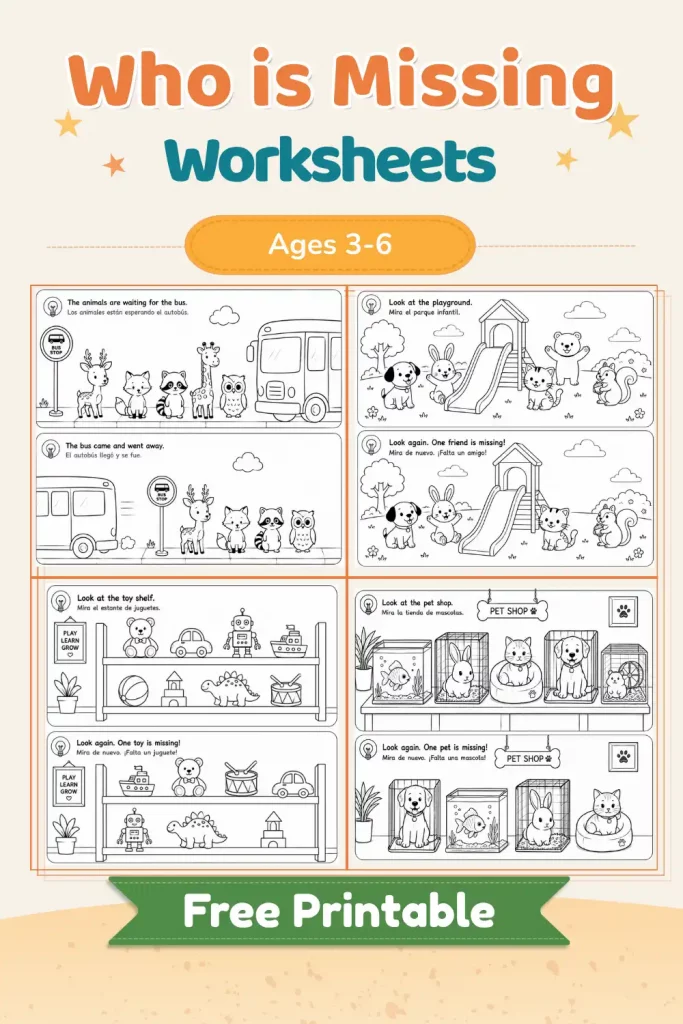
Free Printable “Who Is Missing?” Collection
This collection includes 4 observation and logic activities
🚌 Who Got on the Bus?
🛝 Who Left the Playground?
🧸 Which Toy Is Missing?
🐶 Which Pet Found a New Home?
Optimizado para: hogar o aula • Calidad Profesional
Inside this Worksheet
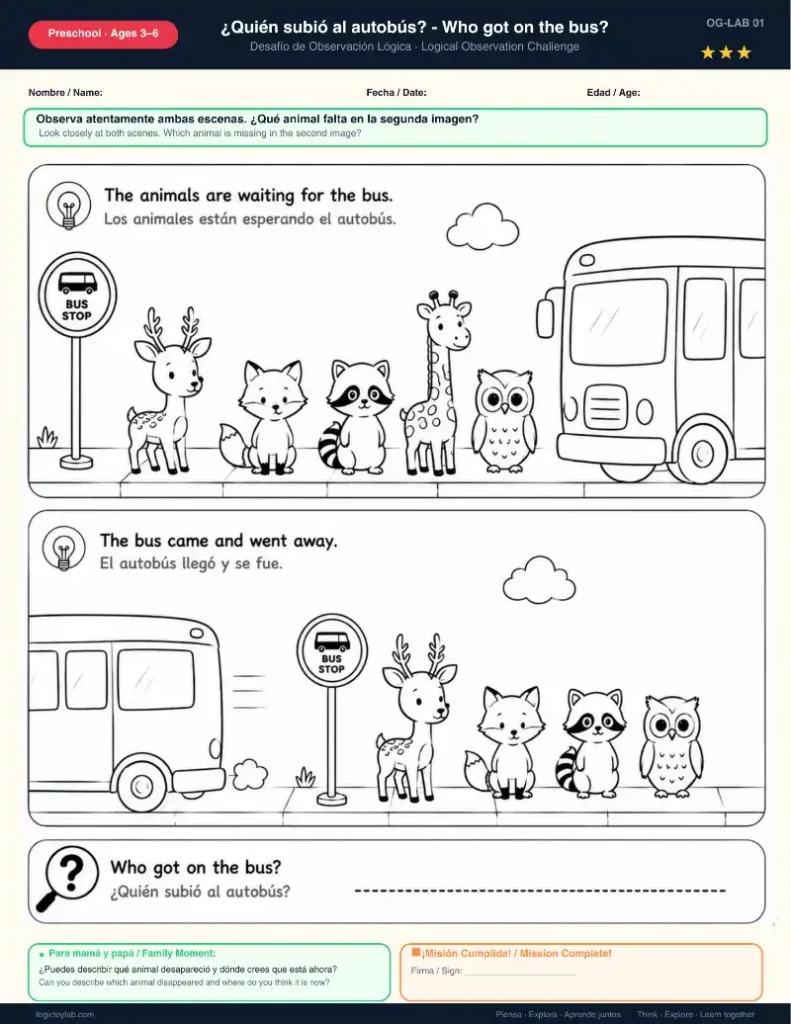
🚌 OG-LAB 01: Who Got on the Bus?
In this activity, children observe a group of animals waiting at a bus stop. Then they compare the second scene to figure out which animal disappeared.
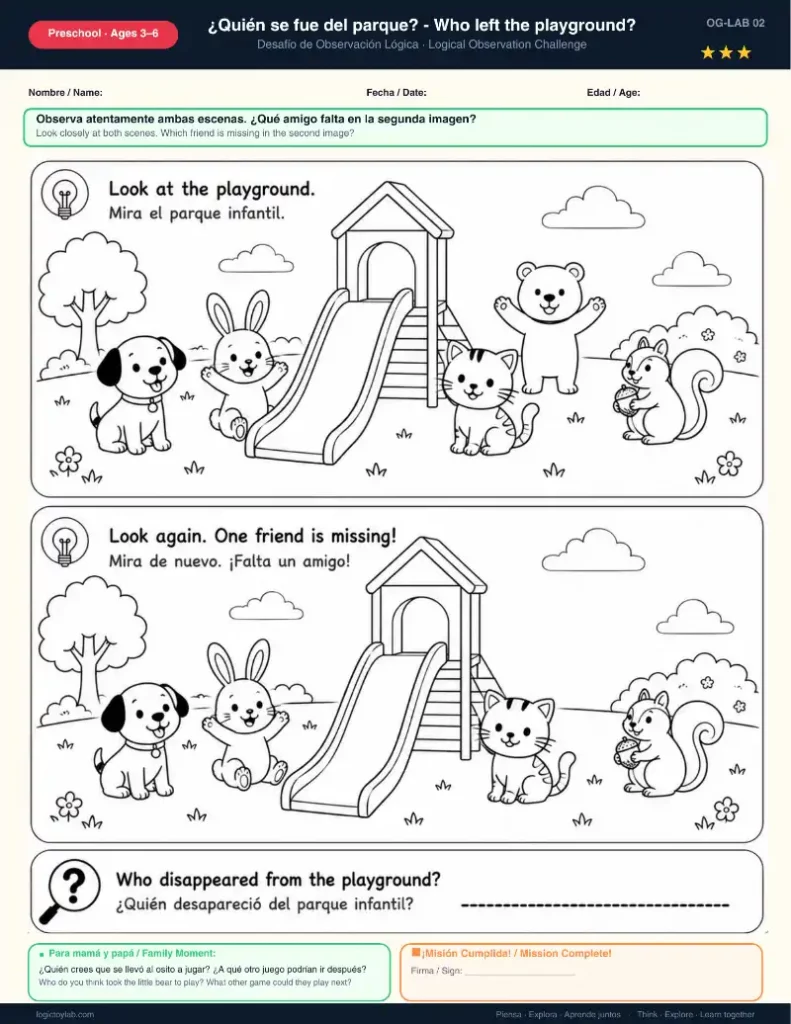
🛝 OG-LAB 02: Who Left the Playground?
Children study a busy playground scene and try to identify which character is no longer there.
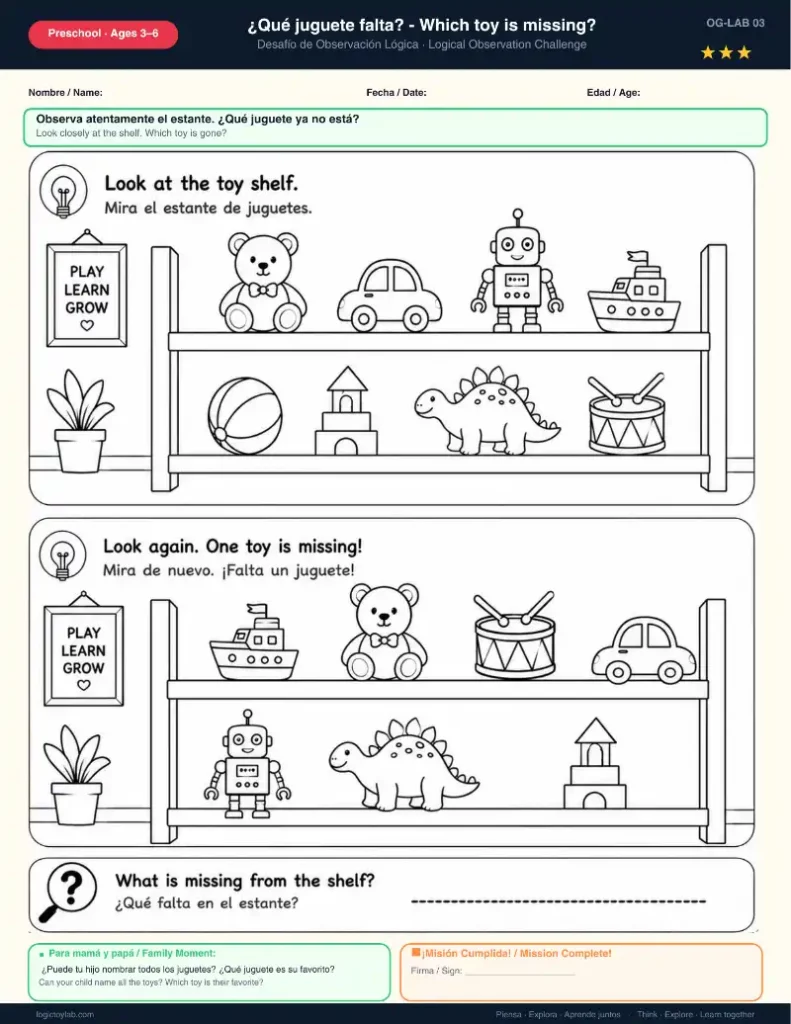
🧸 OG-LAB 03: Which Toy Is Missing?
A shelf full of toys becomes a fun visual memory challenge.Children compare two scenes and identify which toy disappeared from the shelf.
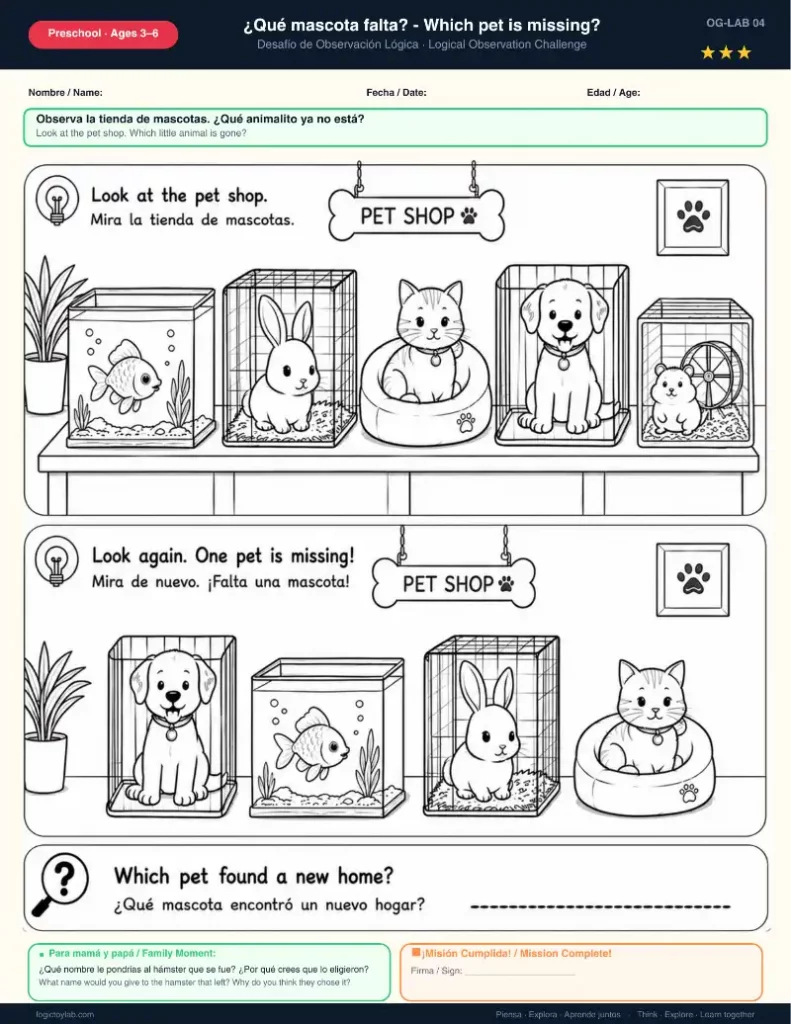
🐶 OG-LAB 04: Which Pet Found a New Home?
In this pet shop themed activity, children must discover which animal was adopted.It’s a simple but meaningful mix of logic and emotional learning.
What is the game “Who’s Missing?” and why is it important?
Young children naturally notice tiny changes in the world around them.
That’s why “Who Is Missing?” games are so engaging for preschoolers. Kids observe a scene, compare pictures, and figure out which character or object disappeared.
This printable collection helps children practice:
✅ Visual attention
✅ Short-term memory
✅ Observation skills
✅ Logical thinking
✅ Language and storytelling
Perfect for preschool and kindergarten children ages 3–6, both at home and in the classroom.
All worksheets are bilingual (English + Spanish) and ready to print.
👉 [Why Is My Child So Easily Distracted? (What’s Normal and What Actually Helps)]
Designed for Siblings — Not Just One Child
These worksheets are not only about solving puzzles. They also create opportunities for siblings to play and think together.
One child can observe the picture while the other guesses who disappeared. They can also take turns asking questions like:
“Who is missing?”
“What changed?”
“How did you notice it?”
Even siblings of different ages can participate together. Older children often enjoy helping explain the clues while younger children point out details and compare images.
👉 [How to Use Learning Activities with Siblings of Different Ages]
Cómo Usar Esta Colección en Casa
To make the activities more engaging:
- Cover part of the page and ask what the child remembers
- Let children invent stories about the missing characters
- Turn it into a family “detective game”
- Use stickers or coloring for extra fun
The goal is not perfection — it’s learning to observe, compare, and think carefully.
🧸 Want to take the learning further? The right hands-on toy can reinforce what these worksheets build — and keep the momentum going between sessions. See our full guide: Best Toys for Building Concentration in Children Ages 3 to 6
What’s Next?
Some children will solve these puzzles very quickly — and that’s a great sign.
It usually means they are ready for more advanced visual thinking activities.
You can even encourage your child to create their own “Who Is Missing?” game for family members to solve.
When children invent their own puzzles, they practice creativity, memory, attention, and logical thinking all at once.
Frequently Asked Questions
Is this collection completely free?
Yes, all 4 worksheets are free. No signup required.
What do I need to print this?
Just a printer, scissors and glue.
Can I use this in a classroom?
Yes, for personal or classroom educational use. Commercial redistribution is not permitted.