
Inside this Worksheet
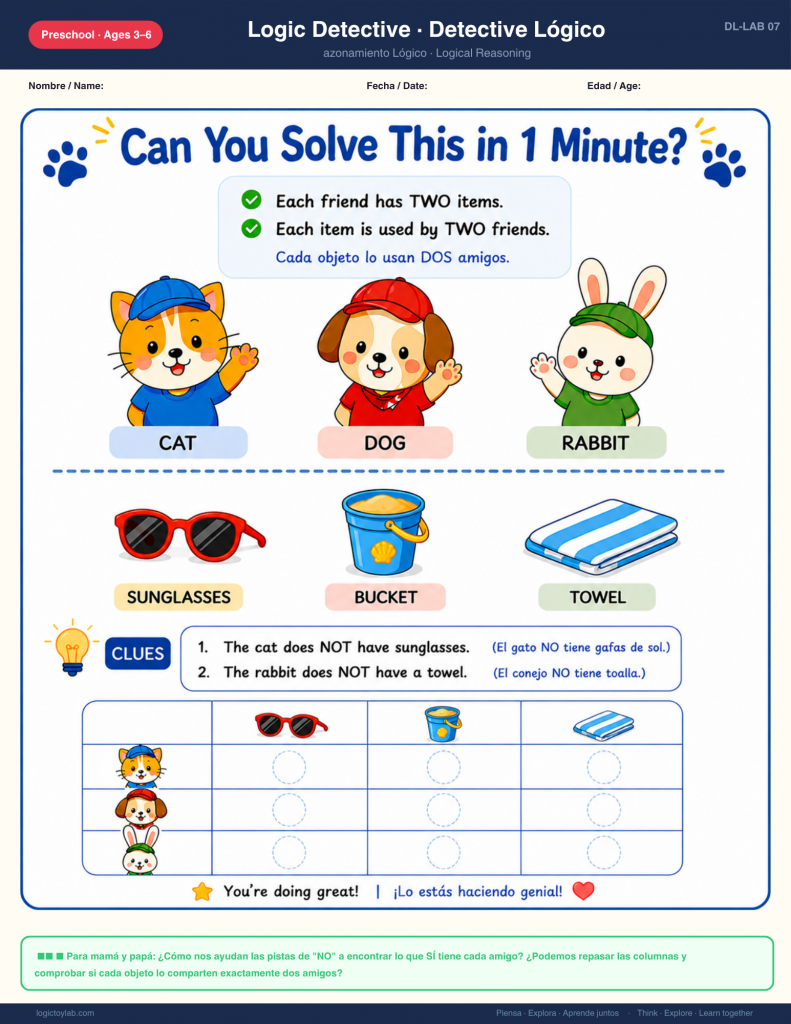
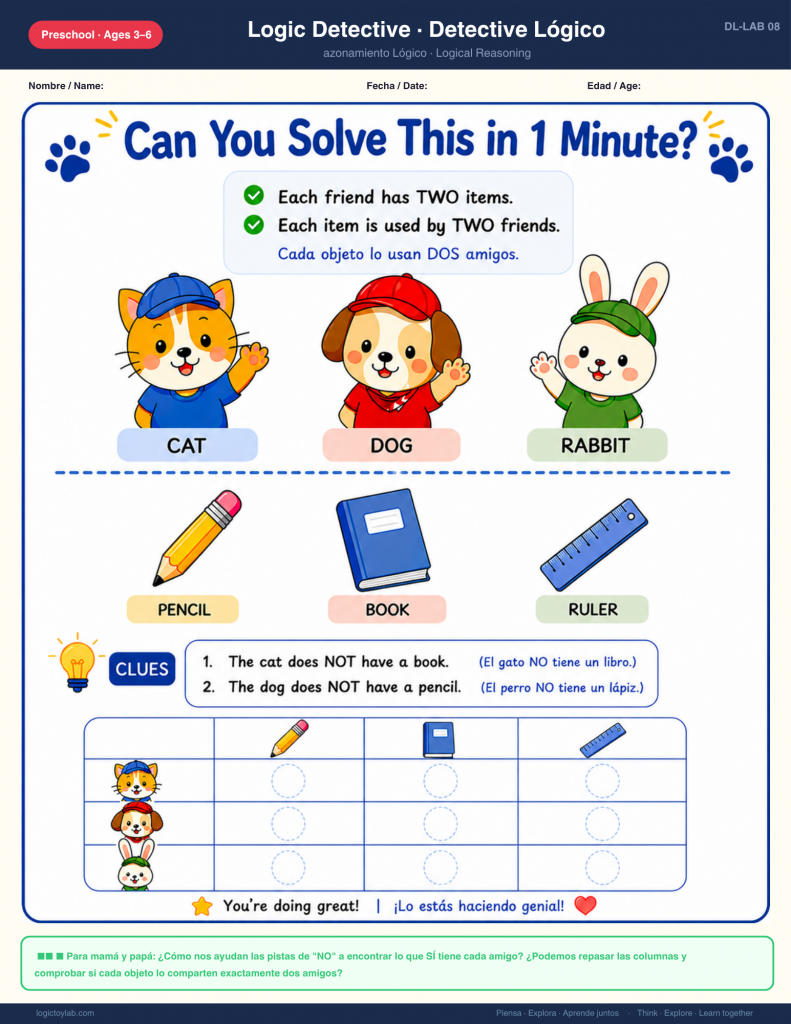
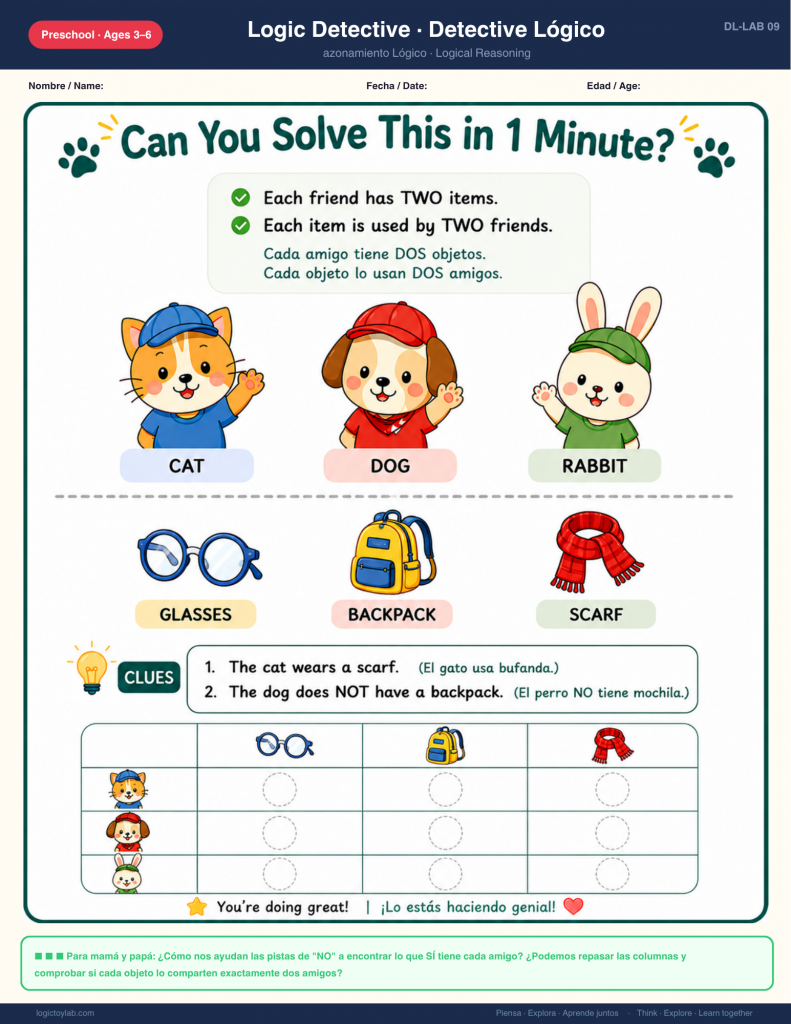
Free Printable Download
Free
Spanish & English
What’s Inside This Collection
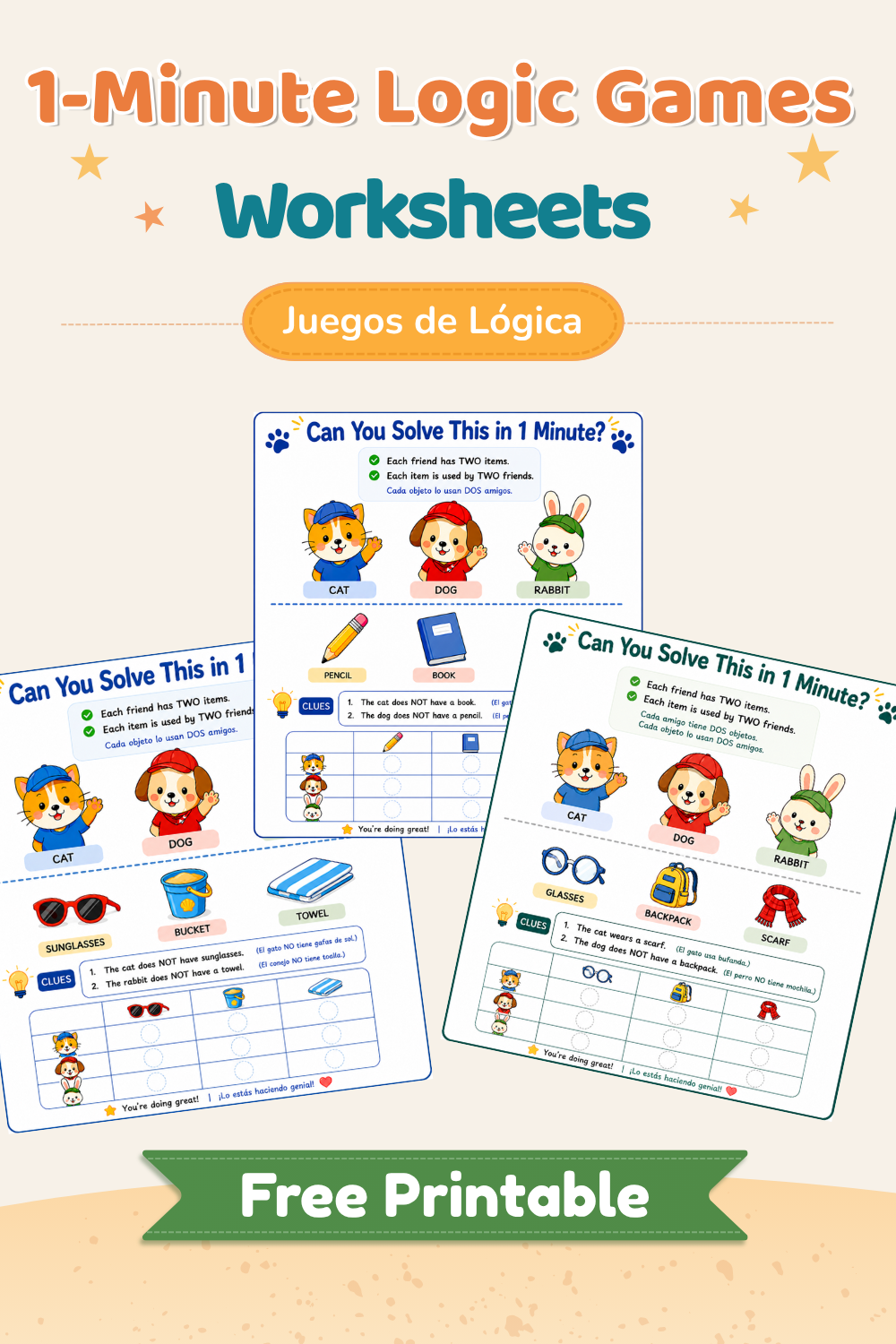
Grid logic games with a two-column table to solve using clues
2 clues per sheet — some sheets use two negative clues, others combine one positive and one negative
Constant rule: each character has TWO items, and each item is shared by TWO characters
Bilingual instructions on every sheet (English + Spanish)
Optimized for: Perfect for home learning, classrooms
What Is a Grid Logic Game — and Why Is It So Powerful?
Many young kids love solving little mysteries. That’s why we created this second collection of grid logic games: new scenes, new objects, and the same format you already know — written clues that children use to figure out which item belongs to each character, recording their answer in a two-column table.
The key rule stays the same across every sheet:Each character has TWO items. Each item is shared by TWO characters.
What changes in this collection is the type of clue. Some sheets use two negative clues (what a character does NOT have). Others combine one positive clue (what a character DOES have) with one negative clue — which requires the child to apply two different types of reasoning on the same sheet.
That kind of logical flexibility — switching strategy depending on the type of clue — is exactly what prepares a child for mathematical thinking down the road.
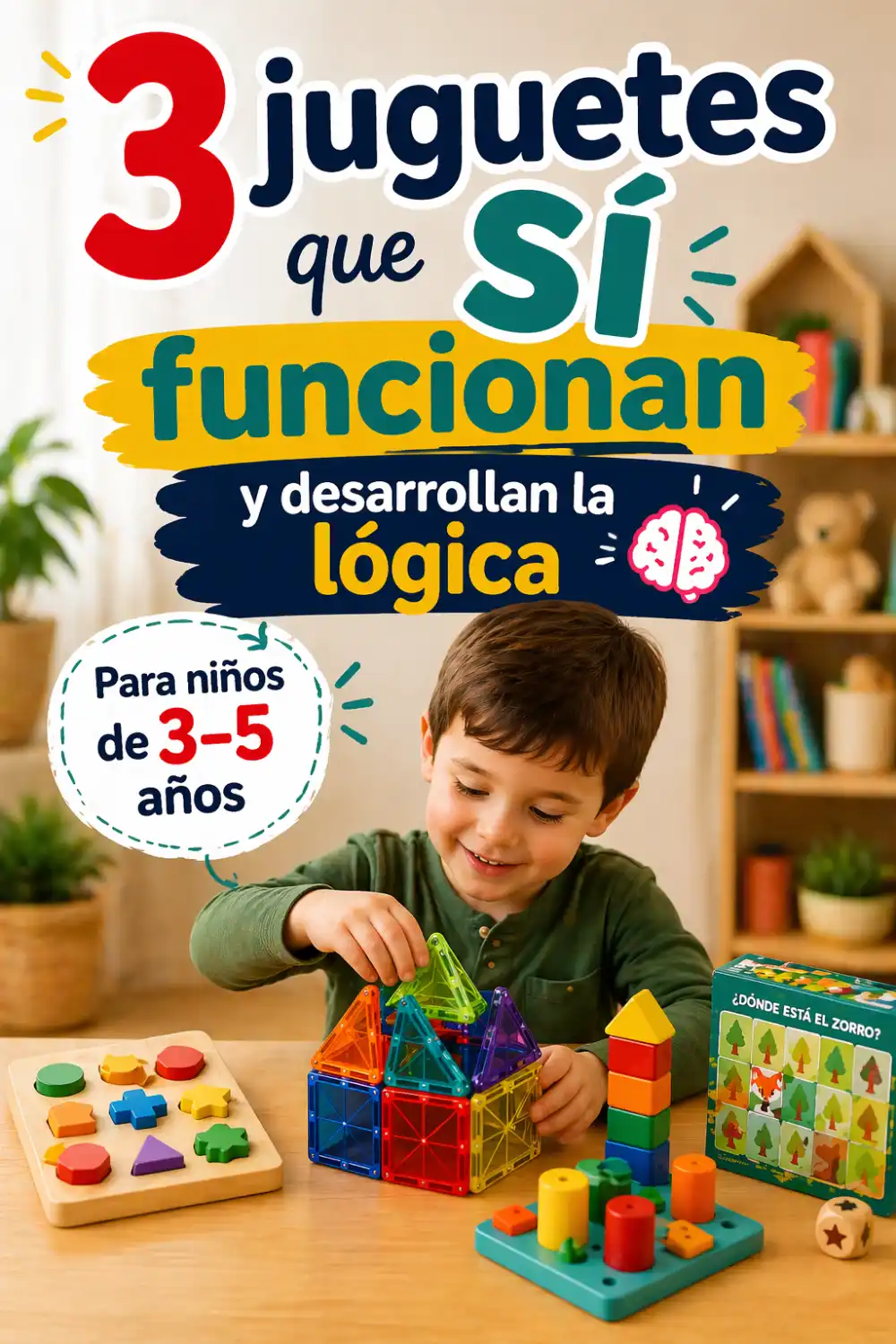
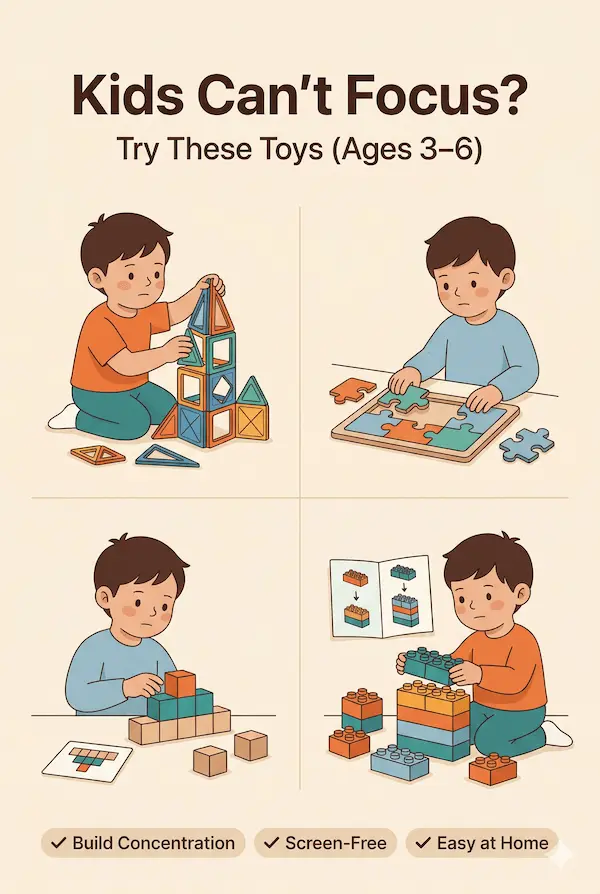
🧸 Want to reinforce this kind of thinking with hands-on toys? Here’s where to find the ones that work best for building logic and focus:
What Skills Does This Activity Build?
This looks like a simple activity sheet, but it works several skills at once:
- Reading clues — The child has to interpret two written conditions before acting.
- Using a grid as a tool — Learning to organize information in a table is a skill used across math, science, and logic throughout school.
- Mixed reasoning — Combining positive and negative clues in the same solution builds logical flexibility.
- Self-regulation — The child has to pause, re-read, and verify. No random guessing.
- Bilingual vocabulary — Every object and clue appears in both English and Spanish, learned in active context.
How to Use This Worksheet at Home
To make it easier the first time: Read the clues out loud with your child before they start marking the grid. Ask: “If the cat doesn’t have a book, what goes in that box?” One guided round removes the initial confusion and sets them up to handle the second and third sheets on their own.
To make it more challenging: Cover the clues after reading them just once. Your child has to solve the puzzle from memory.
One tip that makes a real difference: If your child marks something at random without reading the clues, don’t correct them right away. Ask: “What did the first clue say? Does that match what you marked?” The habit of double-checking before calling it done is exactly what this activity is designed to build.
My Child Solved These Shadow Worksheets Easily. What’s Next?
That’s a great sign — they’re ready for tougher challenges. The next levels in this series include:
- Logic grids with four characters and four objects
- Three clues instead of two
- Multi-step deduction puzzles
- More complex combinations of positive and negative clues
You can also encourage your child to create their own puzzle.
You can also ask your child to invent their own logic game for a sibling or a parent — choosing three characters, three items, and writing two clues. When kids create their own challenges, they’re practicing logical reasoning from the other side, which is even more demanding.
Frequently Asked Questions
Are these printable logic puzzles really free?
Yes. All worksheets can be downloaded at no cost and without creating an account.
What do I need to print them?
A standard printer and letter-size paper. Color printing is recommended for the best visual experience, but the sheets are also fully readable in grayscale.
What age are these puzzles designed for?
These sheets are designed for children ages 4 to 6. The grid format with written clues requires the child to be able to read simple instructions, or to work with an adult who reads them aloud.
Ages 4–5: We recommend working through the first sheet together, reading the clues out loud.
Ages 5–6: Most children can solve these independently after the first guided round.