
I remember the exact moment I stopped caring. It was a Tuesday morning in late October, and I was sitting cross-legged on the kitchen floor while my three-year-old son carefully arranged acorns in a perfect circle. He had been at it for nearly thirty minutes, his small fingers moving with a focus I had never seen in any of my friend’s preschool photos. The acorns weren’t just acorns to him. They were people. They were having a meeting. They needed to be in the right order, and he was the one who knew the order.
I had a friend who texted me that morning. She sent a picture of her daughter at a fancy Montessori school, standing in front of a carefully arranged shelf of wooden toys. I looked at my son on our sticky kitchen floor, surrounded by acorns and a half-eaten banana, and I felt that familiar squeeze in my chest. The judgment I imagined from her. The judgment I felt from myself.
But then my son looked up at me, his eyes bright, and said, “Mama, the acorn family needs a song.” And he started humming something that sounded vaguely like Twinkle Twinkle but with more gravel in it. And I realized I didn’t actually want to be anywhere else. I didn’t want a shelf of wooden toys. I wanted this. This messy, acorn-filled, banana-smeared life.
The Day I Started Noticing
The first time someone asked me if I was worried about socialization, I laughed. The second time, I felt a knot tighten in my stomach. By the fifteenth time, I had memorized my script. I would explain how we did playgroups, library story time, soccer for tots, and music classes. I would list all the ways my child was definitely, absolutely, one hundred percent socialized.
But the truth was, I was exhausted by the explaining. I was tired of defending something that felt as natural as breathing. My son didn’t need a classroom to learn. He needed me to sit on the floor with him while he figured out how acorns work. He needed time to follow his own curiosity without a bell telling him to stop.
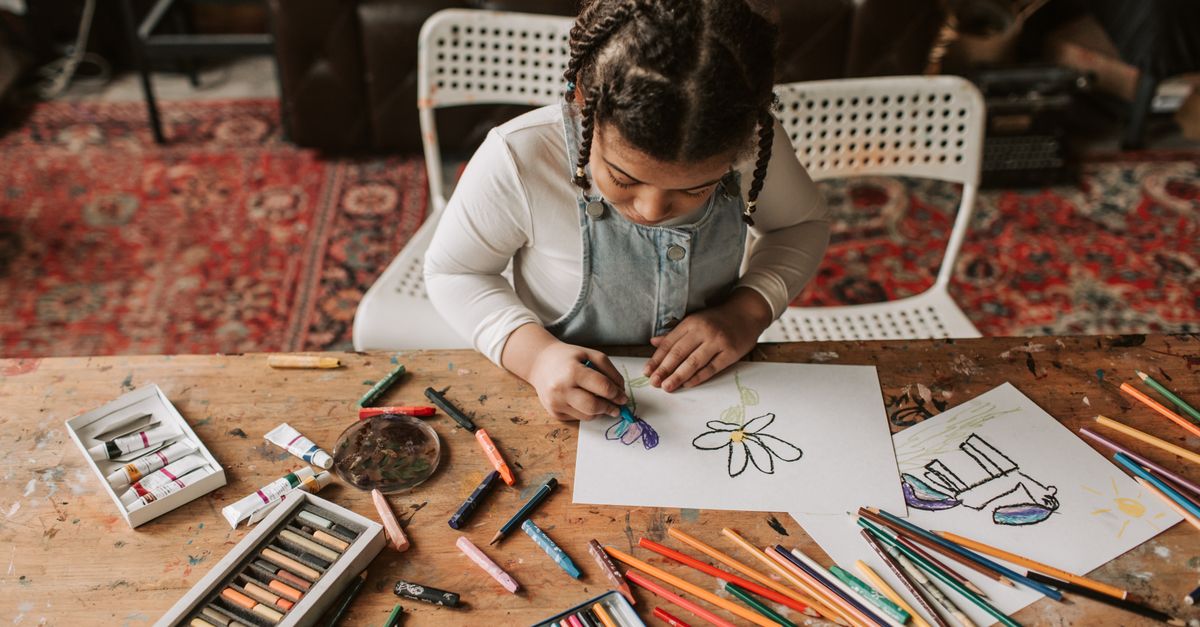
One afternoon, I watched him try to open a jar of peanut butter for ten minutes. He tried twisting it. He tried tapping it. He tried asking it nicely. I sat on my hands to keep from helping. Finally, he ran to the sink, ran hot water over the lid, and twisted it open. He didn’t even know he had learned problem-solving. He just knew he wanted peanut butter. And I knew, right then, that the world was his classroom.
The Stereotype That Haunted Me
The big one, the one that kept me up at night, was the idea that homeschooled kids are weird. That they don’t know how to share, make friends, or handle real life. I had heard it so many times I started to believe it. I would watch my son at the park and hold my breath, waiting for him to do something that would confirm everyone’s fears.
But he never did. He would run up to another kid, hand them a stick, and say, “This is a sword. We are fighting dragons.” And the other kid would take the stick, and they would fight dragons together. No adult needed to facilitate. No classroom rules needed to be taught. He just knew how to connect.
What looked like social awkwardness was sometimes just my own fear projected onto him.
I started paying closer attention. I noticed that when he played with other kids, he was often the one who initiated the game. He was the one who suggested the rules. He was the one who comforted a crying friend without being asked. The stereotype didn’t fit him. It never had. I was the one who had been carrying it.
The Academic Fear That Didn’t Match Reality
The second stereotype that haunted me was the academic one. People would ask me how he would learn to read, do math, or write. They would look at my three-year-old, who couldn’t yet write his name, and I would see the worry in their eyes. I would feel the need to prove something.
So I bought flashcards. I bought workbooks. I sat him down at the kitchen table and tried to teach him the letter A. He cried. I cried. The flashcards ended up in the recycling bin. And I realized that I was teaching him to hate learning by trying to prove that he was learning.
So I stopped. I put the workbooks away. I let him play. And he started learning anyway. He learned numbers by counting acorns. He learned letters by asking me to read the same book seventeen times in a row. He learned to write his name because he wanted to sign his artwork. Not because I made him. Because he was ready.
My child wasn’t refusing learning. He was refusing pressure.
The Moment Everything Shifted
There was a day, about six months into our homeschooling journey, when I realized I had stopped caring. It wasn’t a dramatic moment. It was quiet. We were at the grocery store, and my son was sitting in the cart, counting the apples as I put them in the bag. He got to twelve. He had never counted to twelve before. He looked at me, proud, and I felt this wave of peace wash over me.
The woman next to me said, “Oh, is he in preschool?” And I said, “No, we homeschool.” And she smiled, not with judgment but with curiosity. And I smiled back. I didn’t feel the need to explain. I didn’t feel the need to defend. I just said, “He’s really into acorns right now,” and she laughed. And that was it.
I think that’s the moment I understood. Some preschoolers don’t hate learning. They hate feeling controlled. And my son wasn’t controlled. He was free. He was counting apples because he wanted to. He was learning because his brain was ready, not because a curriculum told him he had to.
What I See Now That I’m Not Worried
When I stopped worrying about what others thought, I started seeing my son differently. I noticed things I had missed before. The way he studies a puddle before he jumps in it, calculating the splash radius. The way he negotiates with his stuffed animals, giving them choices, respecting their decisions. The way he sits in complete silence, just watching a spider build its web.
He is learning. All the time. In ways that can’t be measured by a test or shown on a worksheet. He is learning patience, observation, problem-solving, empathy, and creativity. He is learning how to learn, which is the only thing that will actually matter in the long run.
And I am learning too. I am learning to trust him. I am learning to trust myself. I am learning that the judgment I felt was mostly coming from inside my own head. The other parents I meet are usually just curious, not critical. And the ones who are critical? They don’t know my son. They don’t see what I see. And that’s okay.
The Days Nothing Works
I don’t want to make it sound like every day is beautiful. Some days are terrible. Some days he throws acorns at the wall and I yell and then I cry and then we both sit on the floor and eat crackers in silence. Some days I wonder if I am ruining him. Some days I look at the school bus driving by and feel a pang of longing for a life that seems easier.
On those days, I don’t have a solution. I don’t have a quote that makes it better. I just sit with the hard feelings and wait for them to pass. And they always do. Eventually, he crawls into my lap. Eventually, we find our rhythm again. Eventually, I remember why we chose this life.
It’s not about having all the answers. It’s about being willing to sit in the questions together.
What I’d Tell the Parent Who Feels Judged
If you are reading this and feeling the weight of other people’s opinions, I want you to know that I see you. I was you. And I am still you on some days. The judgment isn’t easy to shake. But here is what I have learned.
Your child is not a project to be perfected. They are a person to be known. And you know them better than anyone. You know when they need a push and when they need space. You know when they are learning and when they are just going through the motions. You know what they need, even when you doubt yourself.
So let the judgments roll off your back. Let the questions sit unanswered. Let the stereotypes belong to people who don’t know your family. Because they don’t know your child. They don’t know the way his face lights up when he figures something out. They don’t know how kind he is, how curious, how full of life.
You know. And that is enough.
What looked like bad focus was sometimes just boredom. What looked like defiance was sometimes just a need for autonomy. And what looked like a child who wasn’t learning was actually a child who was learning in his own way, on his own time.
So I stopped caring. Not because I became indifferent. But because I became certain. Certain that this path, messy and uncertain as it is, is the right one for us. And that certainty is worth more than anyone’s approval.