
You have a 3-year-old and a 6-year-old. Maybe three kids spread across completely different stages. It’s late afternoon, you want to do something educational, and you already know how it’s going to go: the older one gets bored, the younger one can’t keep up, and within ten minutes someone is crying.
If that sounds familiar, it’s not that your kids don’t want to learn together. It’s that nobody showed you how to structure the activity so it actually works for both of them at the same time.
Patterns — those color, shape, and icon sequences that preschoolers work on — are one of the best entry points for family learning. Why? Because the same activity can run at two different difficulty levels using the exact same materials.
Here are three concrete ways to make it work.
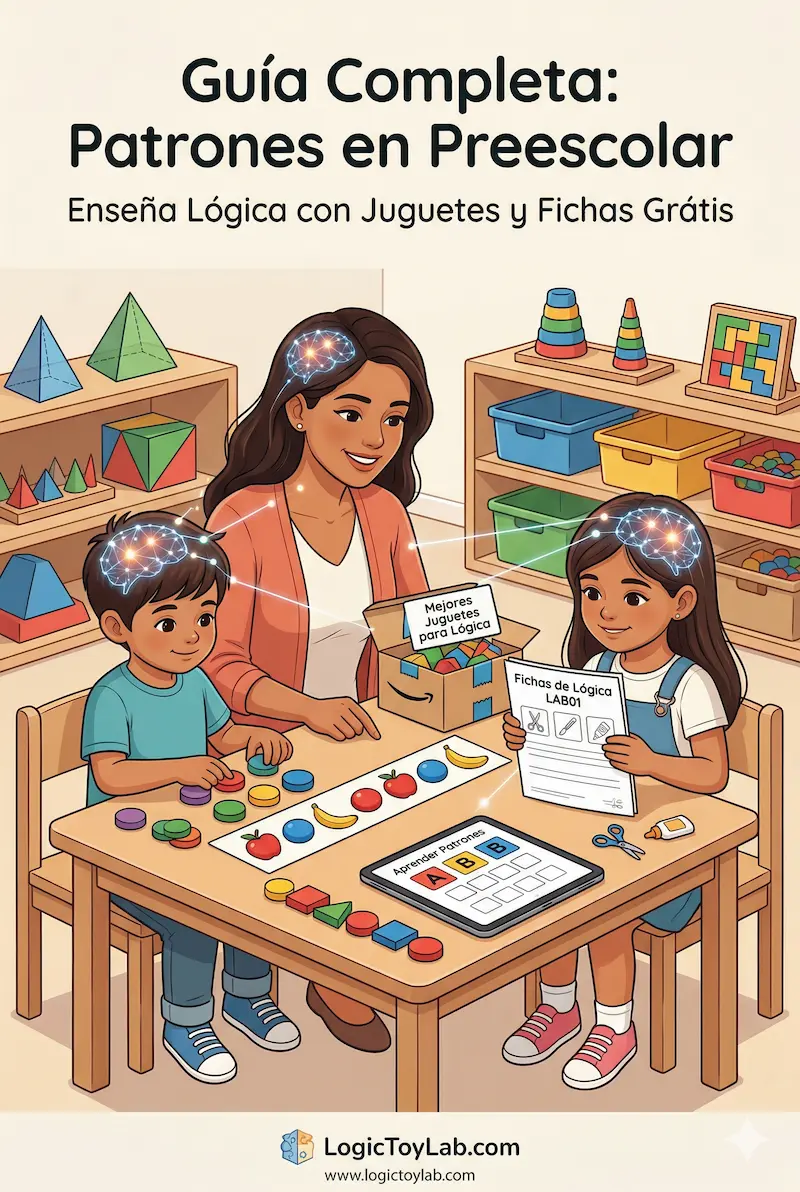
Why Your Siblings Are Already the Best Learning Resource in the Room
In many Hispanic families in the United States, children grow up with siblings of different ages sharing the same space, the same table, the same toys. What looks like a teaching challenge is actually one of the richest environments for developing logical thinking.
Early childhood education research has a name for this: peer learning. When an older child explains something to a younger one, they’re not just doing their sibling a favor — they’re consolidating their own understanding in a way that no worksheet can replicate. And the younger child, watching someone close to them work through a problem, tends to progress faster than they would working alone with an adult.
You don’t need a classroom setup. You just need to know how to activate the dynamic.
Three Ways to Learn Patterns Together
These aren’t three separate activities. They’re three play modes you can rotate depending on how much time you have, where your kids’ energy is that day, and what each one needs to practice.
👦🏽 Mode 1: The Older Sibling as Guide
When to use it: When the older child already has a solid handle on patterns and the younger one is just getting started.
This is the most powerful mode — and the easiest to activate with a single sentence.
Instead of telling the older child “go work on your own activity now,” say: “Can you show your little brother how the sequence works?”
What looks like a favor to the younger child is actually the most advanced exercise you can give the older one. Explaining a rule in their own words — “look, it goes red, blue, red, blue — what do you think comes next?” — requires a level of understanding that goes well beyond simply completing a worksheet.
The older child learns to organize their thinking and communicate it clearly. The younger child learns from someone who speaks their language — literally and figuratively.
Materials that work well: Large color tiles, stringing beads, pattern boards with loose pieces. The older child builds the sequence; the younger one completes it or guesses what comes next.
One thing worth remembering: If the older child makes a mistake while explaining, don’t correct them in front of the younger one. Save it for a private moment afterward. The confidence of the one doing the teaching is part of the learning.
🤝 Mode 2: Cooperative Activity — Both Kids Contribute, Neither Can Finish Alone
When to use it: When you want them to work together without it turning into a competition.
Here there’s no “teacher” and no “student.” Both kids work toward the same goal from different roles — and neither one can finish without the other.
One format that works especially well with patterns: the younger child is in charge of sorting the pieces by color or shape (“find all the blue ones”), while the older child arranges them into a pattern. If the younger child brings the wrong piece, the pattern doesn’t work. If the older child doesn’t explain what they need, the younger one doesn’t know what to look for.
Another version: one child builds the first half of a sequence and covers it. The other has to continue it without seeing the start, using only the logic of the pattern.
This kind of activity builds something that goes beyond patterns: communication, patience, and mutual trust — three skills that children in multi-sibling households have a rare opportunity to practice from a very young age.
Materials that work well: Building blocks, magnetic tiles, sequence card games.
💡 If your kids tend to compete more than cooperate: Start with a very specific shared goal — “together, make a pattern with 10 pieces before the timer goes off.” A common challenge pulls them together faster than any instruction.
🎯 Mode 3: One Toy, Two Levels of Difficulty
When to use it: When you don’t have the energy to set anything up, but you want both kids doing something meaningful.
This is the most realistic mode for ordinary days.
The key is choosing materials that are open-ended enough for each child to work at their own level without interrupting the other — and without you having to mediate every few minutes.
With a set of wooden blocks or pattern blocks, for example:
- The 3-year-old builds a simple alternating tower: red, blue, red, blue. Basic AB pattern.
- The 6-year-old, using the same pieces, builds an ABBC sequence — or creates their own pattern and challenges the younger one to figure out the rule.
Same toy. Same table. Two levels of thinking happening at the same time.
Materials that work well: Wooden blocks, LEGO Duplo, pattern blocks, attribute tiles with varied shapes and colors.
How to Combine Toys with Printable Worksheets
All three modes work best when there’s a closing moment — something that lets each child see what they learned in a concrete, finished form.
That’s where printable worksheets come in.
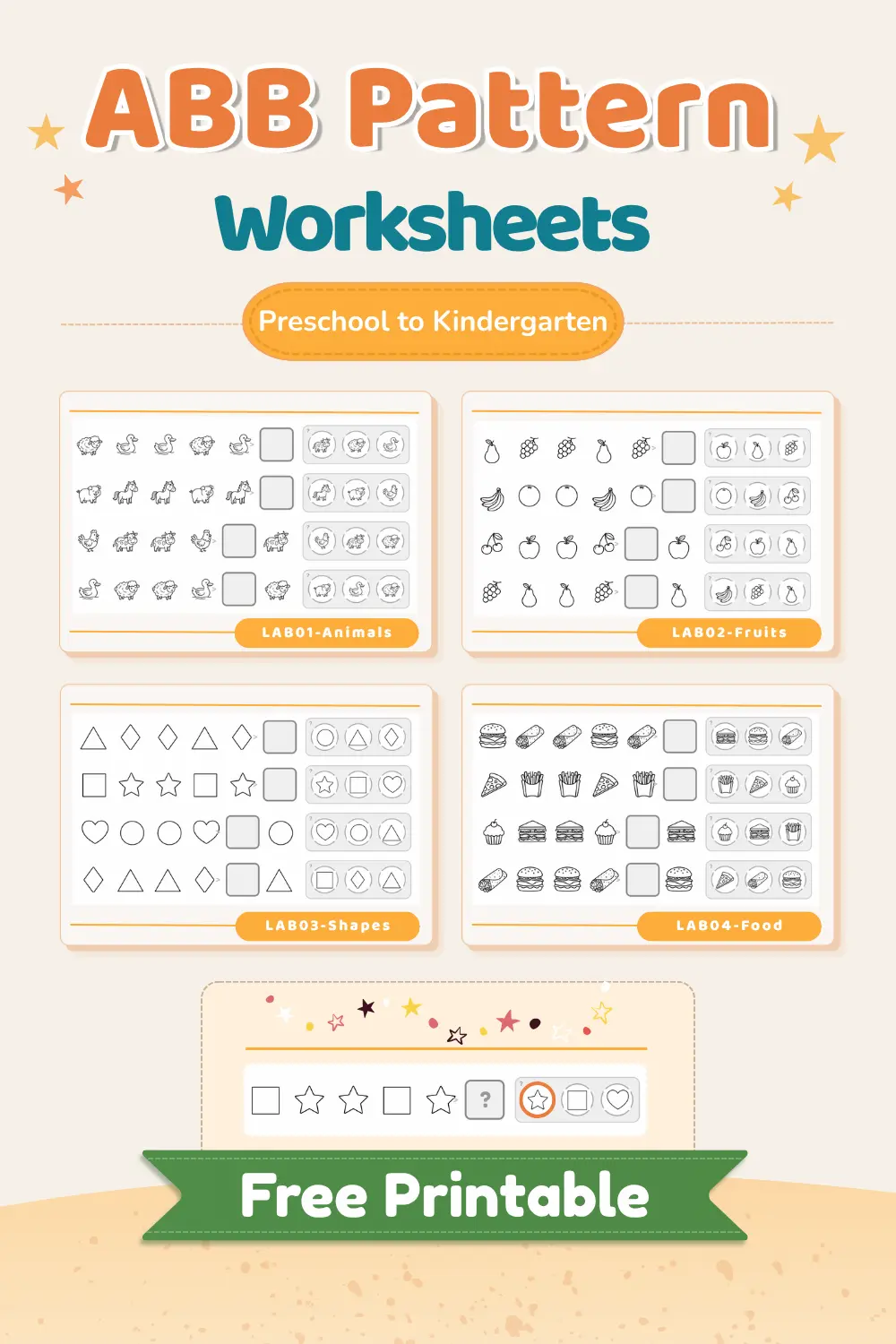
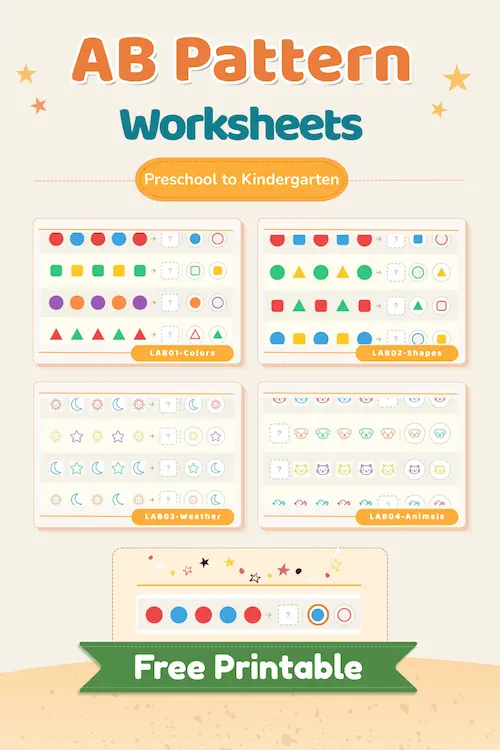
After a block session in Mode 3, for example, you can pull out a pattern sheet and ask each child to complete the activity at their level. The older one works on “create your own pattern”; the younger one works on “circle what comes next.” Both are sitting, both are working, and both get to finish something.
👉 [Download free pattern worksheets — organized by difficulty level]
One Last Thing
The age gap between your children isn’t an obstacle to learning together. It’s the ingredient that makes the learning richer, more real, and more memorable for both of them.
You don’t need everything perfectly organized. You don’t need expensive materials. You just need to know which mode to use today — and then let them do the rest.
LogicToy Lab | Bilingual early thinking activities for Spanish-speaking families in the United States. Free resources for children ages 3 to 6. No sign-up required.