
Honestly, I didn’t think it would be this hard.
I’d seen all the cute setups on Pinterest — little trays with sorting activities, printable worksheets laid out on a clean table, a child sitting happily with a pencil. I thought: that’s doable. We can do that.
And then I tried it with my actual child.
She was four. The moment I pulled out anything that looked remotely like a “learning activity” — a worksheet, a matching card, even a puzzle I was obviously excited about — she’d either walk away, flop dramatically onto the floor, or announce that she needed a snack. Right now.
I spent a few weeks thinking she just didn’t like learning. Which, if you’re a parent, you know is the kind of thought that spirals fast.
Spoiler: that wasn’t it at all.
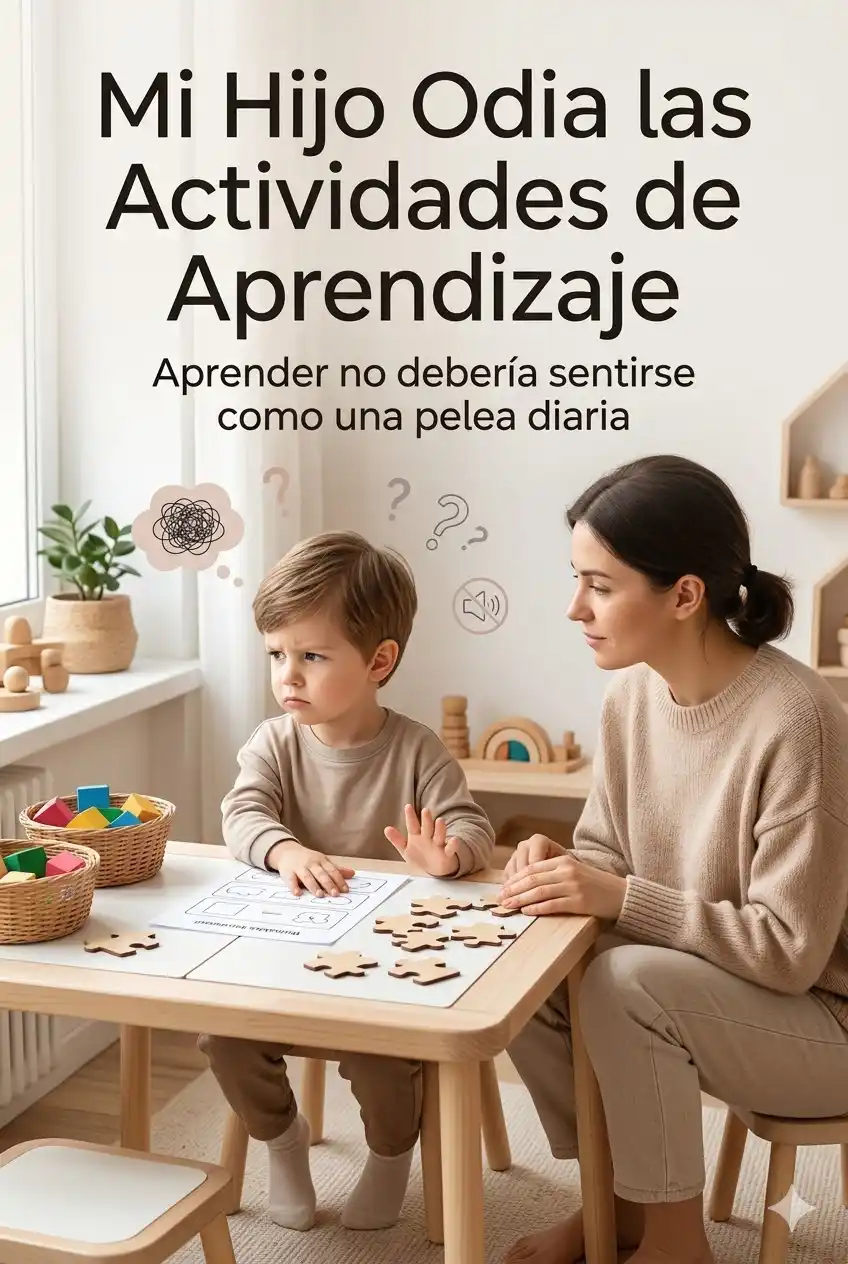
Why Does My Child Refuse Learning Activities?
I started paying attention differently. Instead of trying to figure out how to get her to do the activities, I watched what happened right before she refused them.
What I noticed was that the resistance almost always started when she felt like she was being asked to perform. The second I set something up with that “okay, learning time” energy — even if I didn’t say those words — she picked up on it. And something in her switched off.
Kids that age are incredibly good at reading the room. She knew when something was supposed to be educational. And for some reason, that label alone made it unappealing.
The other thing I noticed: she wasn’t actually avoiding hard things. She’d spend twenty minutes trying to get a lid off a container she couldn’t open. She’d redo the same block tower six times to get it right. That’s not a kid who doesn’t want to think. That’s a kid who wants to think on her own terms.
The Things I Tried That Didn’t Work
Shorter sessions. She still walked away.
Making it “fun” with stickers. She took the stickers and left the worksheet.
Sitting with her the whole time. This helped a little, but the moment I moved, she stopped.
I also tried a bunch of those colorful activity books you find at the grocery store. Too crowded, too random. She’d do one page and lose interest.
The printable worksheets I found online were hit or miss. A lot of them were either too babyish or way too much going on visually. I needed something that had a clear goal — find these animals, count them, write the number — not just pages of stuff to color.
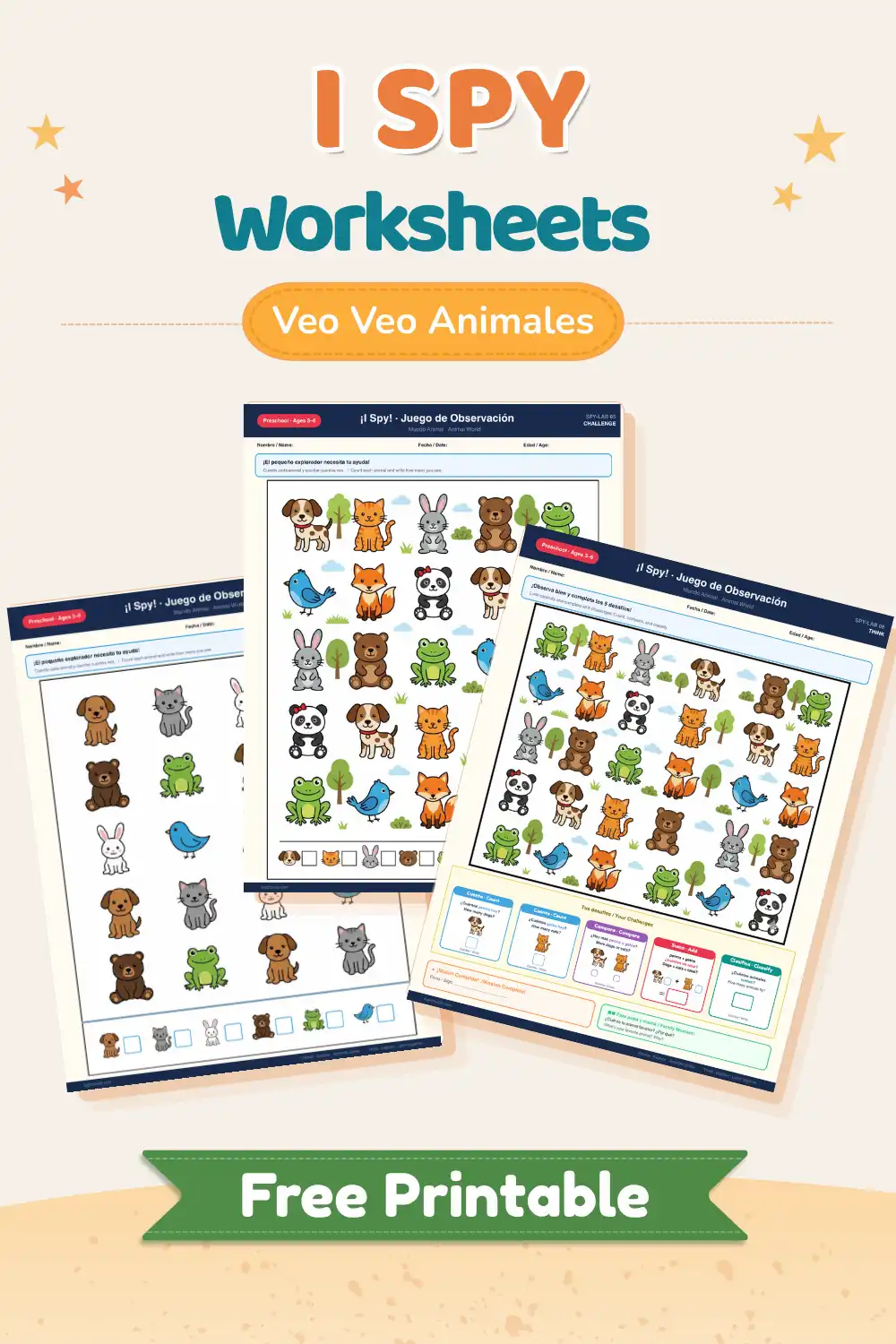
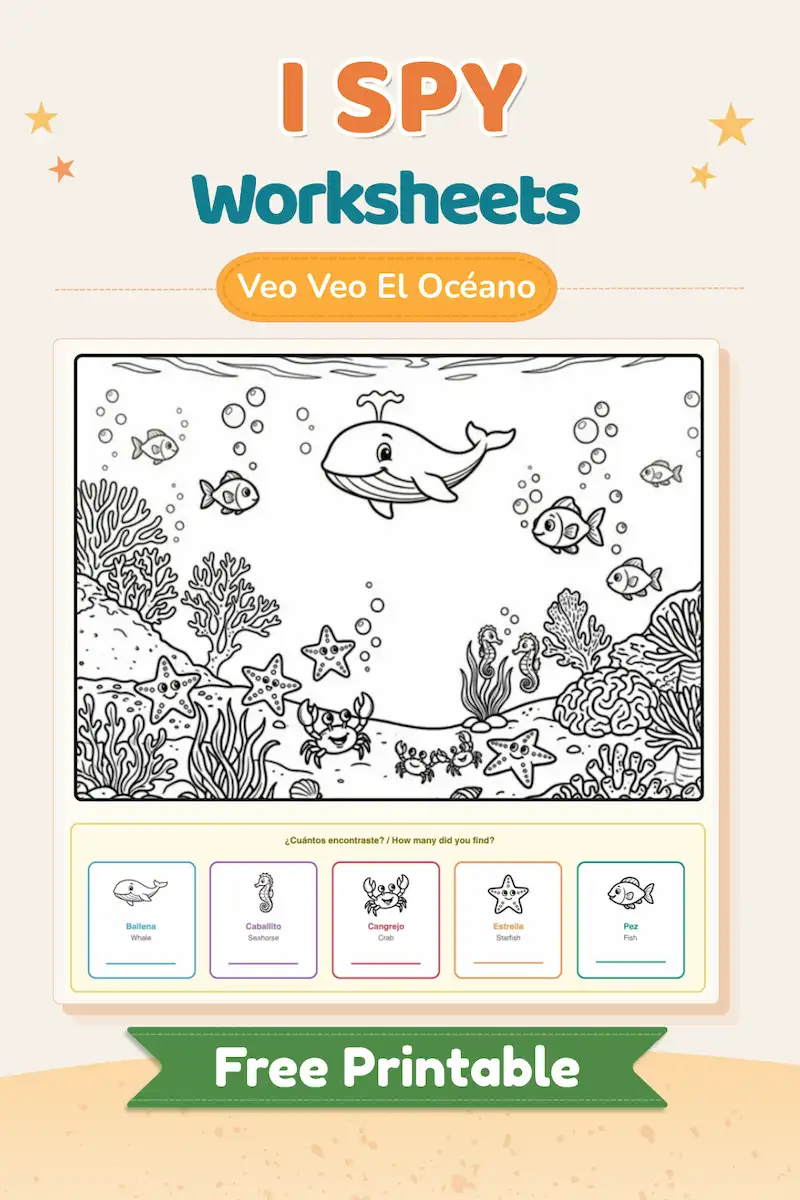
Eventually I found a set of I Spy worksheets that actually worked surprisingly well. She had to find and count specific things hidden in a scene — animals, objects, whatever the sheet was about. It had a clear mission, a small “Mission Complete” section at the bottom, and the whole thing took maybe 10 minutes. She asked to do it again the next morning.
👉 The full I Spy collection is here: Printable I Spy Worksheets — Free Collection
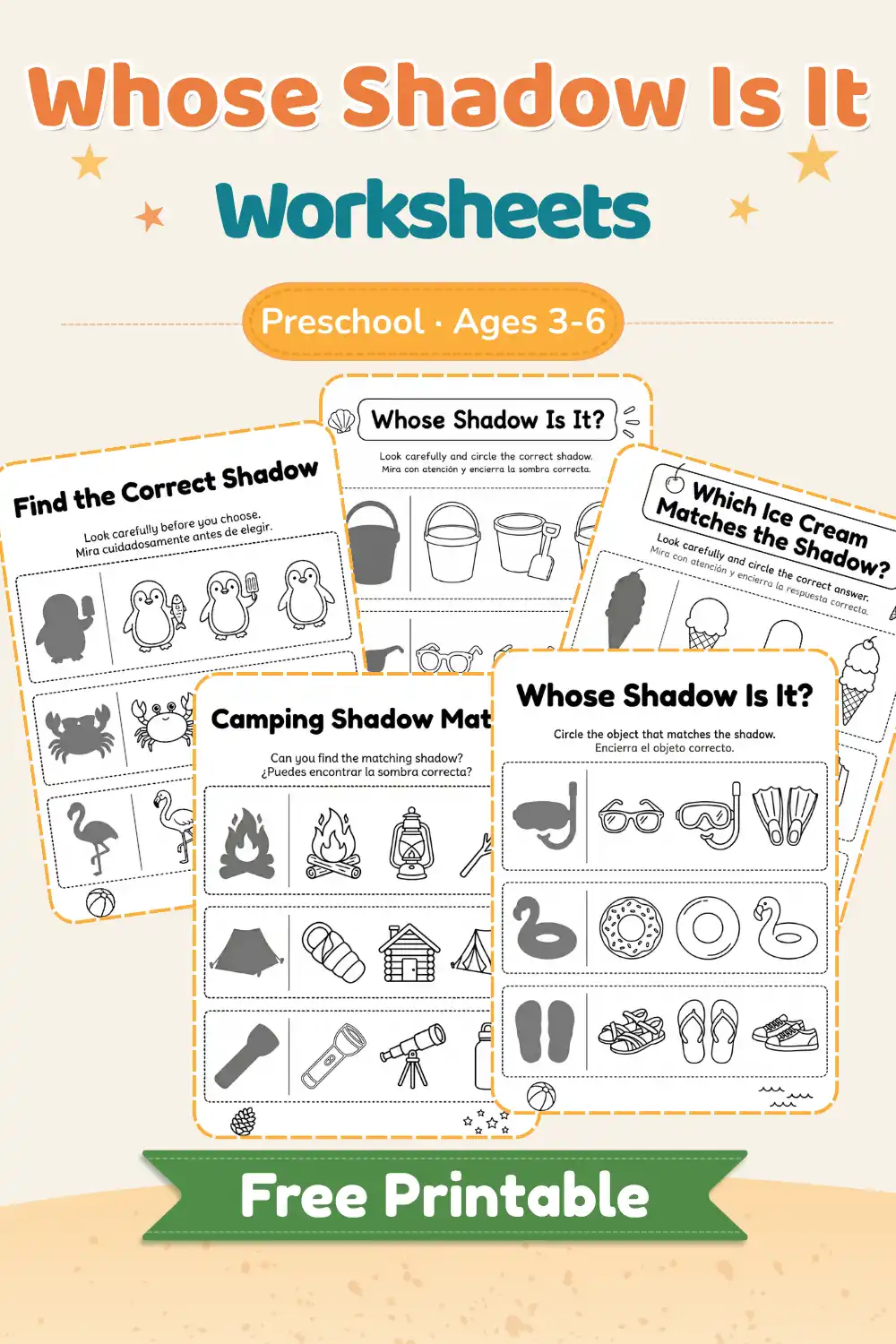
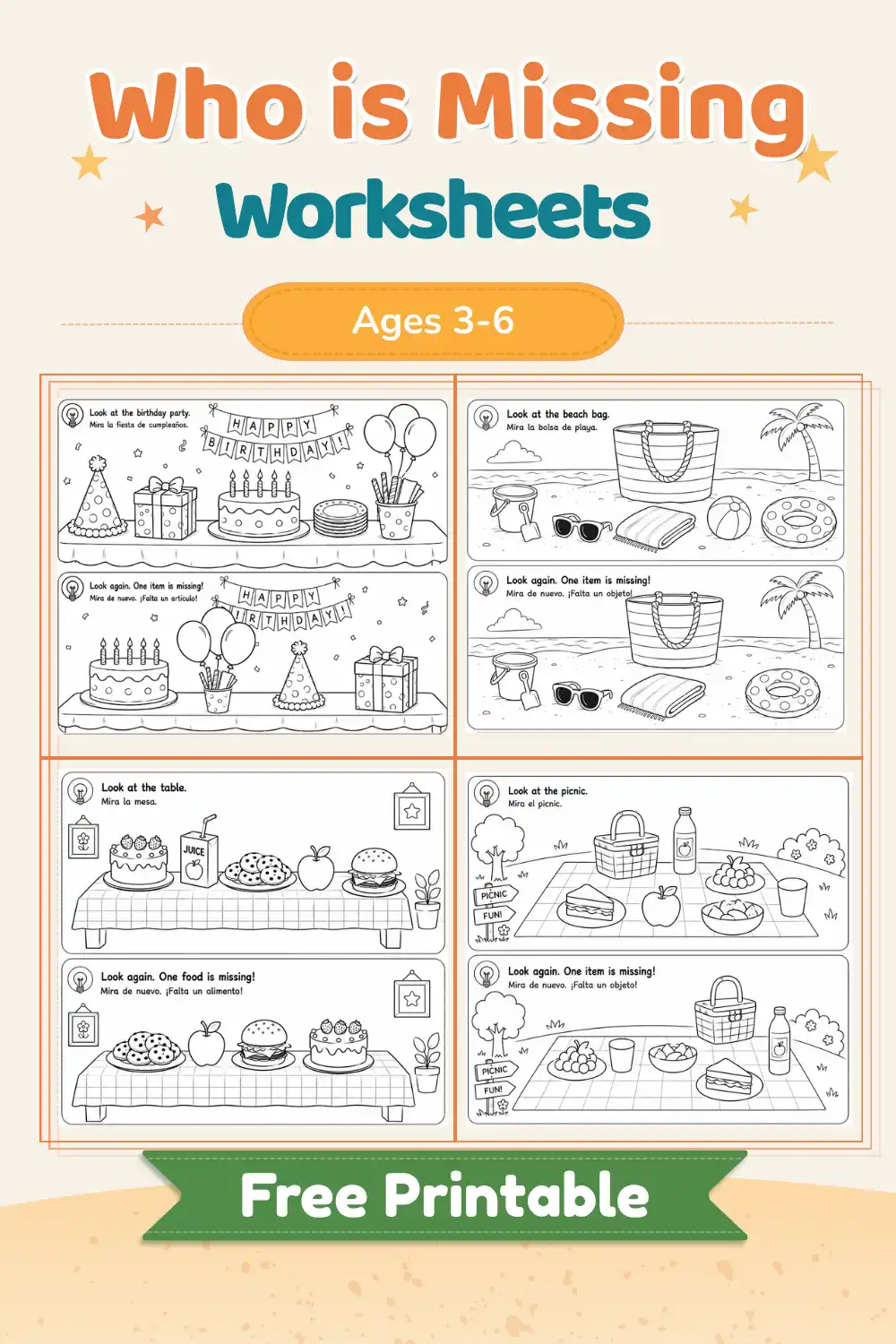
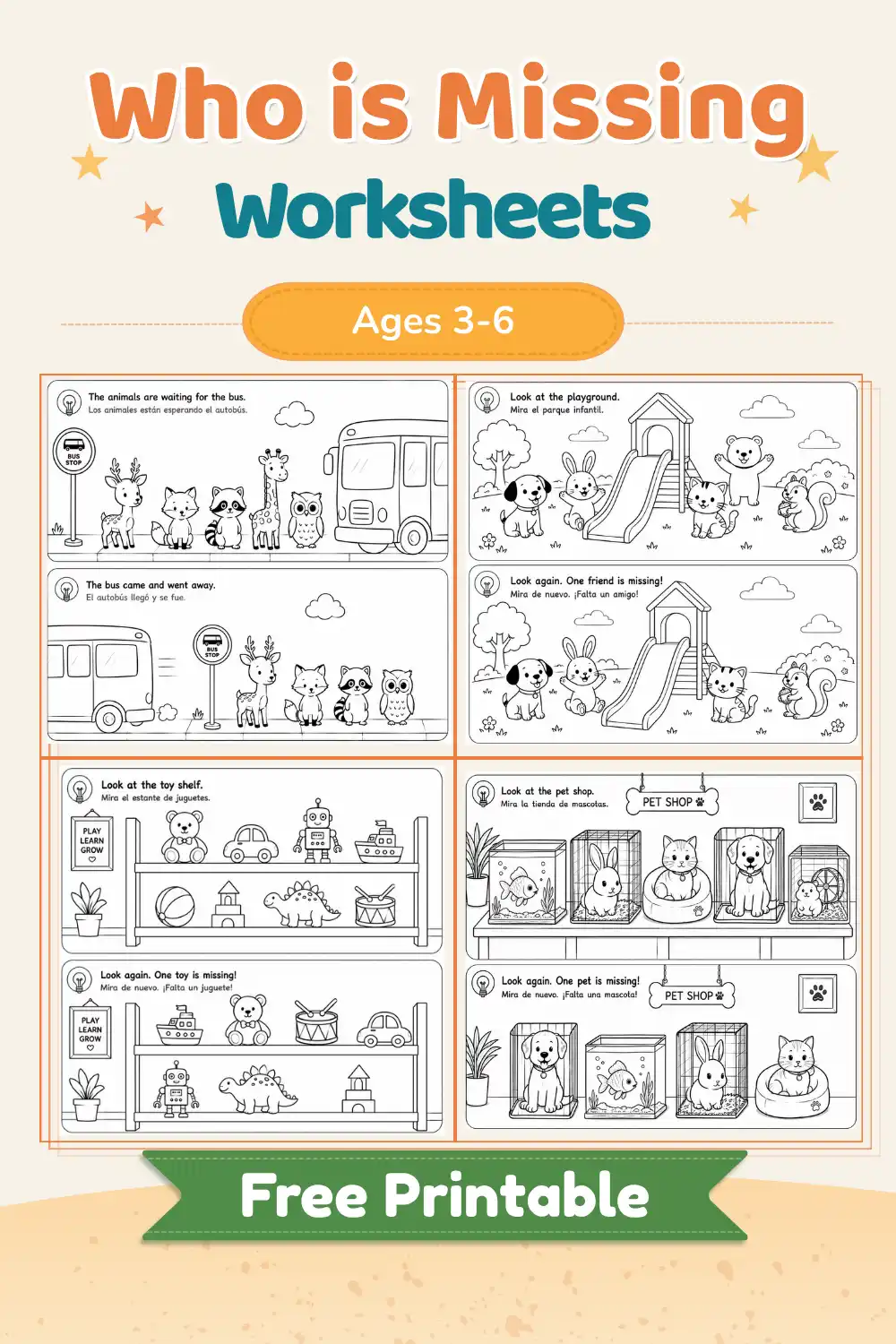
And then I found another series that took things one step further — two images side by side, and the child has to figure out what’s missing from the second one. It sounds simple but she was completely locked in. That “wait, something’s different” moment is apparently very satisfying for a four-year-old.
👉 Observe Games — Who Is Missing? Free Printable Worksheets
What Actually Made the Difference
Here’s the thing I kept coming back to: she needed to feel like she was playing, not performing.
The I Spy sheets worked because they had a story attached. There was a mission. She was the explorer. Nobody was grading her. I wasn’t hovering with my “learning voice.” It was just a scene full of animals and a job to do.
Once I understood that, I started looking at everything differently. The activities that worked all had a few things in common: a clear goal that was hers (not mine), a visual that was interesting enough to spend time with, and some kind of satisfying ending — finishing a row, finding all the animals, solving the little mystery.
The ones that didn’t work were the ones that felt like school — fill in the blank, trace the letters, sit still and focus. Not because those are bad activities. Just because at four, she wasn’t ready to engage with something that felt evaluative.
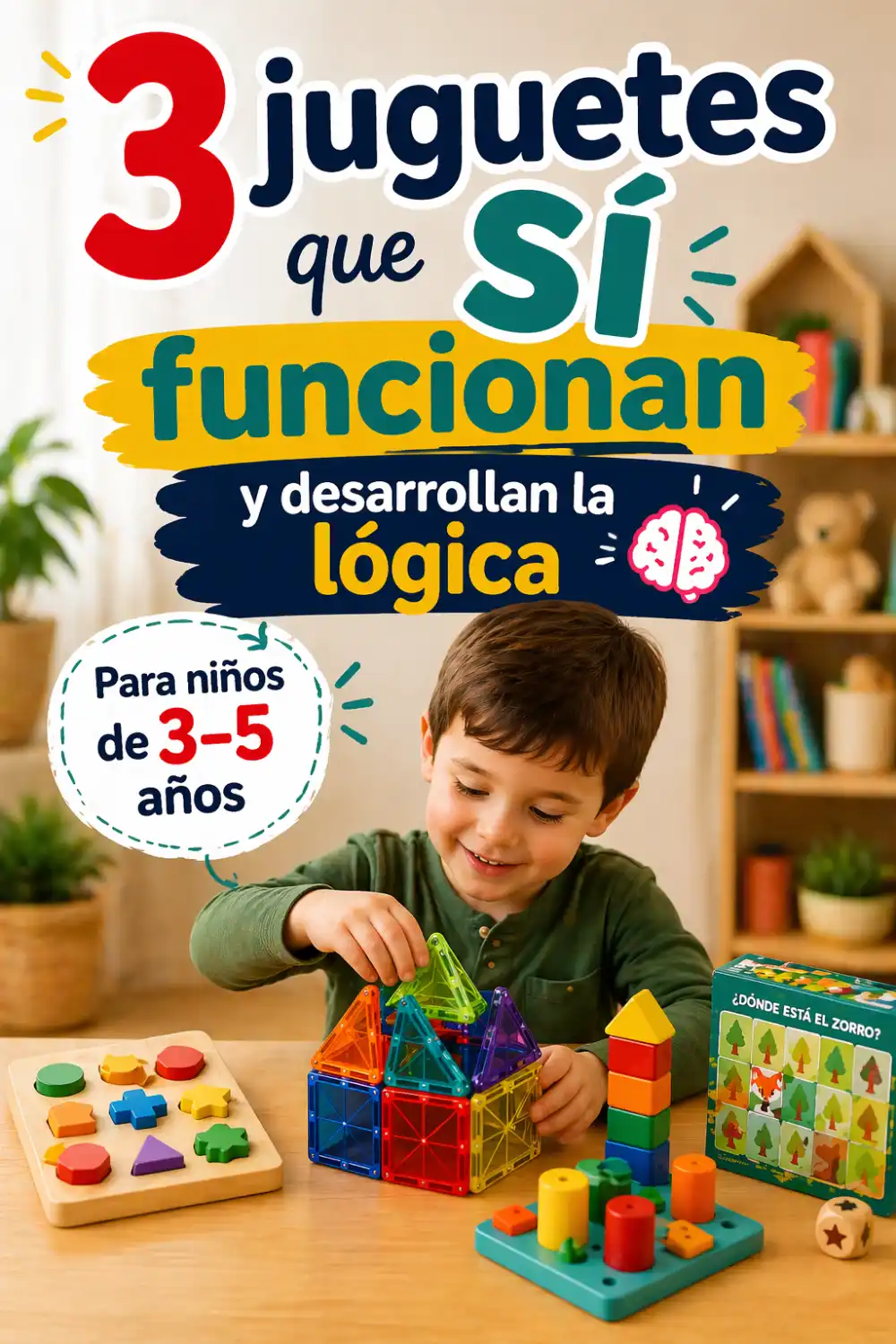
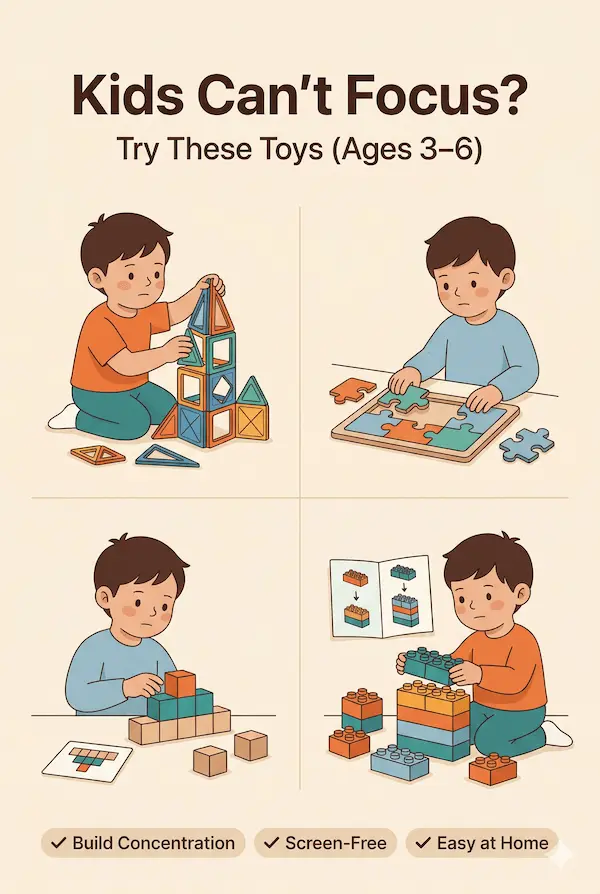
I also started introducing some hands-on logic toys alongside the printables. Wooden blocks and magnetic tiles became a thing — not structured “lesson” time, just available on the table. She’d build something, knock it down, try differently. I’d add a small challenge: “I wonder if you can make a bridge.” That was enough.
The printable activities became the quiet table version of the same thing: a small problem, a clear goal, a satisfying end.
👉 Best construction toys for kids that support creativity and spatial reasoning
A Regular Wednesday Morning
I want to give you a picture of what this actually looks like now, because I think the Pinterest version still messes with people’s heads.
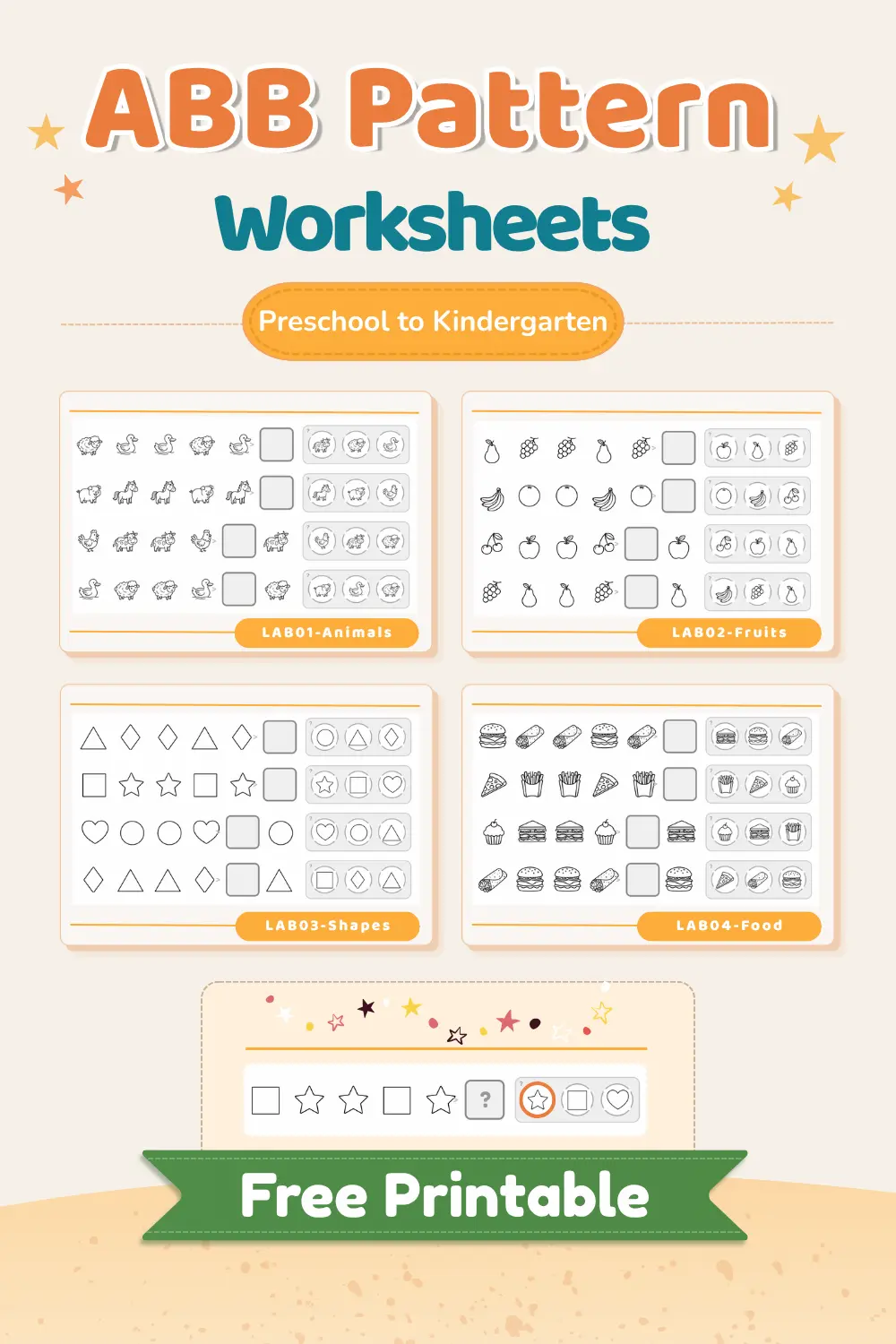
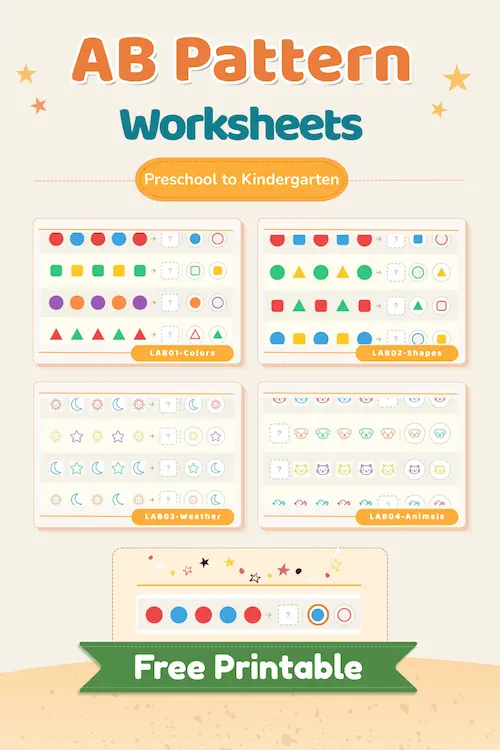
It’s a Wednesday. I have about 20 minutes before things need to get moving. I put a worksheet on the table — one of the pattern ones, because she’s been into those lately — and I make my coffee. I don’t announce it. I don’t say “okay, learning time.” I just put it there.
Half the time she comes over on her own, just because something is there and she’s curious. Half the time I say something like “I think that one might be hard, I’m not sure you can do it” — which, yes, is a mild reverse psychology move, but it works.
She sits down. She does a few rows. Sometimes she asks me what comes next and I ask her “what do you think?” and she figures it out. She finishes. She’s proud of herself.
That’s it. No drama, no negotiations, no floor flopping.
The whole shift wasn’t about finding the magic activity. It was about removing the “educational” wrapper and letting the thinking happen in a way that felt like her idea.
👉 If you want the pattern worksheets I’m talking about: Patterns Worksheets — Free Bilingual Printables
It’s Not That They Hate Learning
I really want to say this clearly, because I spent too long in the spiral of “what is wrong with my kid.”
Nothing was wrong with her. She was four. Her brain was busy. She didn’t want to perform for me. She wanted to explore, figure things out, feel capable — and the way I was presenting things was getting in the way of all of that.
The resistance wasn’t about the content. It was about the framing.
Once I stopped trying to do “learning activities” and started just making interesting things available and keeping my expectations loose, something shifted. She started picking up the worksheets herself. She started asking to do the logic games. She started saying “I want to do the hard one” — which, honestly, I was not expecting at four years old.
If your kid currently hates anything that looks educational, I’d gently suggest: it might not be that they don’t want to learn. It might just be that they don’t want to learn the way you’re presenting it. Try something with a clear mission, a visual they find genuinely interesting, and zero performance pressure.
And then go make your coffee. Sometimes that’s the most important part.
LogicToy Lab | Bilingual early thinking activities for Spanish-speaking families in the United States. Free resources for children ages 3 to 6. No sign-up required.