
Let me just say upfront: I don’t have a Montessori shelf. I don’t use the correct terminology. I’ve never read any of the books. My living room does not look like a curated educational environment — it looks like a living room where a four-year-old lives, which means there are usually at least three things on the floor that shouldn’t be there.
So when I say these logic games “changed our evenings,” I want you to understand the bar I started from.
The bar was: surviving from 5pm to bedtime without anyone losing their mind. Including me.
What Evenings Actually Looked Like Before
My son is the kind of kid who has a lot of energy and approximately zero patience for anything he finds boring. Which, at four, was most things that weren’t screens.
Our evenings followed a very consistent pattern. He’d come home tired and wired at the same time — that specific post-daycare energy that’s somehow both exhausted and chaotic. He’d want the iPad immediately. I’d say not yet. He’d escalate. I’d get dinner started while he cycled through every toy in the living room for about ninety seconds each, found nothing satisfying, and came back to ask about the iPad again.
By the time dinner was ready I’d already had approximately six small confrontations about screen time and I was tired in that specific way where you’re tired before anything actually hard has even happened.
I wasn’t looking for a philosophy. I was looking for something — anything — that could give us both twenty minutes of peace.
How I Even Ended Up Trying This
A friend mentioned offhand that she’d gotten some “logic games” for her daughter and that her kid actually liked them. Not in a “she loves learning!” way. More in a “it bought me enough time to make dinner without being interrupted every four minutes” way.
That’s the kind of endorsement that gets me to try something.
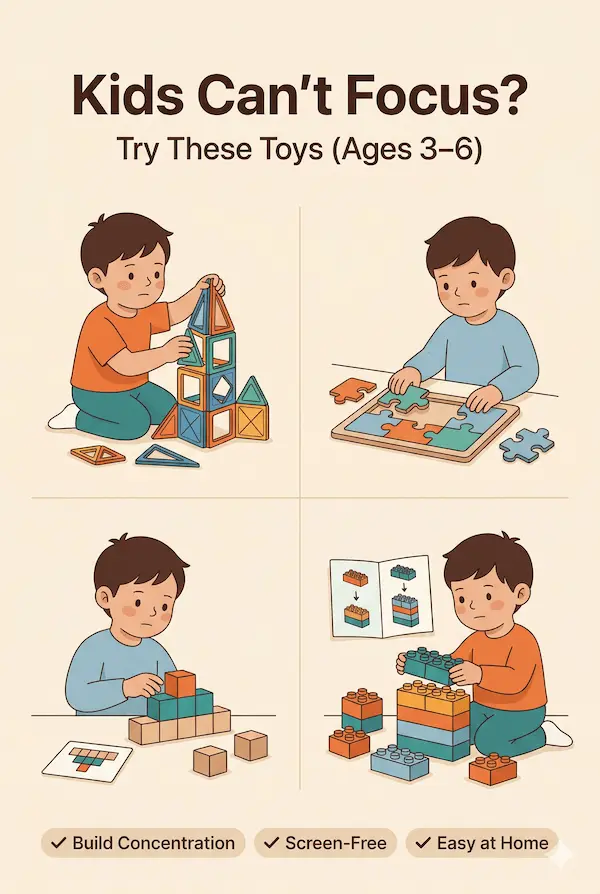
I didn’t overthink it. I got a few things: some pattern blocks, a simple wooden tangram puzzle, and a set of matching cards. I put them on the coffee table one afternoon before the iPad negotiations started and I just… didn’t mention them.
First day, he walked past them twice and asked for the tablet.
Second day, he picked up the tangram pieces, moved them around for two minutes, got frustrated that they weren’t doing what he wanted, and threw one across the room.
Third day, I genuinely thought: okay this was a bad idea.
The Night Something Actually Happened
It was a Thursday. I was making dinner — the kind where you actually have to pay attention, so I was less available than usual to mediate whatever was happening in the next room. He’d wandered over to the coffee table and started fiddling with the pattern blocks.
I didn’t go check on him because I was dealing with a pot that was about to boil over.
I noticed the quiet about eight minutes in. That particular kind of quiet that could mean anything. I leaned out from the kitchen and he was on the floor with all the pattern blocks arranged in front of him, completely absorbed in something. Not copying anything. Not following any instructions I’d given. Just… figuring something out.
He stayed there for almost twenty minutes.
I let the rice get a little overcooked because I didn’t want to break whatever was happening.
When he finally looked up, he showed me what he’d made — some kind of structure that he explained was a “spaceship fence,” which I think was genuinely a design decision — and he seemed genuinely pleased with himself in a way he never does after watching a show.
It wasn’t like a light switched on. I want to be honest about that. The next night he still wanted the iPad first thing. But something had shifted slightly. There was now one thing in the room that could pull him in on its own.
👉 Best construction toys for kids that support creativity and spatial reasoning

What We Actually Use (And What Sat Untouched)
The tangram puzzle cards were too hard at first and caused more meltdowns than focus. I put them away and brought them out again two months later — that timing thing turned out to matter a lot.
The matching cards were a hit almost immediately, which surprised me. Something about the “find the one that goes with this” format clicked for him in a way that open-ended activities don’t always. There’s a clear job. You do the job. You feel done. For a kid who gets frustrated by ambiguity, that structure helps.
The pattern blocks became the consistent thing. Not because I directed him toward them, but because he kept returning to them on his own. He started making the same shape multiple times, then varying it slightly — I watched him figure out, by himself, that two triangles make a square. Nobody told him. He just kept trying combinations until he saw it.
I don’t know how to explain why that moment felt significant, but it did.
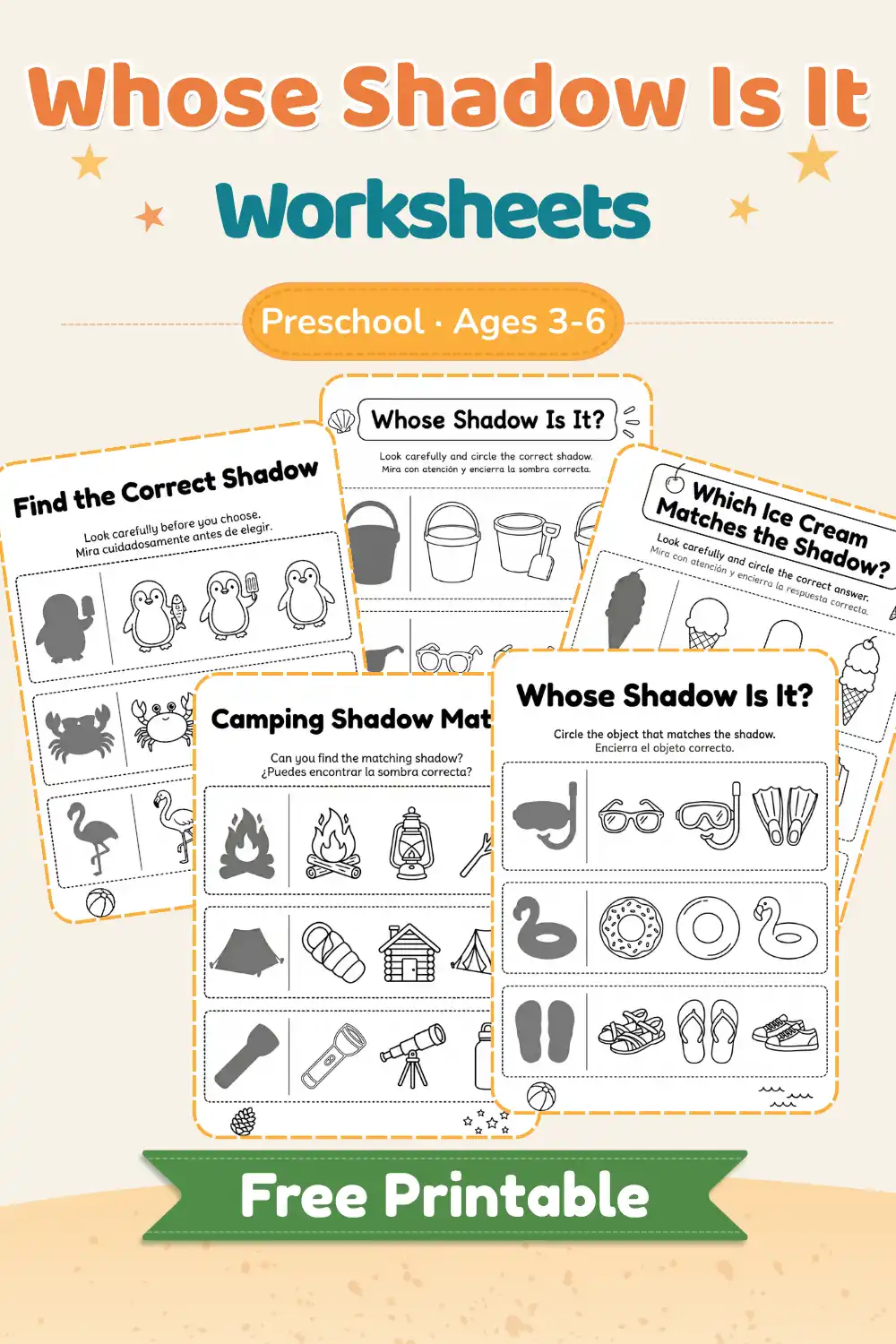
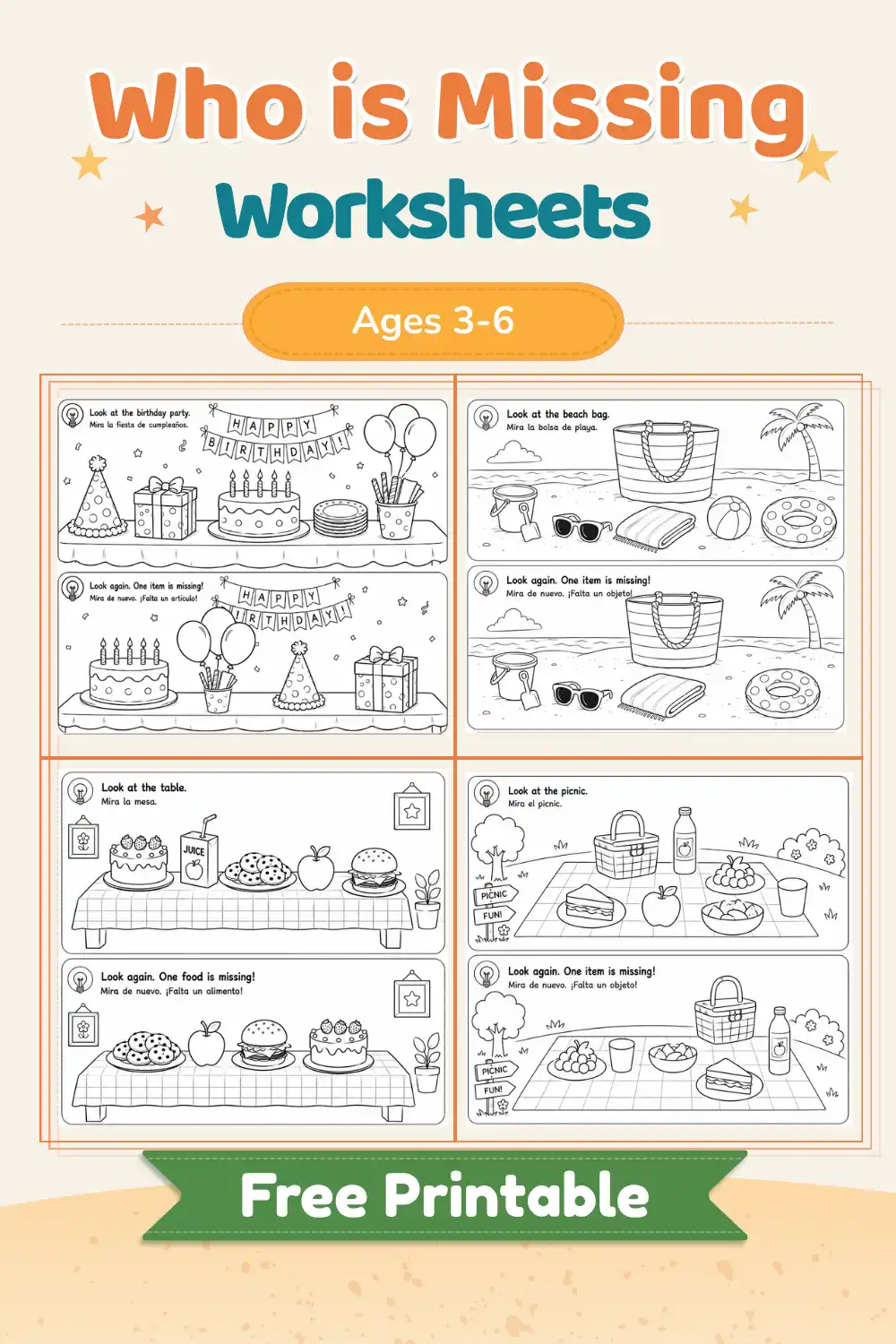
I also started using printable logic worksheets on quieter afternoons — the kind where he has to look at a scene and figure out what’s missing, or follow a set of visual clues to solve a small mystery. These worked well as the “table version” of the same kind of thinking, and they were easy to pull out without any setup. He’s much more willing to sit with a worksheet when it feels like a puzzle than when it feels like homework.
👉 Logic Detective Printables — free worksheets, no prep needed
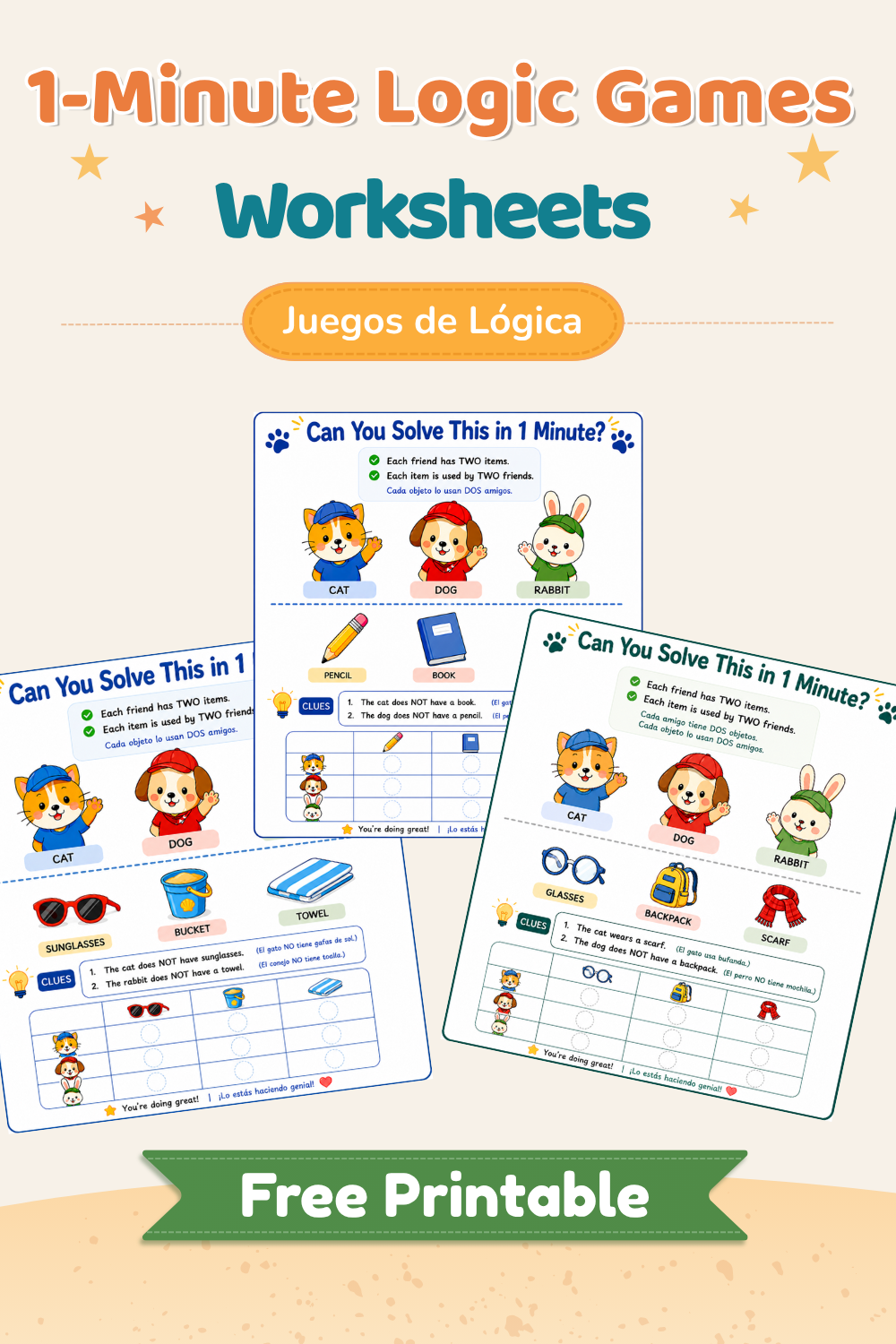
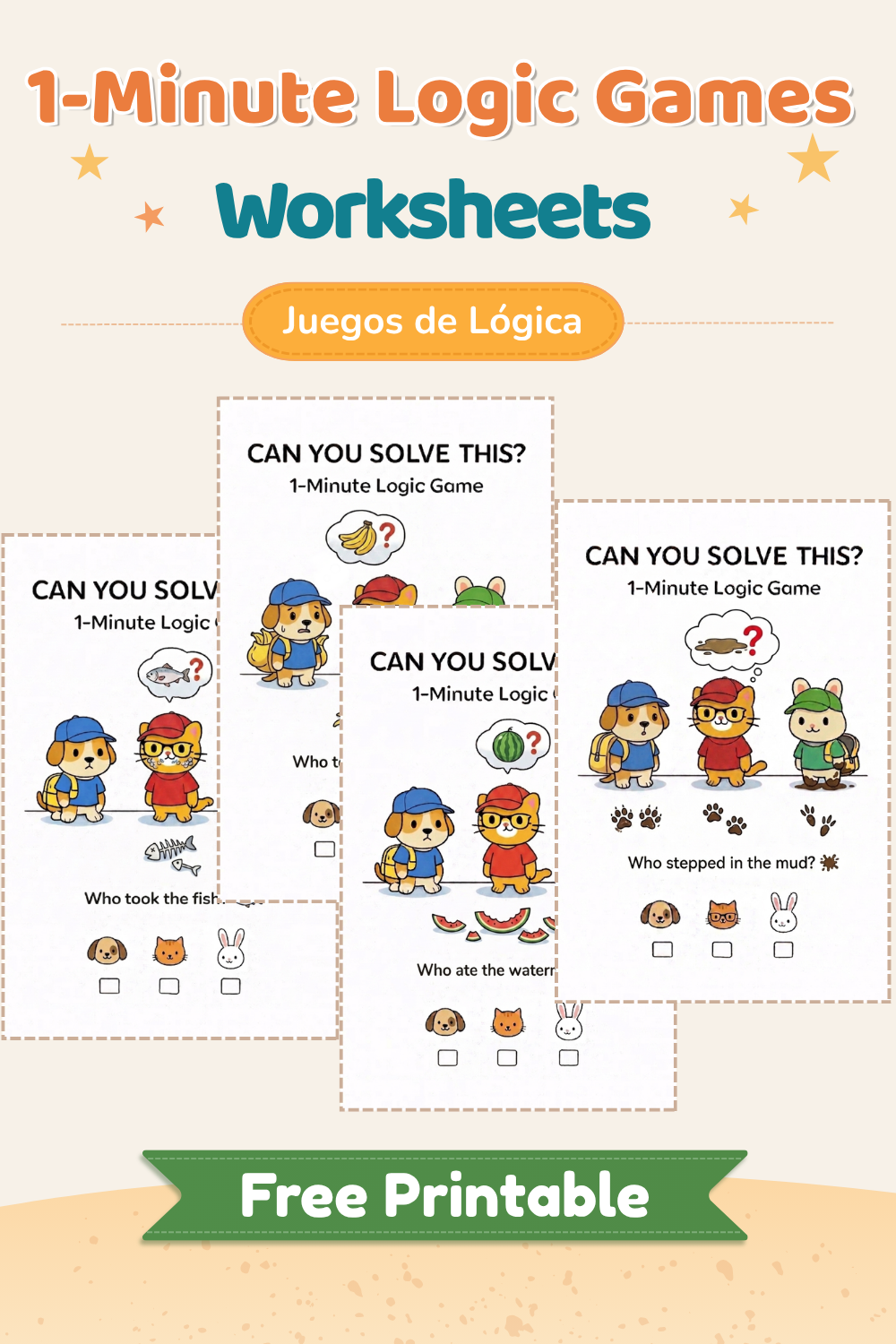
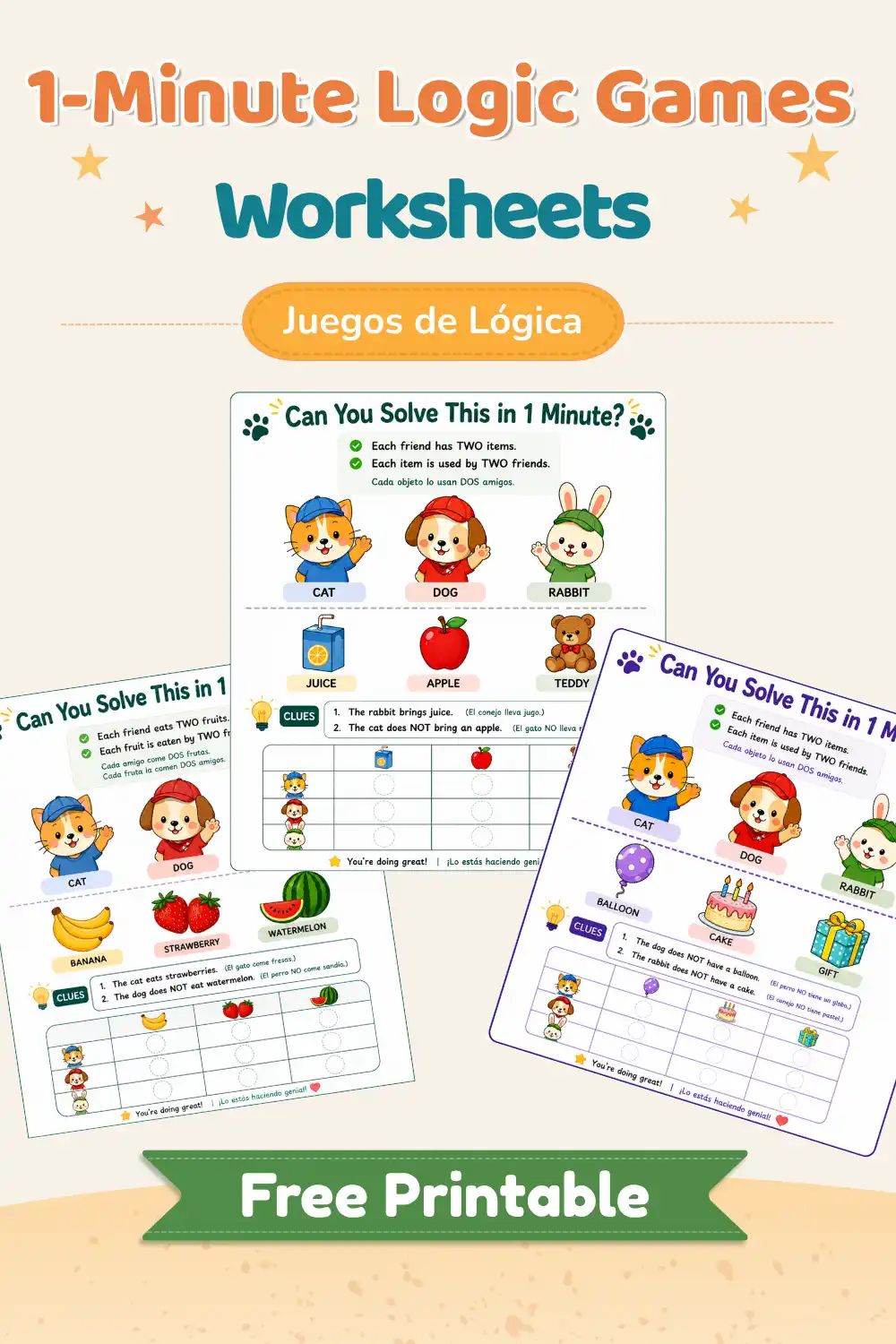
👉 Observe Games — Who Is Missing? Printable Worksheets

The Part That Surprised Me Most
Honestly? It wasn’t the focus thing, even though that improved. It was that he started troubleshooting differently.
Before, when something didn’t work — a toy that wasn’t cooperating, a puzzle piece that wasn’t fitting — his first move was to give up or get upset and call for me. After a few months of these games, his first move started being to try something different.
Small shift. Easy to miss. But once I noticed it I couldn’t un-notice it.
He also started narrating his thinking out loud. Sitting with the sorting game: “these go here because they’re the round ones… wait no, this one’s round too…” Working through it in real time. Talking to himself the way you do when you’re actually problem-solving and not just going through motions.
I didn’t teach him to do that. He just started doing it.
What Our Evenings Look Like Now
Not perfect. I want to be clear about that. He still wants the iPad. We still negotiate about screen time. I still have evenings where nothing works and everyone is difficult including me.
But there’s a different texture to it now. There’s usually a stretch somewhere in the evening — not always long, sometimes just ten or fifteen minutes — where he’s genuinely occupied with something that’s actually making him think. And during that stretch I can make dinner or just exist in the same room without being needed every four minutes.
That’s it. That’s the whole thing.
I didn’t become a Montessori household. I didn’t overhaul anything. I just put a few things out where he could reach them, stepped back, and waited to see what happened. Some of it worked, some of it didn’t, and over time the ratio shifted in a direction I didn’t expect.
If you’re a mom of a preschooler who hates worksheets, has no patience for anything that feels like school, and is slowly taking over the household iPad — I’m not going to promise you a transformation. But I will say: it might be worth putting some pattern blocks on the coffee table one afternoon and seeing what happens.
Worst case you have slightly more clutter on the floor.
Best case you get to let the rice get a little overcooked because you don’t want to break whatever is happening in the next room.
LogicToy Lab | Bilingual early thinking activities for Spanish-speaking families in the United States. Free resources for children ages 3 to 6. No sign-up required.