
I was at the park last week, standing near the swings, trying to get my three-year-old to stop eating sand for the fifth time. Another mom walked over, smiled at my kids, and then asked the question I’ve come to dread: “So, how do they get any social interaction?”
I felt my shoulders tighten. I’ve heard it so many times–from relatives, from strangers, from the checkout lady at Target. The assumption is always the same: homeschooled kids are lonely, awkward, or weird. They don’t know how to share. They don’t have friends. They’re being sheltered from the real world.
But that’s not what I see in my own living room, or at the co-op, or on the neighborhood walks where my kids stop to chat with the mail carrier. What I see is something quieter, and honestly, more beautiful than I expected.
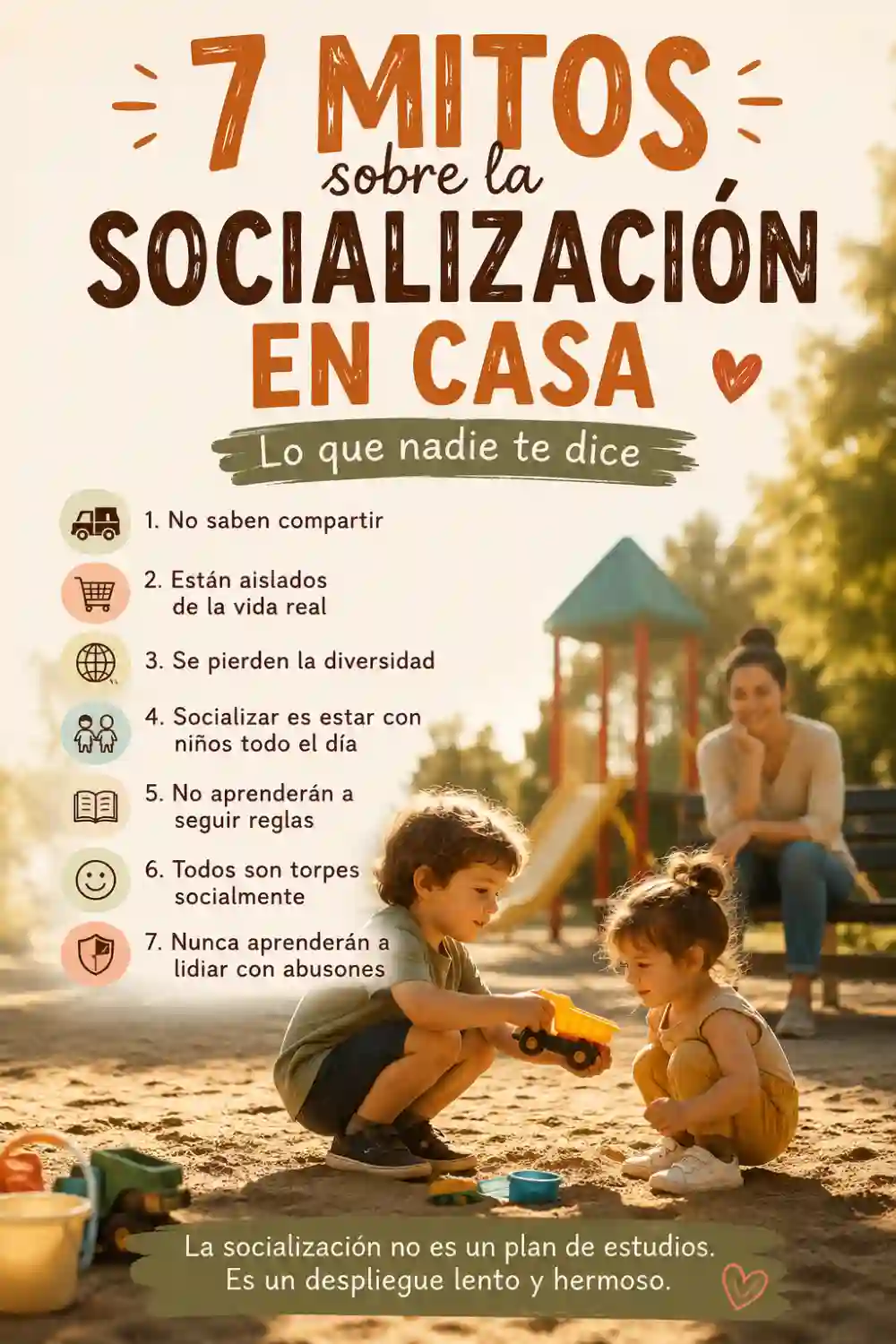
Myth #1: Homeschooled Kids Don’t Know How to Share
I used to worry about this too. My oldest, when he was four, would guard his favorite truck like it held the secrets of the universe. But I’ve started to notice something: he shares differently. Not because he’s forced to, but because he’s learned to wait until he’s ready. At the playground, he’ll watch another child play, then offer a toy without being asked. It’s slower. It’s more intentional. It’s not about the pressure of a classroom timer–it’s about genuine connection.
Some preschoolers don’t hate sharing. They hate being rushed.
Myth #2: They’re Isolated from Real Life
Real life isn’t a classroom of thirty same-aged kids. Real life is the grocery store, the post office, the neighbor who needs help carrying groceries. My kids see me negotiate with a cashier, apologize to a stranger, and ask for directions. They see conflict resolution up close, not scripted by a teacher. They learn social skills by living them, not by being told about them.
Myth #3: They Miss Out on Diversity
I used to believe this one. I worried my kids would only ever meet people who think like me. But the truth is, our homeschool group includes families from different religions, races, and political views. We have playdates with kids who speak Spanish at home, kids who use wheelchairs, kids who are being raised by grandparents. Diversity isn’t automatic in a school building either–it depends on the community you build.
Myth #4: Socialization Means Being Around Kids All Day
I used to think my kids needed constant peer interaction to be normal. But when I watch my son play alone with his blocks, narrating a whole story to himself, I realize he’s practicing something important: how to be comfortable in his own skin. Some of the most socially skilled adults I know are people who can enjoy solitude. Socialization isn’t just about quantity. It’s about quality–and sometimes that means one good friend instead of twenty acquaintances.
Myth #5: They Won’t Learn to Follow Rules
This one makes me laugh now. My daughter, at five, knows exactly what the rules are at the library: whisper, walk, don’t touch the computers without asking. She learned them not from a poster on the wall, but from watching me interact with the librarian. She follows them because she understands the why, not because she’s afraid of punishment.
What looked like defiance was sometimes just a need for context.
Myth #6: They’re All Socially Awkward
I’ll be honest: some days my kids are awkward. They forget to say hi. They stare at people. They answer questions with one word and then run away. But so do plenty of school kids. Awkwardness isn’t a homeschool trait–it’s a human trait. And honestly, I’d rather my kids be awkward but kind than polished but dismissive.
Myth #7: They’ll Never Learn to Handle Bullies
This one used to keep me up at night. How will they learn to stand up for themselves if they’re not in a classroom full of kids who might be mean? But then I realized: my kids deal with difficult people all the time. The grumpy neighbor. The cousin who teases too hard. The kid at the park who won’t share the slide. They’re learning to navigate conflict in real time, with me nearby to guide them, not just to survive.
My child wasn’t refusing to stand up for herself. She was refusing to fight battles that didn’t matter to her.
So here’s what I want to say to that mom at the park, and to anyone else who wonders: my kids are learning to socialize in the same way anyone learns anything–by doing it, imperfectly, every day. Some days it’s a mess. Some days my toddler bites someone. Some days my preschooler hides behind my legs and won’t say a word. But other days, I watch them offer a snack to a crying child or invite a lonely kid to join their game. And those moments remind me that socialization isn’t a curriculum you check off. It’s a slow, beautiful unfolding.
We’re all just doing our best here. And honestly? The kids are okay.