
She looked me dead in the eye and said, “I wish you weren’t my mommy anymore.”
Then she walked away, little shoulders squared, and closed her bedroom door with a soft click. Not a slam. That would have been easier. That I could have matched with frustration. But the quiet click of a 6-year-old shutting me out? That broke something in me.
I stood in the hallway holding my two-week-old daughter, who was finally asleep. My older daughter–my first baby, my tiny sidekick–had just declared war. And I had no idea how to surrender.
This wasn’t the first time it happened. In the weeks since we brought the baby home, my once-sweet 6-year-old had turned into a tiny verbal tornado. She told me I was “the worst mom ever.” She told her dad she wished he’d go back to work. She told the baby, “Go back in Mommy’s tummy.”
And then she cried. And then I cried. And then we both sat on opposite ends of the couch, not touching, not speaking, just breathing the same sad air.
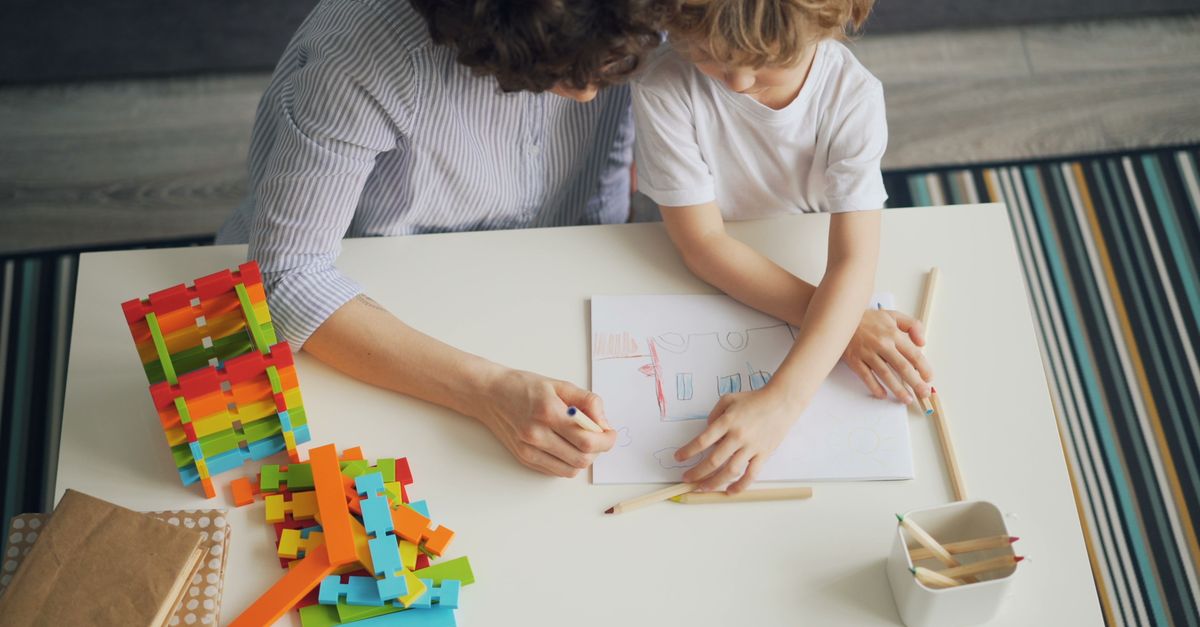
If you’re here because your 6-year-old is showing mean behavior after a new baby arrived, I see you. I know the guilt that sits in your chest like a stone. I know the way you replay every harsh word at 2 a.m. I know you’ve read all the articles about “special time” and “including the older sibling” and you’re doing all of it and still getting told you’re the worst.
So let’s sit in the mess for a minute before we try to clean it up.
The Moment I Realized I Was Missing Something
One afternoon, about three weeks in, my 6-year-old was playing with her dolls in the living room. I was nursing the baby on the couch, half-watching, half-drowning in mental lists of things I needed to do. She had her baby doll in a stroller and was pushing it around the coffee table, muttering to herself.
Then she stopped and looked at me. “This baby is bad,” she said, her voice flat. “She keeps crying and taking all the snacks. I don’t like her.”
I opened my mouth to give the standard script: “I know it’s hard, sweetie, but the baby needs me right now. You’re still so special.” But before I could say it, she picked up the doll and threw it across the room. It hit the wall with a soft thud and landed face-down on the rug.
Something in my chest cracked open. Not at her–for her.
In that moment, I saw what I’d been missing. Not the surface behavior. Not the mean words. I saw a little girl who had been knocked out of her orbit and was trying to claw her way back in. She wasn’t being mean to hurt me. She was being mean because she was hurting.
What the Mean Words Were Really Saying
I started paying closer attention. Not to correct her–but to translate her.
When she said “I hate the baby,” what I started hearing was: “I’m scared there’s not enough love left for me.”
When she said “You never play with me,” what I heard was: “I miss the version of us that existed before.”
When she said “I wish I was the baby,” what I heard was: “I want to be held like that. I want to be that important again.”
And when she said “I don’t want to be your daughter,” what I finally understood was: “I’m so scared of losing you that I’m pushing you away first.”
It wasn’t an excuse for the behavior. It was the key to understanding it.
Some 6-year-olds don’t mean to be cruel. They mean to be seen.
The Afternoon That Changed My Approach
I remember one specific afternoon when the baby was about a month old. My older daughter had been relatively calm all morning, and I let myself feel a flicker of hope. Then lunchtime came, and I made her a sandwich. Cut diagonally, no crust, exactly how she likes it.
She took one look at the plate and said, “I wanted it cut into squares. You NEVER listen.” She knocked the plate off the table. Sandwich landed face-down on the floor. She burst into tears.
I felt the familiar heat rise in my chest. The frustration. The exhaustion. The voice in my head that screamed, “I am trying SO HARD. Why are you making this harder?”
But instead of reacting, I got down on my knees next to her chair. I didn’t say anything about the sandwich. I didn’t mention the mess. I just sat next to her on the floor and said, “That felt really big, didn’t it?”
She looked at me, surprised. Then she crawled into my lap, all bony knees and sharp elbows, and sobbed into my shoulder. She cried for a long time. Not about the sandwich. About everything.
I held her and let the baby cry in her bouncer for a few minutes. The floor was dirty. The dishes were undone. The sandwich was ruined. And none of it mattered as much as that moment of her letting me back in.
What looked like defiance was really desperation dressed up in a 6-year-old’s limited vocabulary.
Why 6-Year-Olds Don’t Just “Get Over It”
Here’s the thing I kept forgetting: six is not a big kid. Six is still so small. Six is still learning how to name feelings, how to ask for help, how to regulate a nervous system that’s been completely upended.
A new baby doesn’t just add a family member. It rewrites the entire story of who your 6-year-old is in the world. They go from being the center of gravity to being a satellite orbiting a new sun. And they don’t have the language to say, “I’m experiencing an existential shift in my identity and I’m grieving the loss of my previous role.”
So instead, they say, “You’re mean.”
Instead, they slam doors. They refuse to eat. They say things that cut deep because they are, in their own way, trying to cut through the fog and remind you that they are still here.
Some 6-year-olds don’t hate the baby. They hate feeling invisible.
What Actually Helped (And What Didn’t)
I want to be honest with you. Some days, nothing worked. Some days I did all the right things and still got screamed at. Some days I lost my patience and yelled back. Some days I handed her an iPad and hid in the bathroom for ten minutes. I’m not proud of those days, but they happened.
But over time, a few things started to shift. Not because I found a magic trick–but because I stopped trying to fix her and started trying to understand her.
One thing that helped was naming the jealousy out loud. Instead of pretending it wasn’t there, I started saying things like, “It’s okay to be mad that the baby needs so much of me. I’d feel mad too.” It didn’t make the behavior disappear, but it made her stop hiding it. And when she stopped hiding it, we could actually talk.
Another thing that helped was letting her be mean on paper. I got a little notebook and told her she could write or draw anything she wanted about the baby–even the angry stuff. She drew a picture of the baby with a poopy diaper the size of a mountain. We laughed together. It was a start.
I also stopped trying to make up for lost time with big gestures. I stopped planning elaborate “special sibling activities” that left me more exhausted and her more disappointed. Instead, I started doing tiny, consistent things. Five minutes of uninterrupted eye contact before bed. Letting her pick the song we sang. Letting her complain about the baby without jumping in to defend her.
The Hardest Day
There was a day, around week seven, when I thought we were regressing. She had been doing better–fewer mean words, more moments of sweetness with the baby. Then one morning, she walked past the baby’s bouncer and whispered, “I wish she would disappear.”
I felt my stomach drop. All the progress, gone. All the work, wasted.
I sat down on the floor and started crying. Not the quiet, controlled tears I’d been holding back. The ugly, heaving kind. She stared at me for a second, then her face crumpled, and she cried too.
We sat there, both of us sobbing, the baby sleeping peacefully through it all. And then my 6-year-old crawled over, put her small hand on my arm, and said, “I’m sorry, Mommy. I didn’t mean it.”
Maybe she didn’t. Maybe she did and felt terrible about it. I don’t know. But what I do know is that in that moment, we weren’t enemies anymore. We were two people, both overwhelmed, both trying to find our footing in a family that had changed shape.
Some days, the best you can do is cry together and then start over.
What I Want You to Know
If your 6-year-old is being mean since the baby arrived, you are not a bad parent. Your child is not a bad kid. You are both navigating an earthquake, and sometimes the aftershocks look like cruelty when they’re really just fear.
Your 6-year-old’s mean behavior after a new baby is not a sign that you’ve failed. It’s a sign that they trust you enough to show you their ugliest feelings. It’s a sign that they know, somewhere deep down, that your love is big enough to hold their anger without breaking.
And maybe that’s the whole thing. Maybe the meanness is just a messy, painful proof of trust.
So tonight, when she tells you she hates you, take a breath. Don’t fix it. Don’t punish it. Just sit next to her and say, “I’m still here. I’m not going anywhere.”
Even if she doesn’t say it back, she’ll hear it. And that’s the part that sticks.
What Helped Us Instead
I stopped trying to talk her out of her feelings and started meeting her where she was. The shift didn’t come from a new parenting technique. It came from me finally believing that her mean words weren’t a rejection of me–they were a cry for connection. Once I stopped taking it personally, I could actually hear what she was saying underneath.
One simple thing that worked for us was giving her a small, predictable role in the baby’s routine. Not to keep her busy, but to remind her she mattered. It wasn’t about distraction. It was about belonging.