
My son was 4 and I was convinced something was off.
I’d show him a simple sequence — circle, square, circle — and he’d look at me completely blank. I’d hand him a 12-piece puzzle and he’d abandon it in frustration within two minutes. I’d ask him to sort his toys by type and somehow everything ended up more mixed up than when we started.
I kept asking myself: Am I explaining it wrong? Does he need something special? Am I overthinking this?
What I figured out after a lot of trial and error is that the problem wasn’t him. It was that not all toys actually help. Most keep kids busy — but very few make them think.
👉 [See the guide: Why Doesn’t My Child Understand Logic? A Step-by-Step Guide for Parents (Ages 3–5)]
Why Some Toys Help and Others Don’t
It has nothing to do with price. Or how flashy the toy looks.
The difference is whether the toy shows a child the result of what they did. If they stack blocks unevenly and the tower falls, they see it. If they put the wrong puzzle piece in the wrong spot, it won’t fit. That immediate feedback is what makes a child think — not the instructions we give them.
The toys that actually help are the ones that let kids try, get it wrong, and try again — without needing an adult to step in every time.
A toy that does everything on its own — with sounds, lights, and animations — doesn’t teach anything. It just entertains. And there’s a real difference between the two.
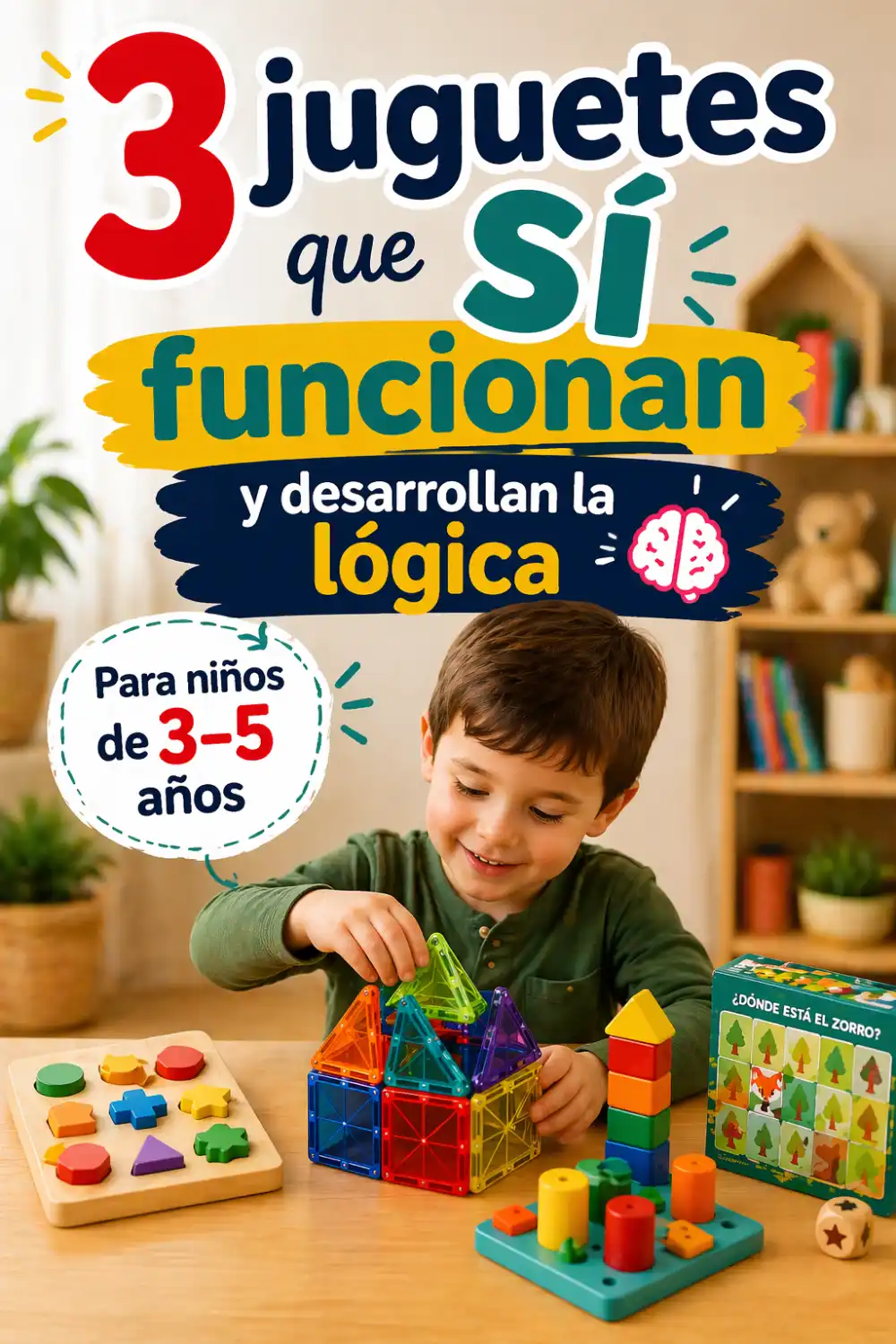
3 Types of Toys That Actually Help
1. Construction Toys (Blocks or Magnetic Tiles)
What they develop: The ability to visualize how things fit together in space. Understanding that if something isn’t balanced, it falls. Planning before acting.
Why they work: Because children can directly see the consequences of their own decisions. Stack too much on one side — it falls. Try a different approach — it holds. No one has to explain anything: the toy shows them.
Best for: Kids who get frustrated quickly with paper-based activities, or who learn better by moving things with their hands than by looking at images.
How to get the most out of them: Don’t give instructions upfront. Let your child explore freely for a few minutes first. Then introduce a small challenge: “Can you build a tower using only squares?” or “How do we keep it from falling?” One question like that is enough to activate thinking.
For children who already play with blocks and want something more visual, spatial thinking worksheets are a great complement. Your child practices on paper the same spatial reasoning they’re doing with their hands — where things go, what fits where.
-
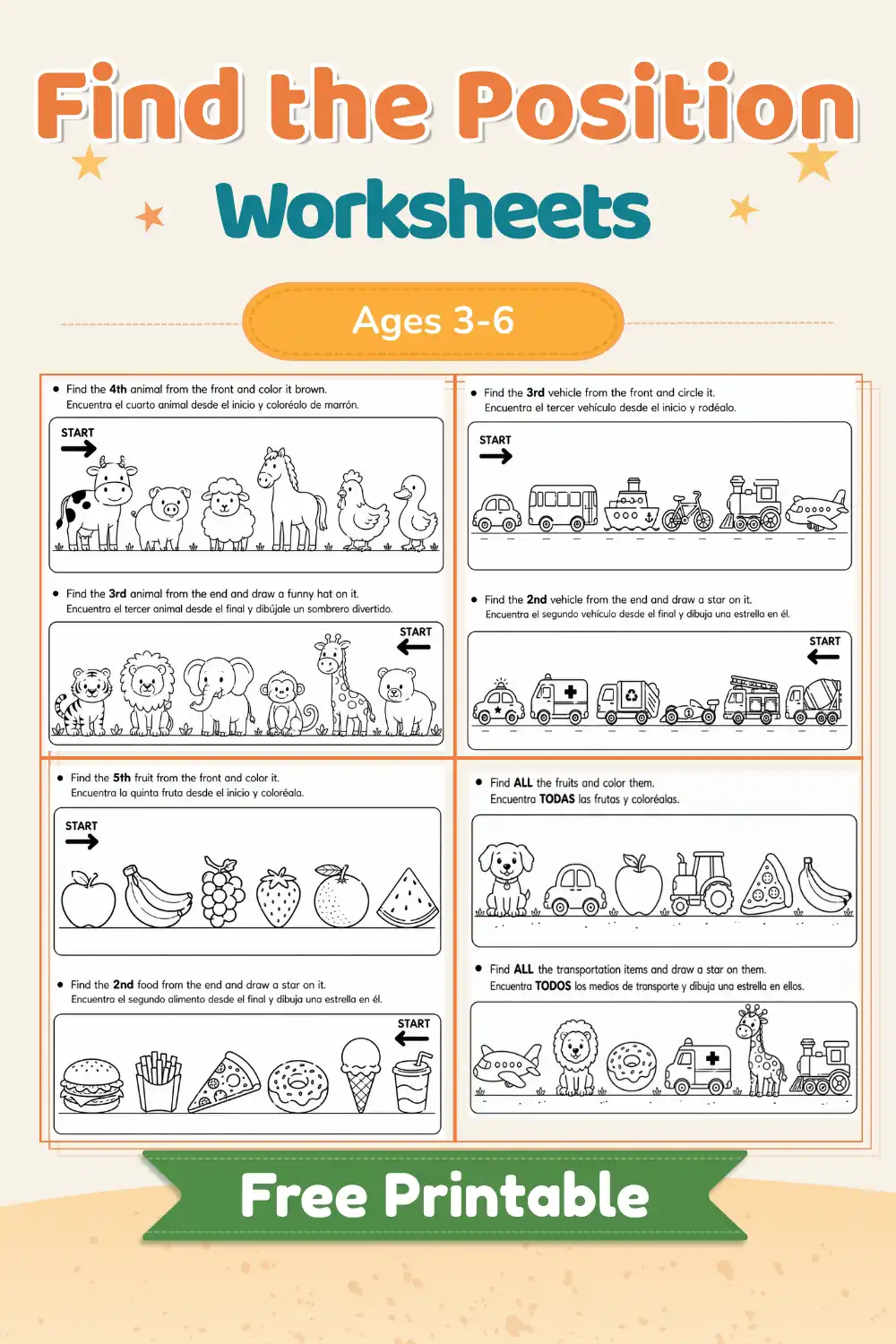
Find the Position Worksheets for Preschool (Ages 3–6) – Free Printable Spatial Reasoning Activities in English & Spanish
-
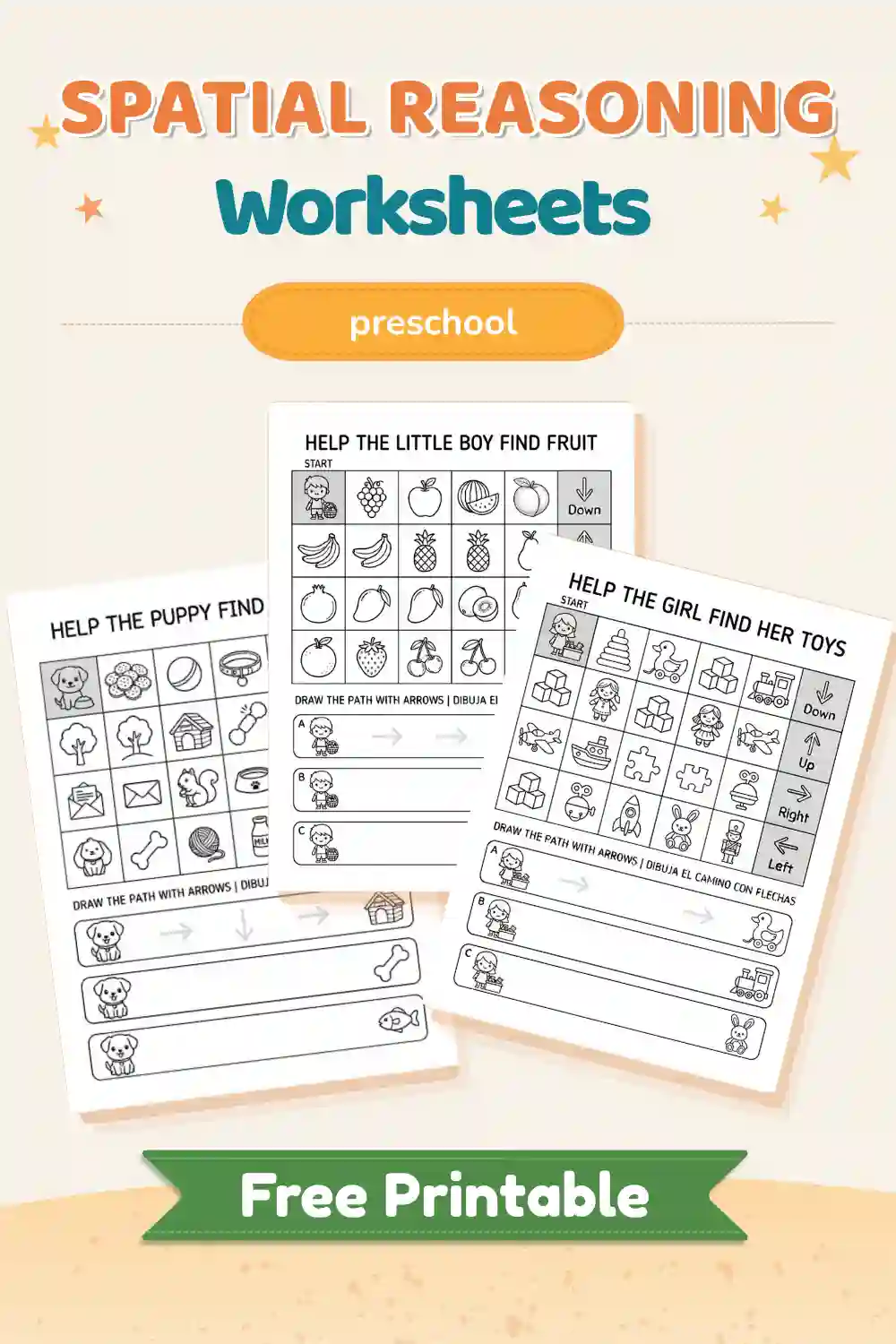
Draw the Path Worksheets for Kids – Spatial Reasoning Activities (Spanish & English Free Printable Ages 3–6)
-
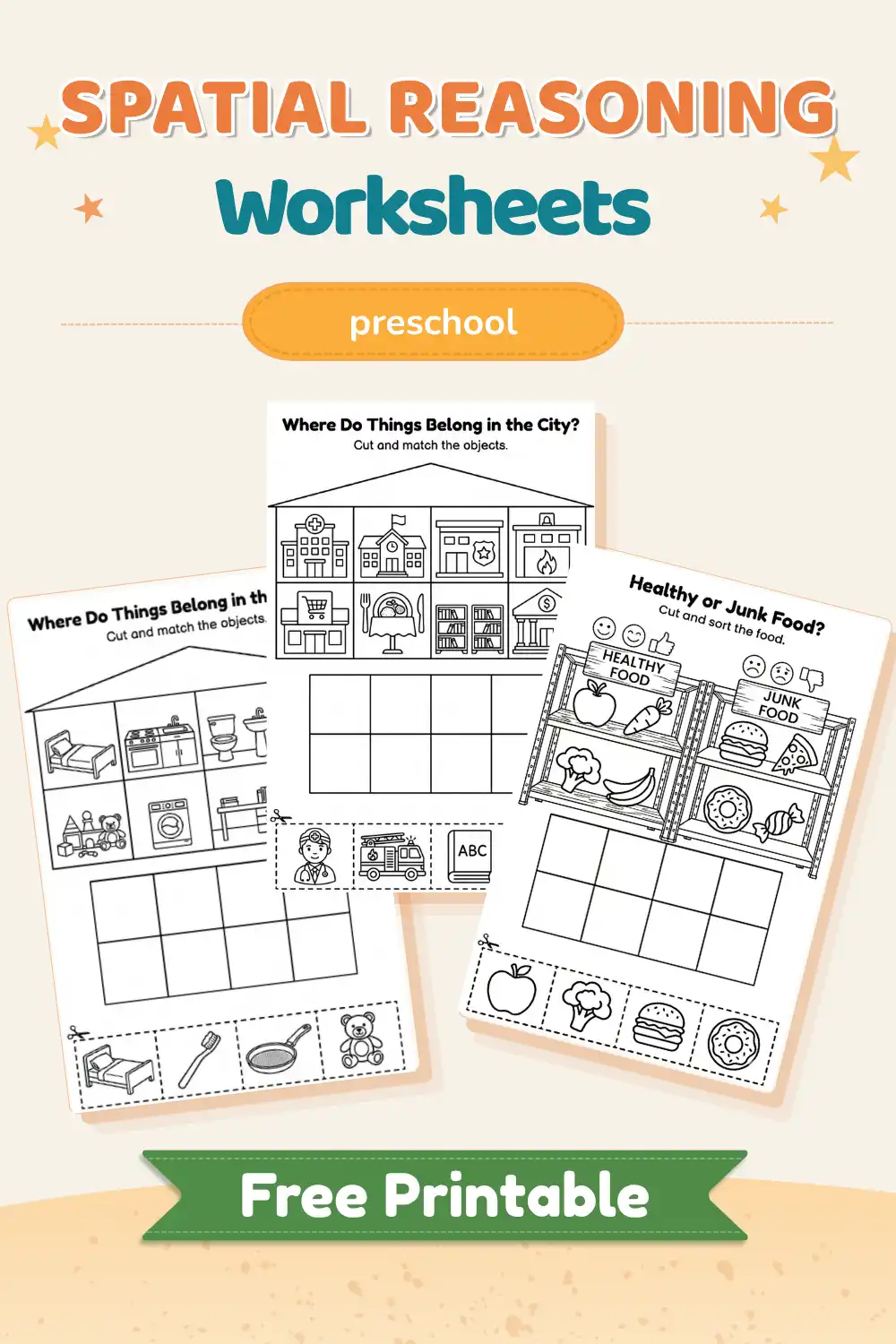
Where Do Things Belong? Spatial Reasoning Worksheets for Kids (Spanish & English, Free Printable PDF Ages 3–6)
2. Sorting and Matching Toys
What they develop: The ability to see groups. To understand that some things belong together and some don’t. To apply a rule — even a simple one — consistently.
Why they work: Sorting is one of the earliest forms of logic a child can practice. It doesn’t require reading or counting. It just requires observing and deciding. And when there’s a physical toy involved — pieces that literally do or don’t fit in the right spot — children get the answer immediately, without needing an adult to confirm it.
Best for: Kids who get overwhelmed when there are too many choices, or who mix everything together without noticing differences. Also works really well as a parallel activity for siblings of different ages.
How to get the most out of them: Start with only two categories. Animals vs. food. Red vs. blue. One rule at a time is enough at first. Once they’ve got it, you can add a second variable — for example, “now group them by color AND by shape.”
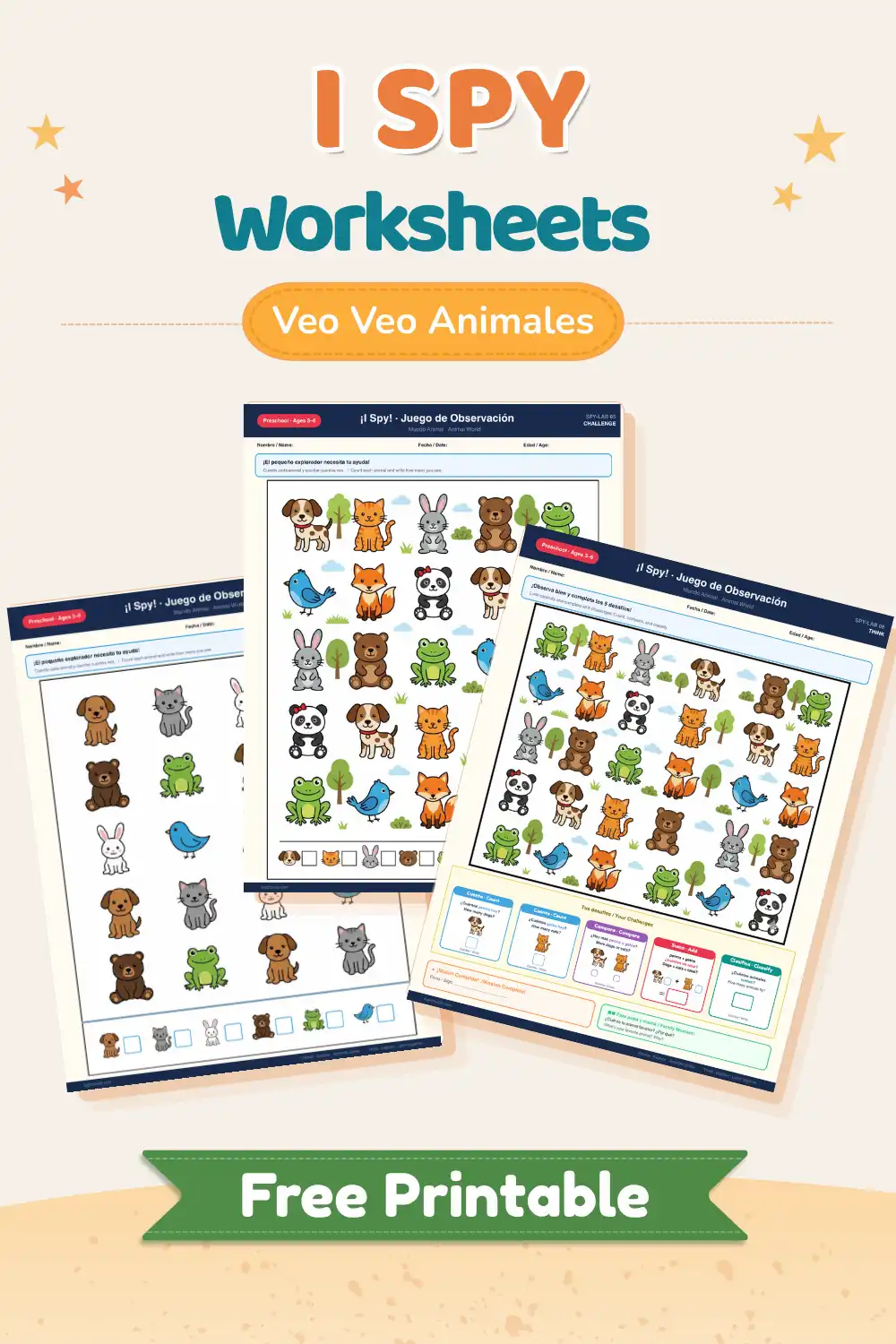
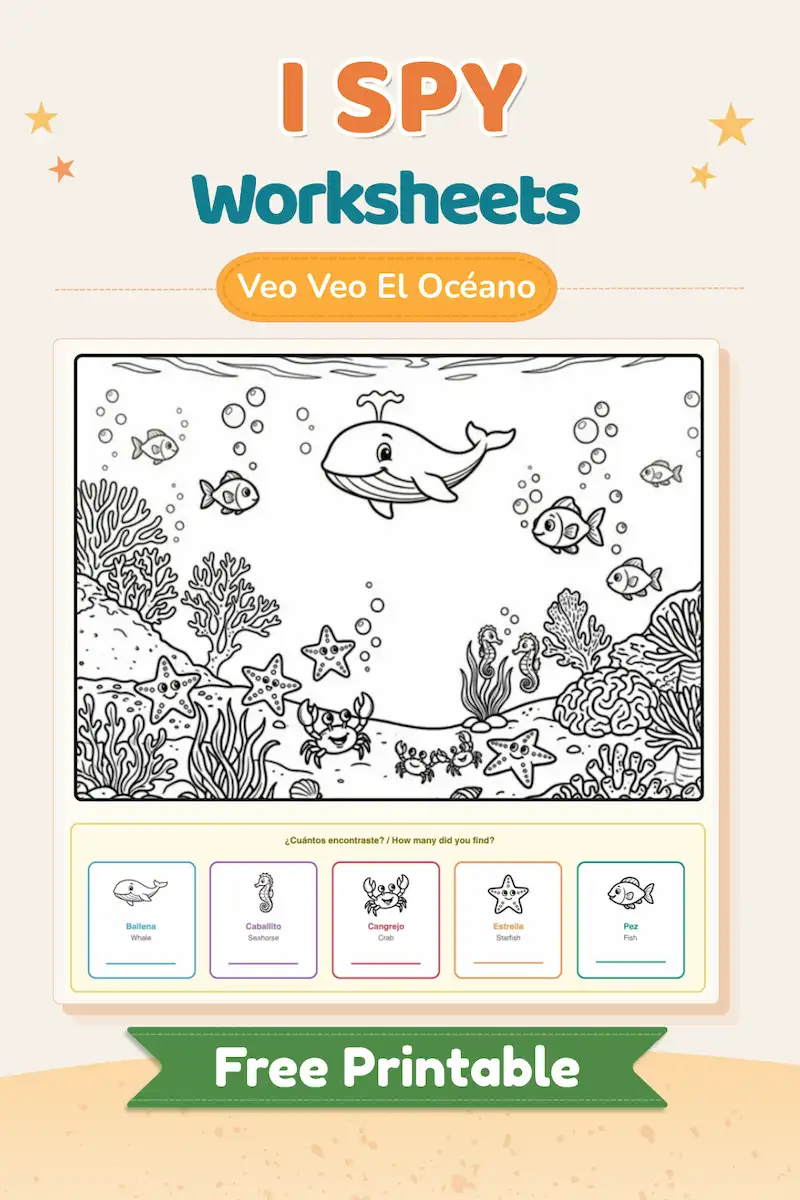
Sorting worksheets and matching activities are perfect for reinforcing this when you don’t have the physical toy handy.
3. Simple Logic Games (Detective / Reasoning Format)
What they develop: The ability to follow steps to reach an answer. To use what you already know to figure out something you can’t see directly. To think before acting.
Why they work: By ages 4 or 5, many children can hold two ideas in mind at the same time — but they need practice doing it on purpose. Simple logic games give them exactly that: a small problem, clear visual clues, and one correct answer they can find on their own.
The feeling of “I figured it out” is completely different from being told the answer. That small win is what builds the confidence to keep trying.
Best for: Kids who already sort well and understand basic patterns, but still freeze when they encounter something new. Also great for kids who get bored quickly — the mystery format holds attention much better than a traditional worksheet.
How to get the most out of them: Play along the first time. Don’t give away the answer — just ask questions: “What clues do you have? Who can you rule out?” After one or two rounds, they can do it independently.
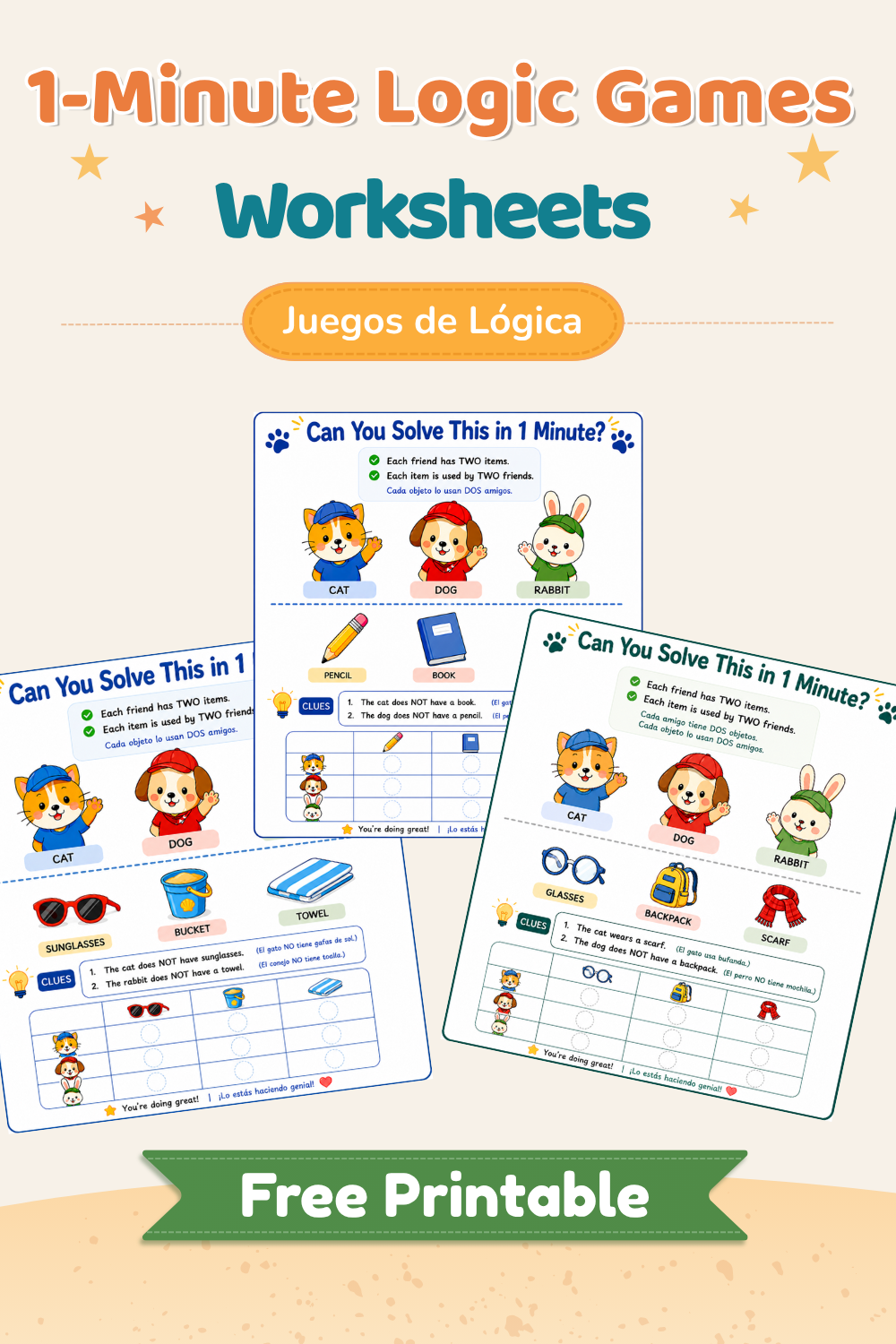
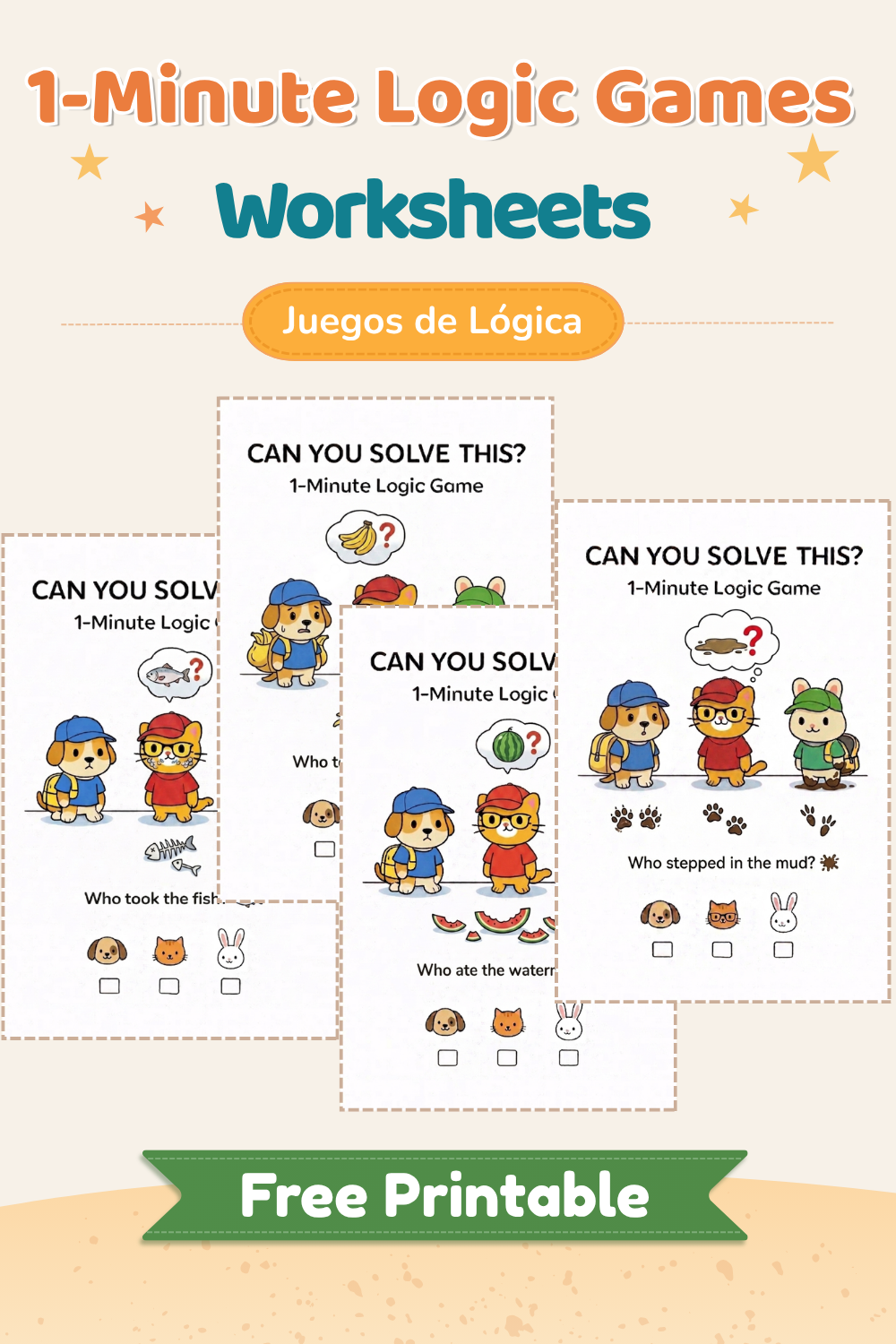
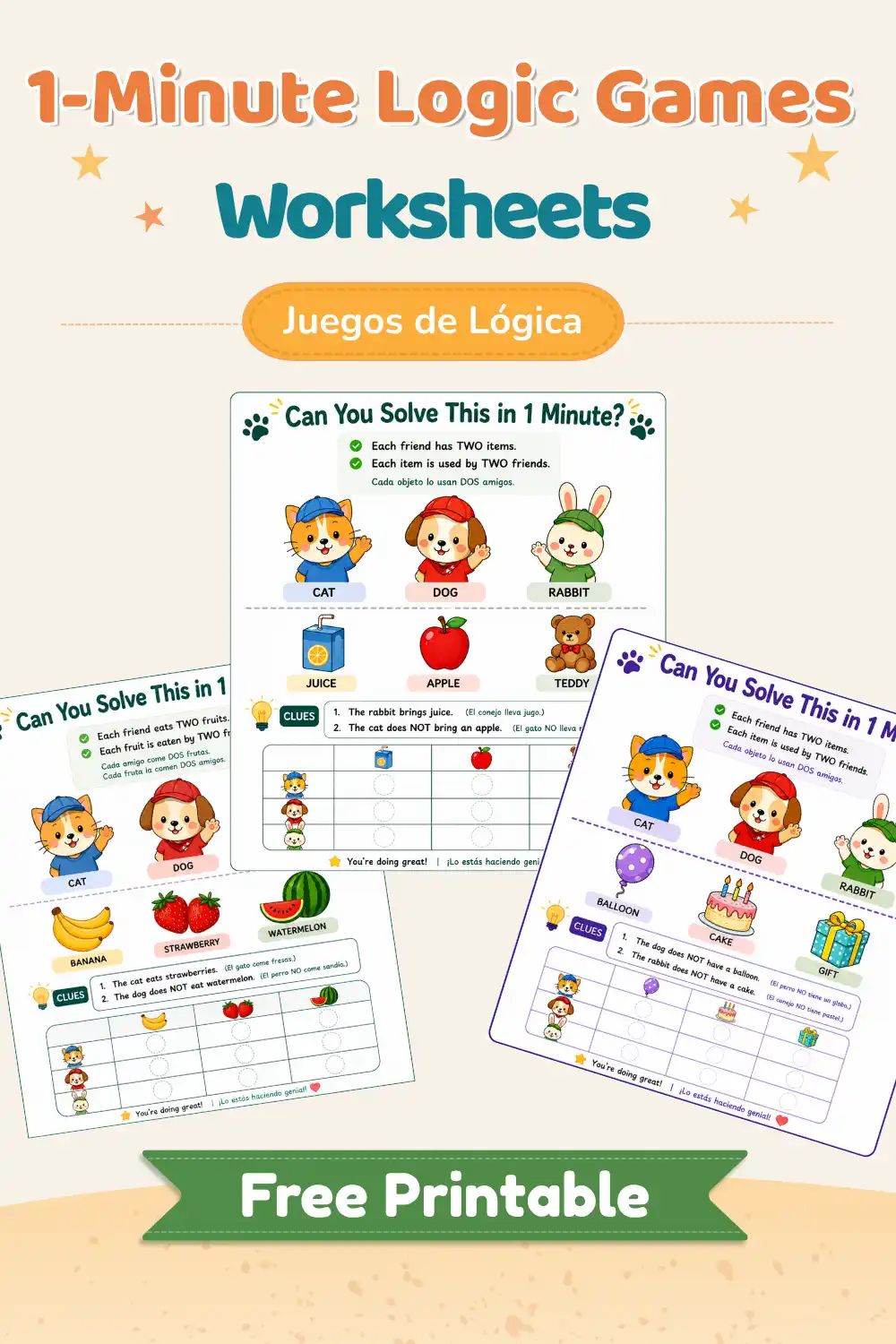
Printable logic game worksheets are a great way to practice this kind of reasoning without needing any toy at all.
👉 [See free logic detective games — Who Took It?]
How to Combine Toys and Activities (The Approach That Actually Works)
Toys alone aren’t enough. And activity worksheets alone can get boring fast.
What works best is alternating between the two.
One day you play with blocks — you build together, things fall, you try again. The next day you pull out a spatial thinking worksheet — your child practices on paper what they already processed with their hands. The learning consolidates in a way that neither one achieves on its own.
Same with sorting: start with the physical toy, then move to the matching worksheet. Or the other way around — sometimes the worksheet sparks curiosity and your child asks for the toy on their own.
You don’t need an elaborate plan. Just have both available and switch between them as it makes sense.
Common Toy-Buying Mistakes (That I Made Too)
Buying something too advanced. We think that if the toy is harder, the child will learn faster. In practice, a toy that’s too difficult just creates frustration — and the child stops wanting to engage with it. It’s always better to start one level below where you think they are.
Expecting results in two days. Logic isn’t learned in one session. Or ten. It builds through repeated exposure over weeks. If your child still “doesn’t get it” after a week, that’s not a signal to switch toys — it’s a signal to keep going.
Leaving them to play alone with no guidance. You don’t have to sit with them the whole time. But one well-placed question at the start — “what do you think will happen if you put that there?” — makes an enormous difference. It gets your child thinking before acting, instead of just reacting.
If You Want to Start Today
You don’t need to buy anything this week.
You can start with simple printable activities based on what you’re observing in your child, try them at home, and see how they respond. That will also tell you what kind of toy is actually worth looking for afterward.
Here’s where to start based on what you’re noticing:
👉 [AB and ABB Pattern Worksheets — for children who need to practice sequences]
👉 [I Spy Worksheets — for children who need practice grouping]
👉 [Logic Detective Games — for children ready to solve problems]
👉 [Spatial Thinking Worksheets — for children who get frustrated with building]
All free. All bilingual — Spanish and English on every sheet. All designed to do together, so it never feels like homework.
You don’t have to figure it all out at once.
One toy, one activity, a few minutes a day. That’s enough for something to start shifting.
LogicToy Lab | Bilingual early thinking activities for Spanish-speaking families in the United States. Recursos gratuitos para niños de 3 a 6 años · Free resources for children ages 3 to 6.