
You put a puzzle in front of them and they start jamming pieces in at random without looking at the picture. You show them a red–blue–red–blue pattern and they stare at you like you’re speaking a foreign language. You ask them to sort their toys by type and somehow everything ends up more mixed up than before.
And you’re left thinking: Why don’t they get it? Am I doing something wrong? Should I be worried?
The short answer is: no. What you’re seeing is completely normal at this age. And there’s a solution — one that’s much simpler than it might seem.
Is It Normal for a Child This Age Not to Understand Logic?
Yes. Completely normal.
Between ages 3 and 5, a child’s brain is still building the basic connections needed to understand how the world works. Logic doesn’t just appear one day — it develops gradually, through repeated exposure and hands-on activities.
Some children start recognizing patterns at 3. Others aren’t fully there until 5. Neither is wrong. The pace varies from child to child, and the difference almost never has anything to do with intelligence.
It’s not a lack of intelligence. It’s a lack of guided practice.
Logic isn’t taught through explanation. It’s learned through doing — through games, materials they can touch, and someone nearby asking the right questions.
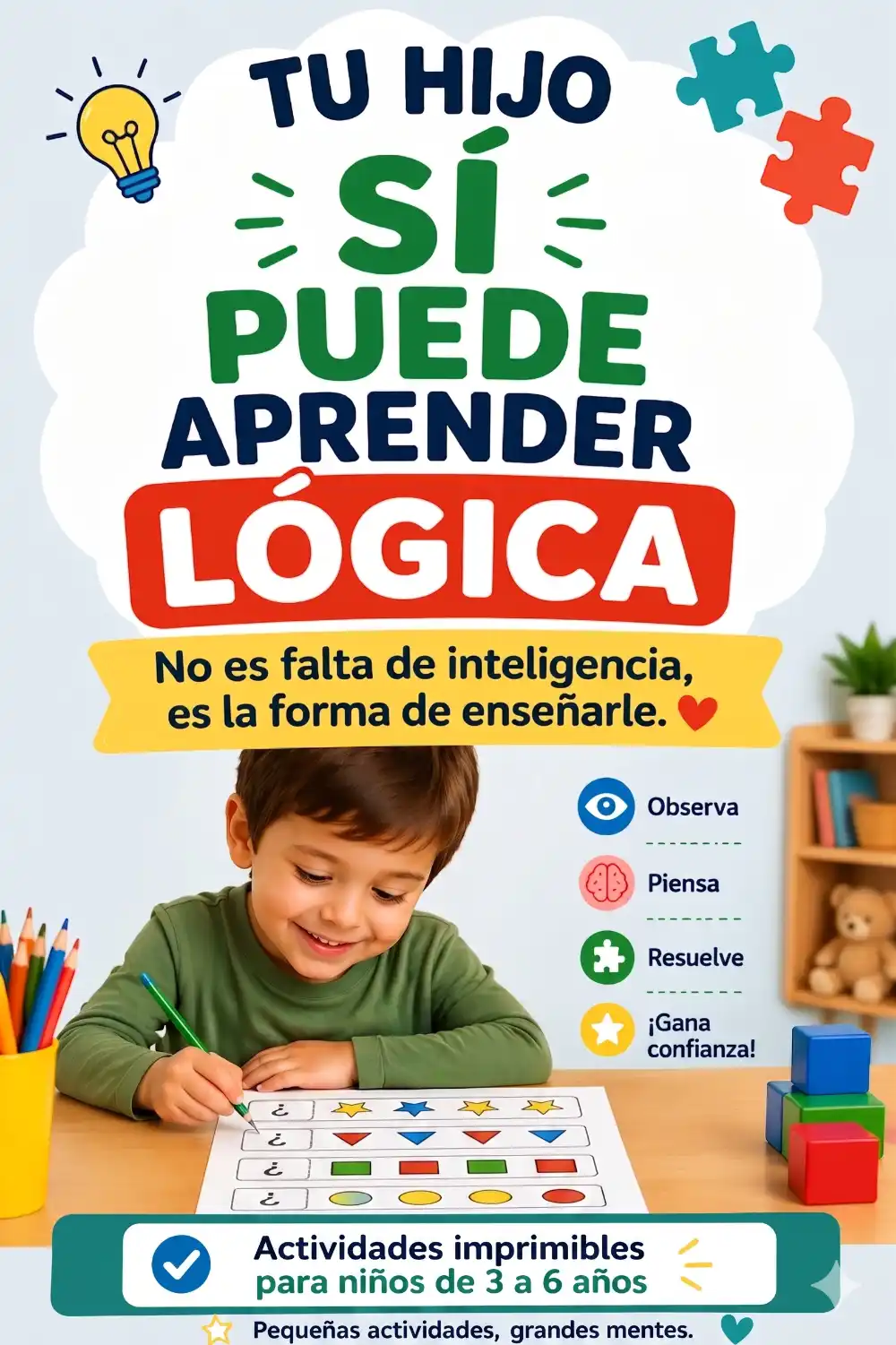
What “Logical Thinking” Actually Looks Like in Preschool
This isn’t about math problems or complex reasoning. At this age, logical thinking looks like this:
Following patterns. Red–blue–red–blue → what comes next? That’s logic.
Grouping things together. Animals go here. Food goes there. That’s logic too.
Understanding that one thing leads to another. If I stack blocks unevenly, they fall. That’s cause and effect — the foundation of all reasoning.
Solving small problems. The puzzle piece doesn’t fit? I turn it. I try another one. That’s logical thinking in action.
Your child is already doing versions of all of this every day. The work is helping them do it with more intention.
4 Signs Your Child Needs More Practice (Not More Explanation)
✔ Sign 1: They Don’t Understand Simple Patterns
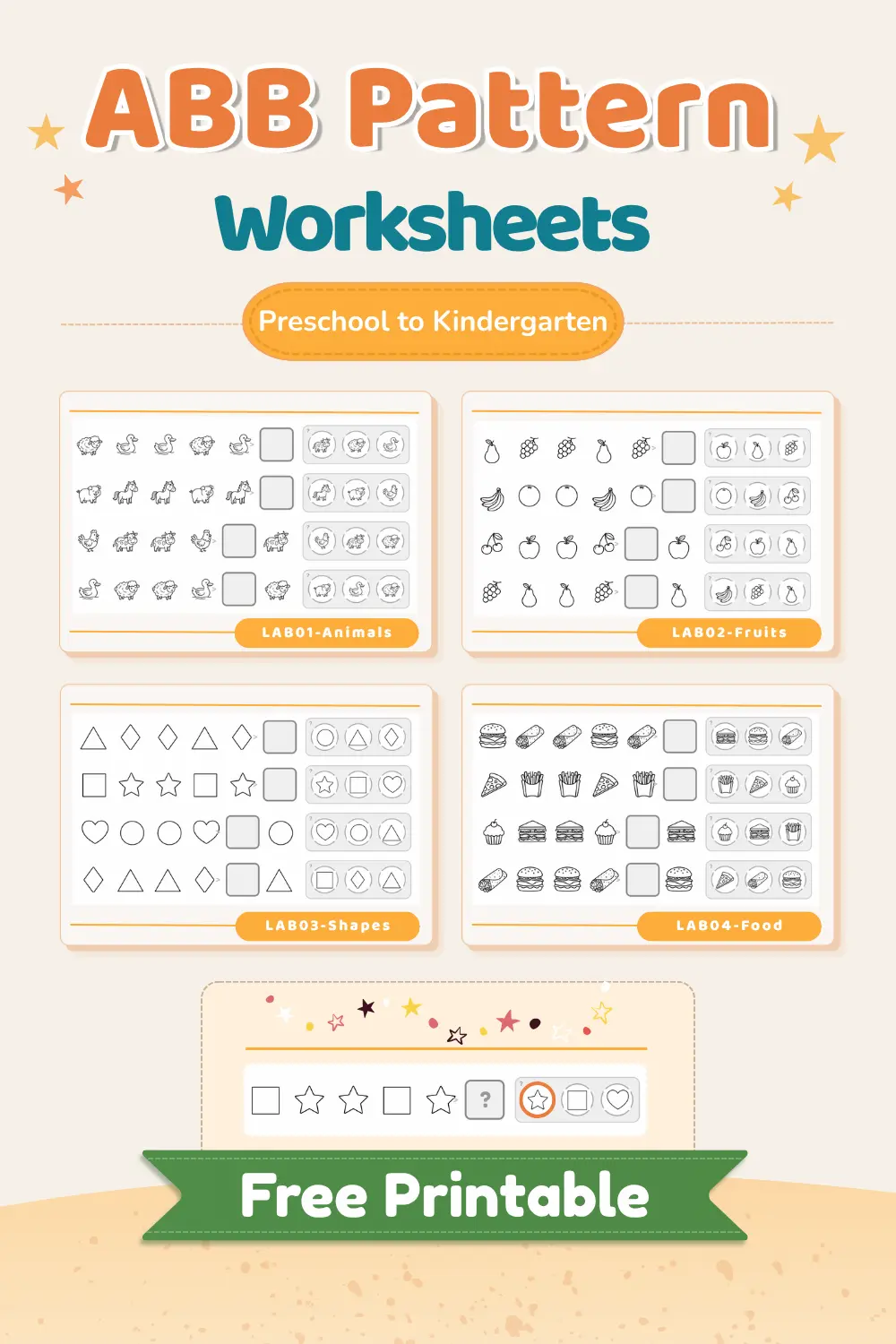
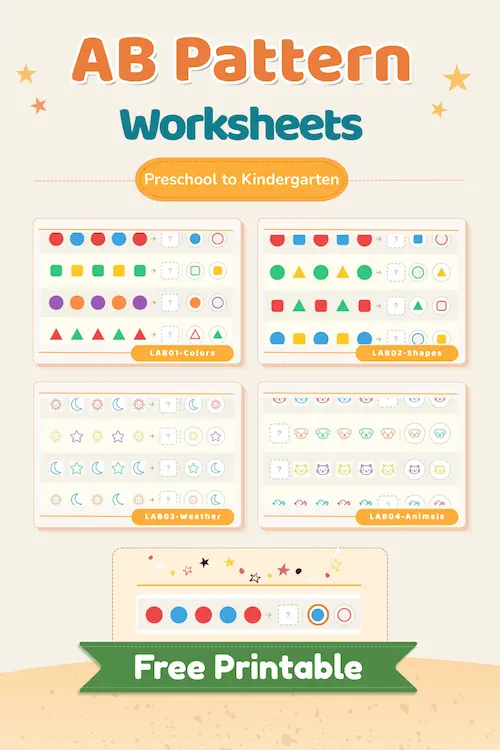
You show them red–blue–red and ask what comes next. They guess randomly, or they don’t know where to start.
This isn’t that they “can’t” — it’s that they haven’t practiced enough yet to see the rule. Patterns become obvious through repetition, not through explanation.
✔ Sign 2: They Struggle to Sort or Group Things
You ask them to separate toys from play food and everything ends up mixed together. Or they group by color when the task calls for grouping by type — and they genuinely don’t understand why that’s “wrong.”
At this age, sorting requires a child to hold a rule in mind while making decisions. It’s a skill that gets trained, not explained.
✔ Sign 3: They Don’t Know How to Approach Small Problems
Faced with something new — a game with rules, an activity with instructions — they freeze or give up quickly. It’s not that they don’t want to try. It’s that they don’t know how to start thinking through the problem.
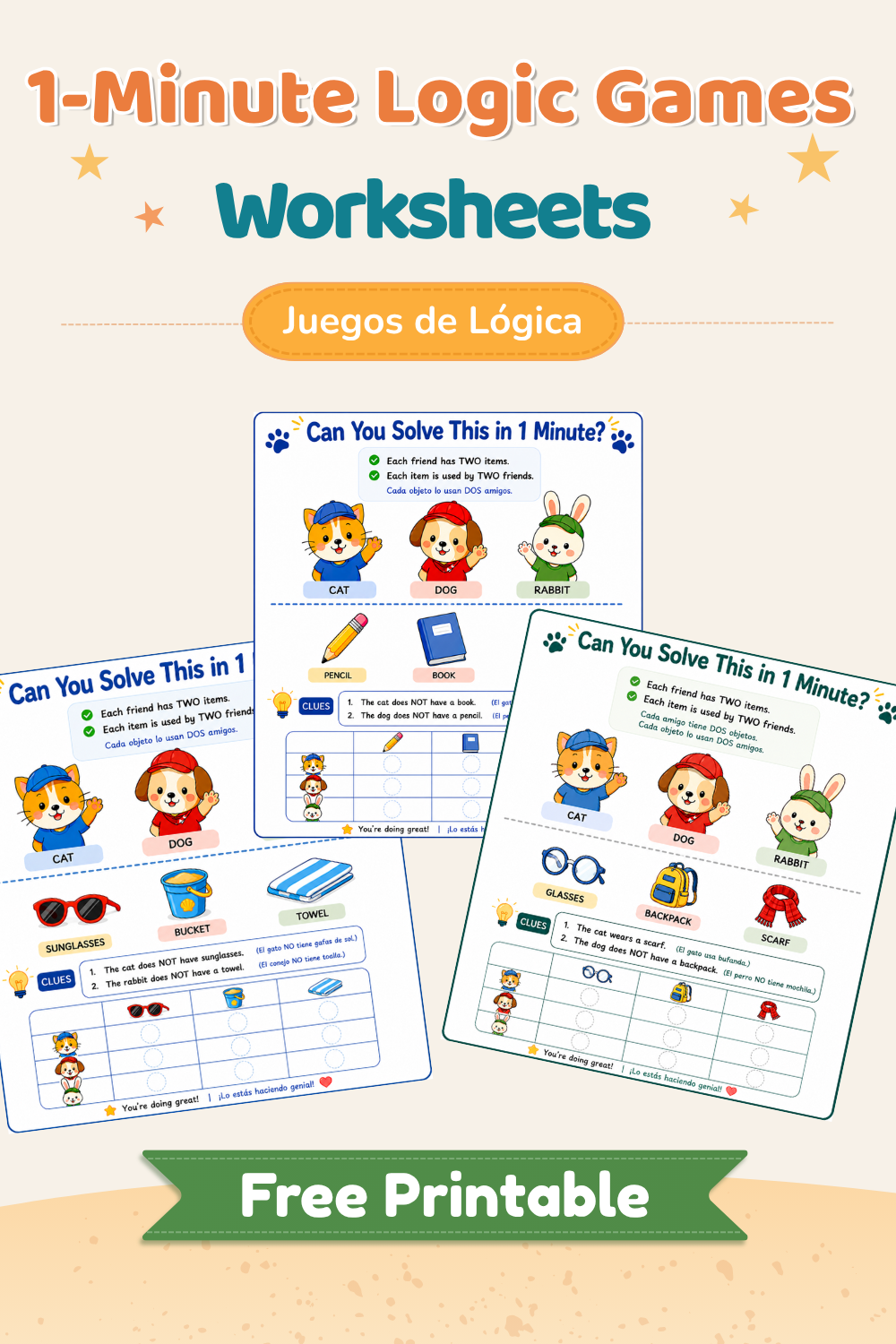
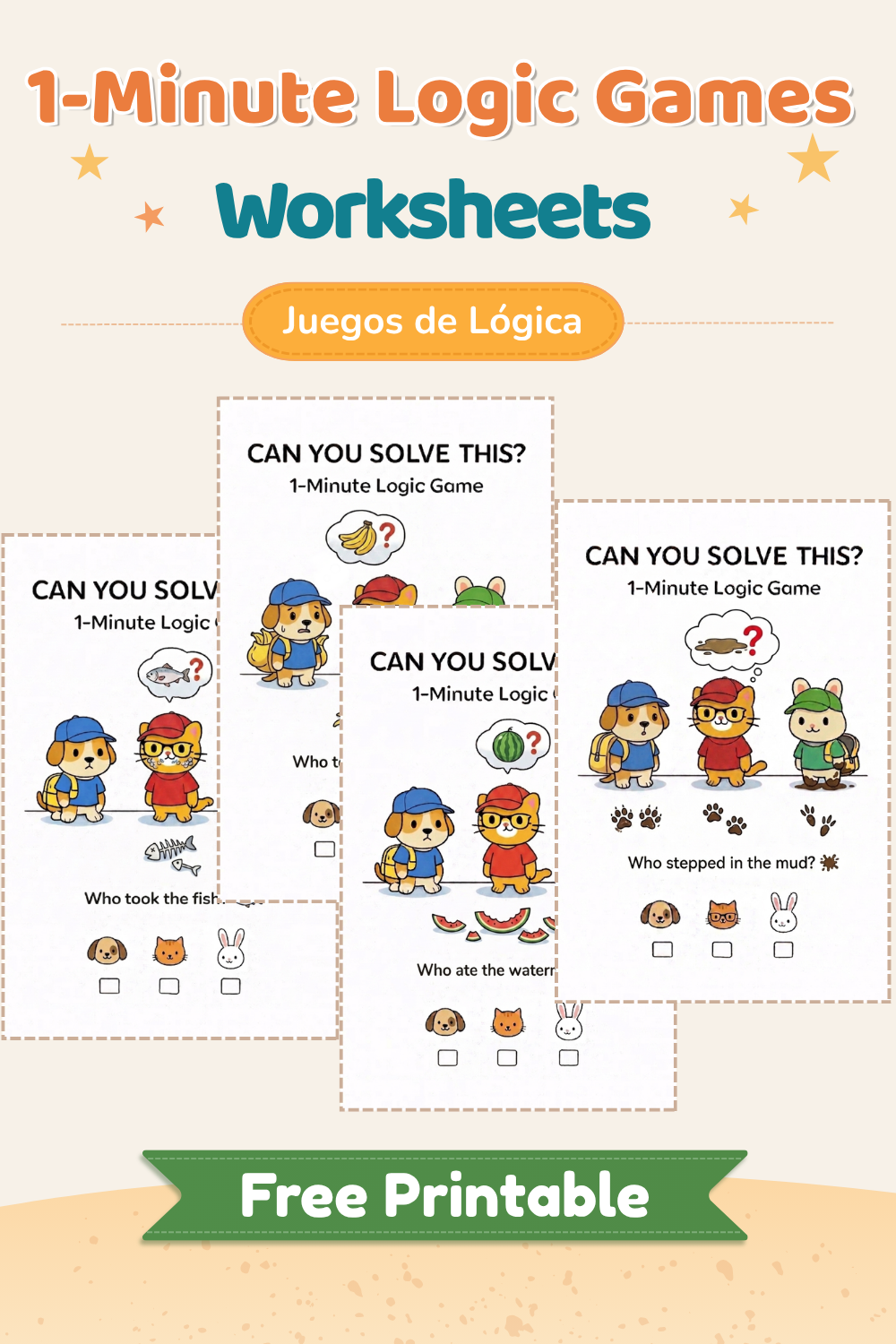
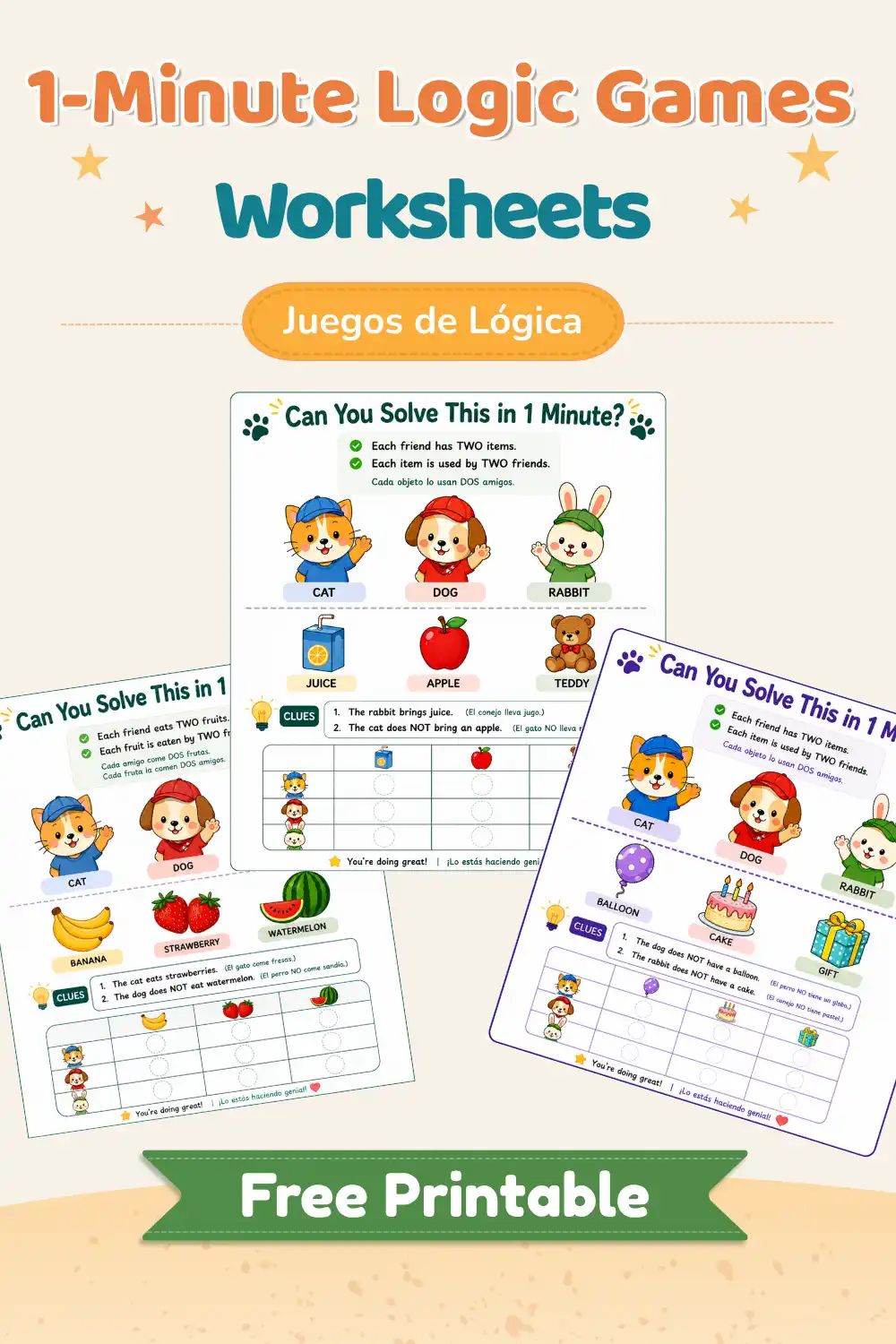
Simple logic games — with visual clues and a single correct answer — are the best way to train that process of “observe, think, decide.”
✔ Sign 4: They Get Frustrated with Blocks, Puzzles, or Building
They try to build something, it doesn’t work, and everything gets thrown. This isn’t a temperament issue — it means their mind is still learning to read space: where each piece goes, how shapes fit together, what position something needs to stay standing.
Spatial thinking develops through visual practice and physical manipulation. Printable placement activities are a solid starting point before moving on to 3D materials.
-
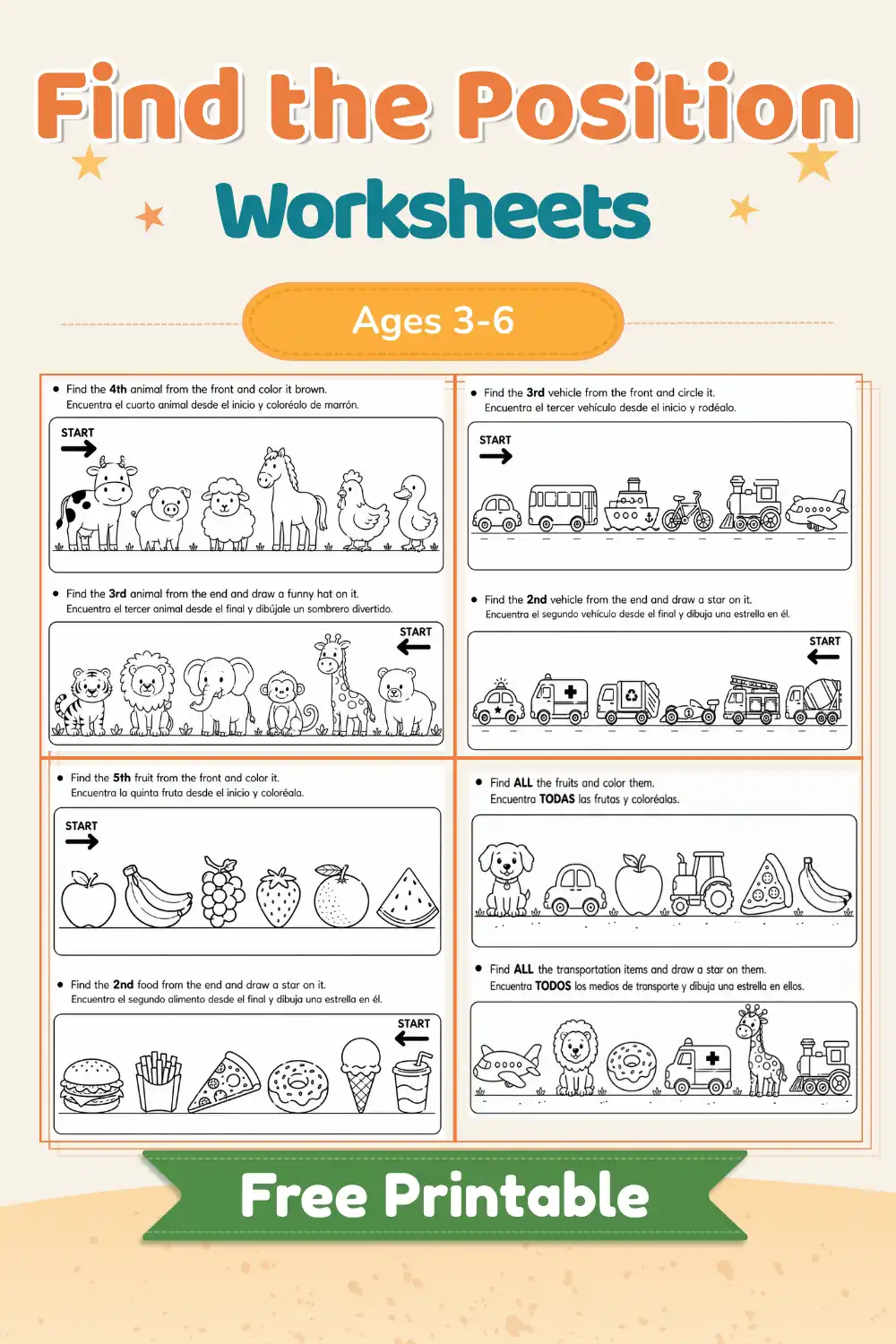
Find the Position Worksheets for Preschool (Ages 3–6) – Free Printable Spatial Reasoning Activities in English & Spanish
-
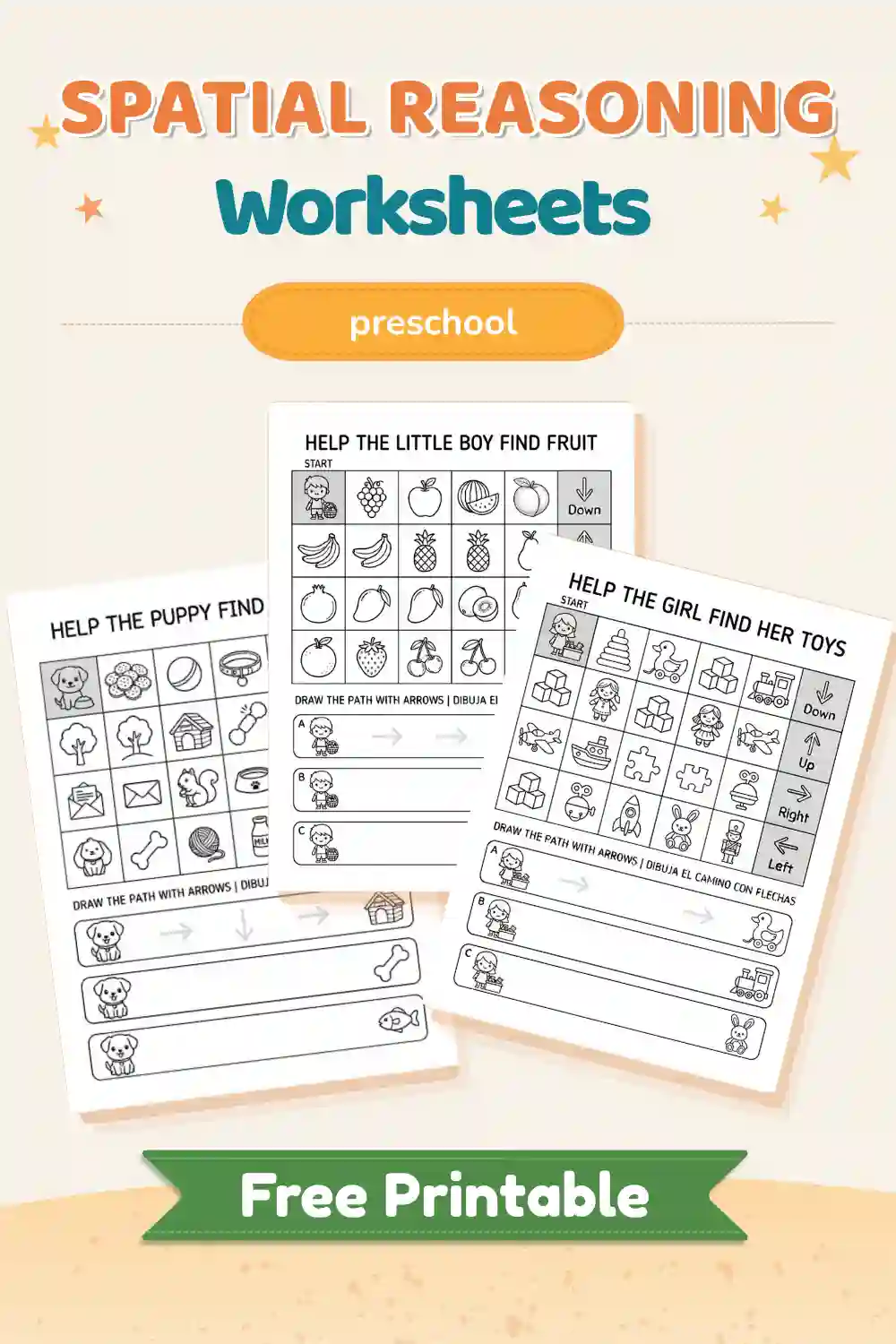
Draw the Path Worksheets for Kids – Spatial Reasoning Activities (Spanish & English Free Printable Ages 3–6)
-
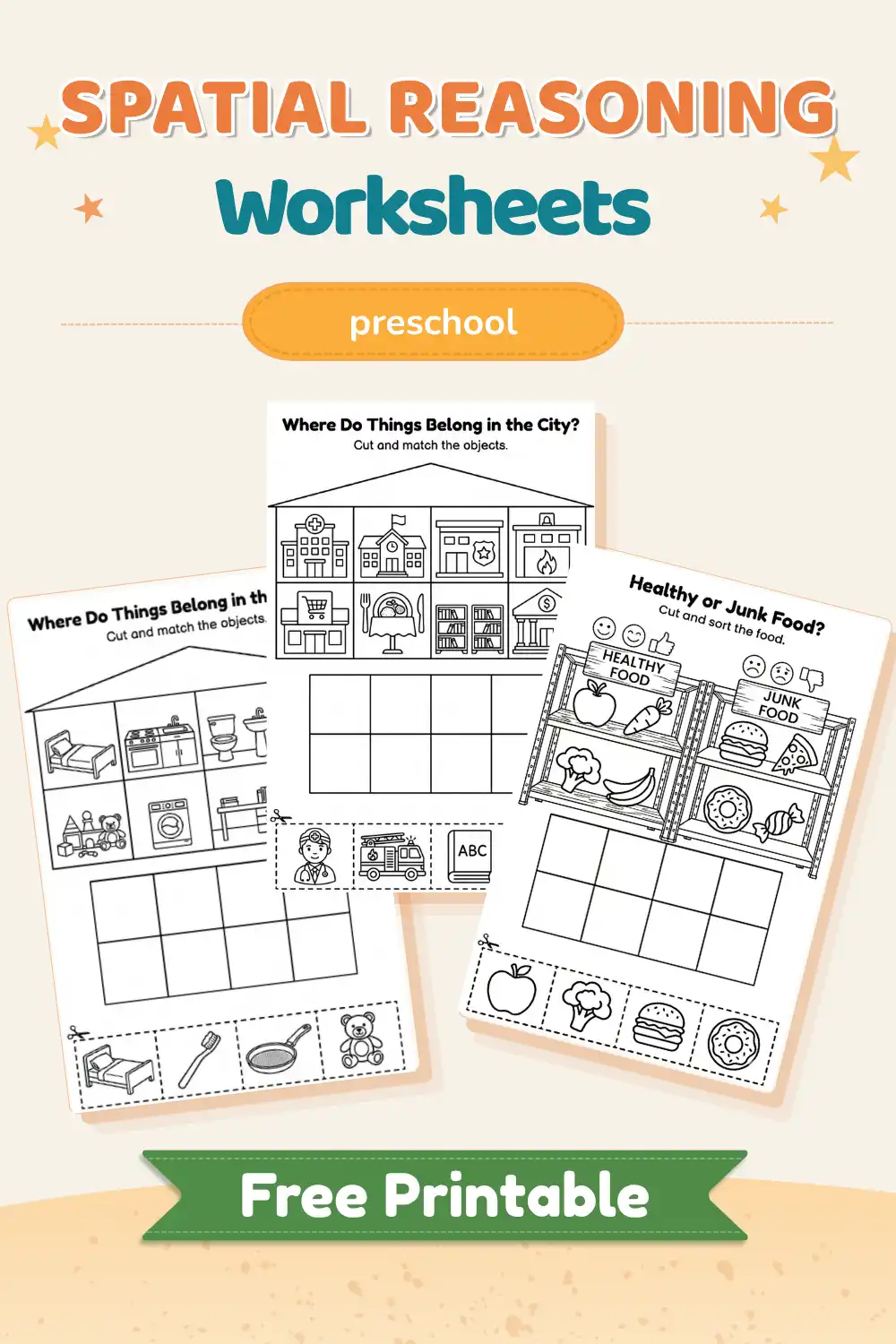
Where Do Things Belong? Spatial Reasoning Worksheets for Kids (Spanish & English, Free Printable PDF Ages 3–6)
What Kind of Practice Does Your Child Actually Need?
Not every child needs the same thing. Use this as a quick reference:
- If they don’t understand patterns → start with [AB Patterns] and [ABB Patterns]
- If they struggle to sort → try [Spatial Sorting] and [Food Sorting]
- If they can’t approach problems → use [Logic Detective Games]
- If they get frustrated building → start with [Spatial Thinking Worksheets]
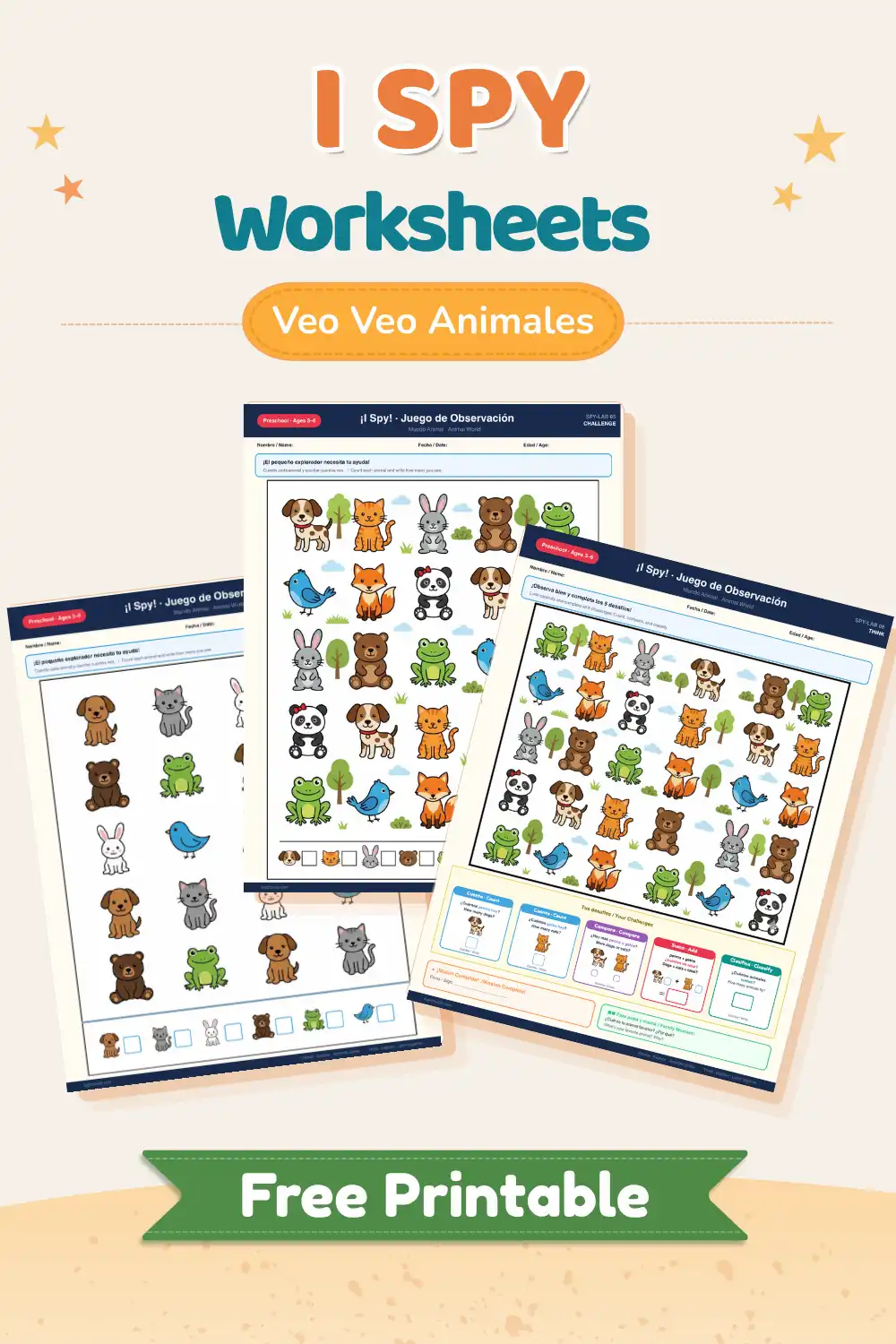
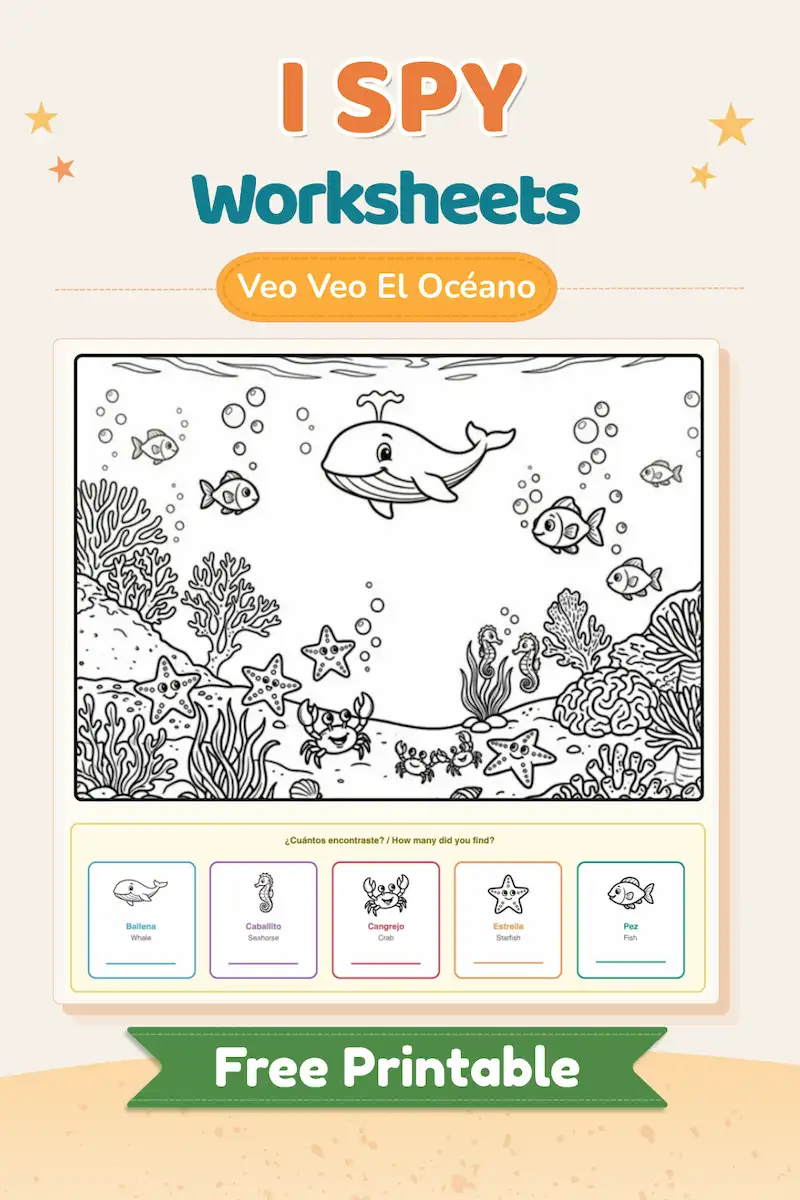
- If they get distracted easily → [I Spy] is the best entry point
You don’t have to do everything at once. One activity, two or three times a week, for just a few minutes — that’s enough to start seeing a difference.
How to Help Your Child, Step by Step (Without Pressure)
Step 1: Start with Observation
Before asking them to solve anything, let them look. Observation activities — searching for objects in a scene, spotting what’s different, finding a hidden animal — train attention without demanding a “correct” answer right away.
When a child learns to look carefully before acting, everything else becomes easier.
Step 2: Practice with Simple Structure
Once they can observe well, introduce activities with one clear rule: follow this pattern, group these objects, put this where it belongs.
The key is repetition. Don’t switch activities too quickly. A child who does the same pattern three times in a row is processing, not bored.
Simple → repeated → slightly harder. That’s the right rhythm.
Step 3: Move Toward Problem-Solving Through Play
Once they have practice with patterns and sorting, they’re ready for activities that require a logical decision: who took the cake?, which animal belongs in this habitat?, what piece comes next?
At this stage, physical toys do something paper alone can’t. Stacking blocks, building with magnetic tiles, arranging real objects in sequences — all of that makes logic visible and tangible in a way that a 4-year-old’s brain processes much more effectively than a worksheet on its own.
The best toys for logical thinking aren’t the most expensive ones. They’re the ones with a clear problem to solve.
👉 [See the guide: Best Toys for Building Concentration and Logical Thinking in Children Ages 3–6]
Mistakes We Make Without Realizing It
These three come up more than any others — and they’re the easiest to fix:
Over-explaining. When a child doesn’t understand something, the instinct is to explain it more. But at this age, more words rarely help. One short demonstration is worth ten explanations.
Pushing to the next level too soon. If your child has been working on an activity for two days and still hasn’t nailed it, that’s not the moment to increase the difficulty. Consolidation takes time — and that time can look like “not making progress,” but it’s actually where real learning happens.
Comparing to other children. The neighbor’s kid who’s doing ABC patterns at 3, and your child who’s still working on AB at 4 — both are fine. Every child moves at their own pace, and comparison just creates pressure that doesn’t help anyone.
A Simple Way to Start Today
You don’t need a perfect plan or special materials. You just need to pick a starting point based on what you’re observing in your child right now.
Here are some simple activities to begin with, depending on what you notice:
👉 [AB and ABB Pattern Worksheets — for children who need to practice sequences]
👉 [I Spy Worksheets — for children who need practice grouping]
👉 [Logic Detective Games — for children ready to solve problems]
👉 [Spatial Thinking Worksheets — for children who get frustrated with building]
All free. All bilingual — Spanish and English on every sheet. All designed to do together, so it never feels like homework.
You don’t have to get it perfect.
Just show up, keep it playful, and take it one small step at a time.
That’s enough.
LogicToy Lab | Bilingual early thinking activities for Spanish-speaking families in the United States. Recursos gratuitos para niños de 3 a 6 años · Free resources for children ages 3 to 6.