
“Put your shoes on.”
Nothing.
“Put your shoes on, please.”
Still nothing. They’re staring at a toy on the floor like you didn’t say a word.
“We need to leave. Shoes. Now.”
And now they’re looking at you — not because they’re finally listening, but because your voice changed. And somehow, in the middle of a Tuesday morning, you’re already worn out and it’s barely 8am.
If this is a familiar scene in your house, you’re in very good company. Most parents of children ages 3 to 6 spend a significant portion of their day repeating themselves, wondering if their child is hearing them at all, and trying not to lose their patience before the day has really started.
Here’s the thing though: the problem is almost never what it looks like from the outside.
It’s Not Defiance. It’s Development.
When a young child ignores instructions — repeatedly, casually, without any apparent awareness that you just said something — it’s tempting to read it as disrespect. Or laziness. Or a sign that they’re testing boundaries in some deliberate way.
But for most children between 3 and 6, what’s actually happening has nothing to do with attitude. It has to do with how their brains are wired right now.
At this age, children are still in the early stages of building the mental skills that adults use automatically to follow instructions: attention, working memory, and impulse control. These aren’t personality traits — they’re functions that develop gradually over years, and they’re genuinely limited in a 4-year-old.
Working memory is the one that catches most parents off guard. It’s the ability to hold information in your mind while doing something with it. When you say “put your shoes on, grab your backpack, and meet me by the door,” you’ve just given your child three pieces of information to hold in sequence while simultaneously stopping what they’re doing and switching tasks. For a small child, that’s a lot to manage — and the most recent thing on their mind (the toy on the floor) is still much louder than your voice.
This doesn’t mean your child isn’t capable. It means their brain is doing exactly what a 4-year-old brain is supposed to be doing.
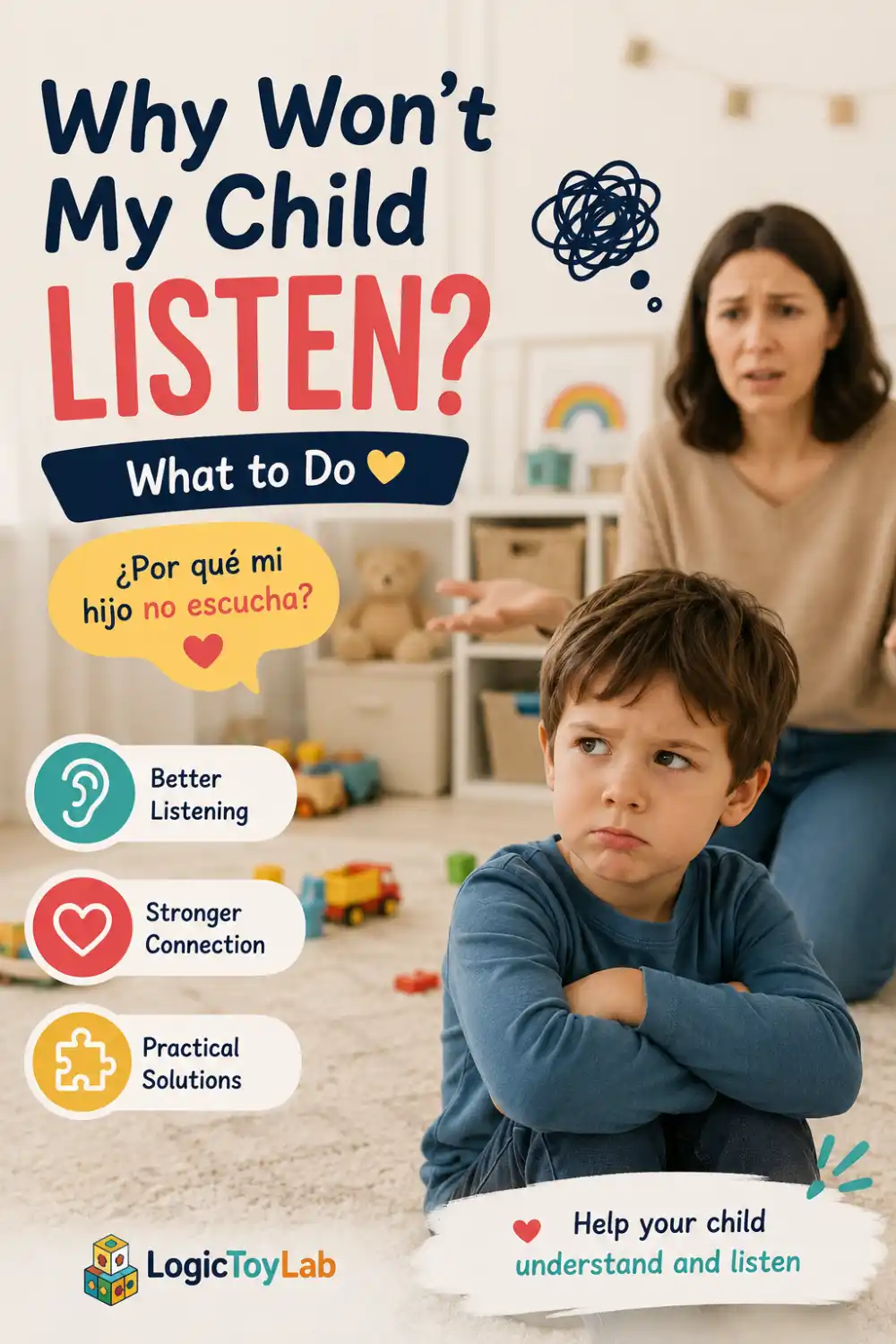
Why Some Kids Struggle More Than Others
Children develop these skills at different rates, and certain things can make following instructions even harder on any given day:
Too many words at once. We communicate naturally in full sentences and paragraphs. Children process information in shorter bursts. A multi-step instruction can arrive as noise rather than a clear directive.
Being in the middle of something. When a child is absorbed in play, their focus is genuinely elsewhere — not ignoring you on purpose, but mentally occupied in a way that makes external input hard to absorb. Transitioning out of that takes more than a verbal cue.
Emotional overload. A child who is hungry, tired, overstimulated, or already frustrated is working with a depleted mental reserve. Instructions that would land fine at 9am may genuinely not register at 5pm.
Visual or hands-on learners. Some children simply process information better when they can see or touch something rather than just hear it. Words alone — especially from across the room — may not be the most effective channel for them.
None of these are character flaws. They’re just useful things to know.
What Doesn’t Actually Help
Before getting into what works, it’s worth naming what doesn’t — because most of us have tried these things and been frustrated when they didn’t make a dent.
Repeating the same instruction louder. Volume doesn’t increase comprehension. What it does increase is stress — which makes it harder for a child to process and respond.
Long explanations in the moment. When a child is already mid-ignore, launching into a reasoning session (“I’ve asked you three times and we’re going to be late and this isn’t fair to everyone else…”) adds more words to an already overloaded system. It rarely changes the behavior and usually escalates the tension.
Expecting consistent compliance without building the skill first. Following multi-step instructions is genuinely a skill. Expecting it without practice is like expecting a child to read before they’ve learned letters.
What Actually Helps
The good news is that most of the strategies that work are simple — they just require a small shift in how you deliver the instruction, not a complete overhaul of your parenting approach.
Get close and make eye contact first. Before you say anything, move toward your child and wait until they’re looking at you. It takes a few seconds and feels slower in the moment — but it almost always works better than speaking from the next room. You’re essentially asking their brain to tune in before you start transmitting.
One step at a time. Instead of “get your shoes, grab your coat, and wait by the door,” try just: “Can you get your shoes?” When that’s done: “Great. Now your coat.” It feels slower, but the task actually gets done — which is faster than repeating a three-step instruction six times.
Use “first, then” framing. Young children respond well to this format because it makes the sequence visible. “First shoes, then we can go to the park.” The reward at the end isn’t a bribe — it’s a way of making the instruction make sense within their framework of what they care about.
Turn it into a game when you can. “Can you beat the timer?” or “Let’s see if the shoes can make it to the door before I count to ten.” This sounds silly and it kind of is, but it works because it shifts the child from receiving a directive to participating in something. Not every instruction can be a game, but when you have a few extra seconds, it’s worth trying.
Use visual routines for repeated sequences. If your morning involves the same steps every day — shoes, backpack, teeth — a simple picture chart near the door does the cognitive work of remembering so your child doesn’t have to rely on your voice as the prompt. Many children follow visual cues much more readily than verbal ones.
Acknowledge what they’re leaving behind. “I know you were right in the middle of building that — let’s put the pieces in the bin so they’ll be here when we get back.” It takes thirty seconds and can prevent a full shutdown. When a child feels heard about the thing they’re giving up, they’re much more willing to make the transition.
How Play Builds the Skills Behind Listening
One of the most effective — and least pressure-filled — ways to build the attention and working memory skills that underlie following instructions is through structured play.
This isn’t a trick. It’s just how development works at this age. When children play games that require them to hold a rule in mind, wait for their turn, or follow a sequence, they’re practicing exactly the same mental skills involved in listening to and carrying out instructions.
Matching and sorting games build the habit of looking carefully before acting — the same focus that “put your shoes on” requires.
Logic games and simple puzzles — like detective-style printables where children use visual clues to find an answer — teach children to follow a sequence of steps toward a goal. That’s instruction-following in disguise.
👉 [Logic Detective Printables — free worksheets for preschoolers]
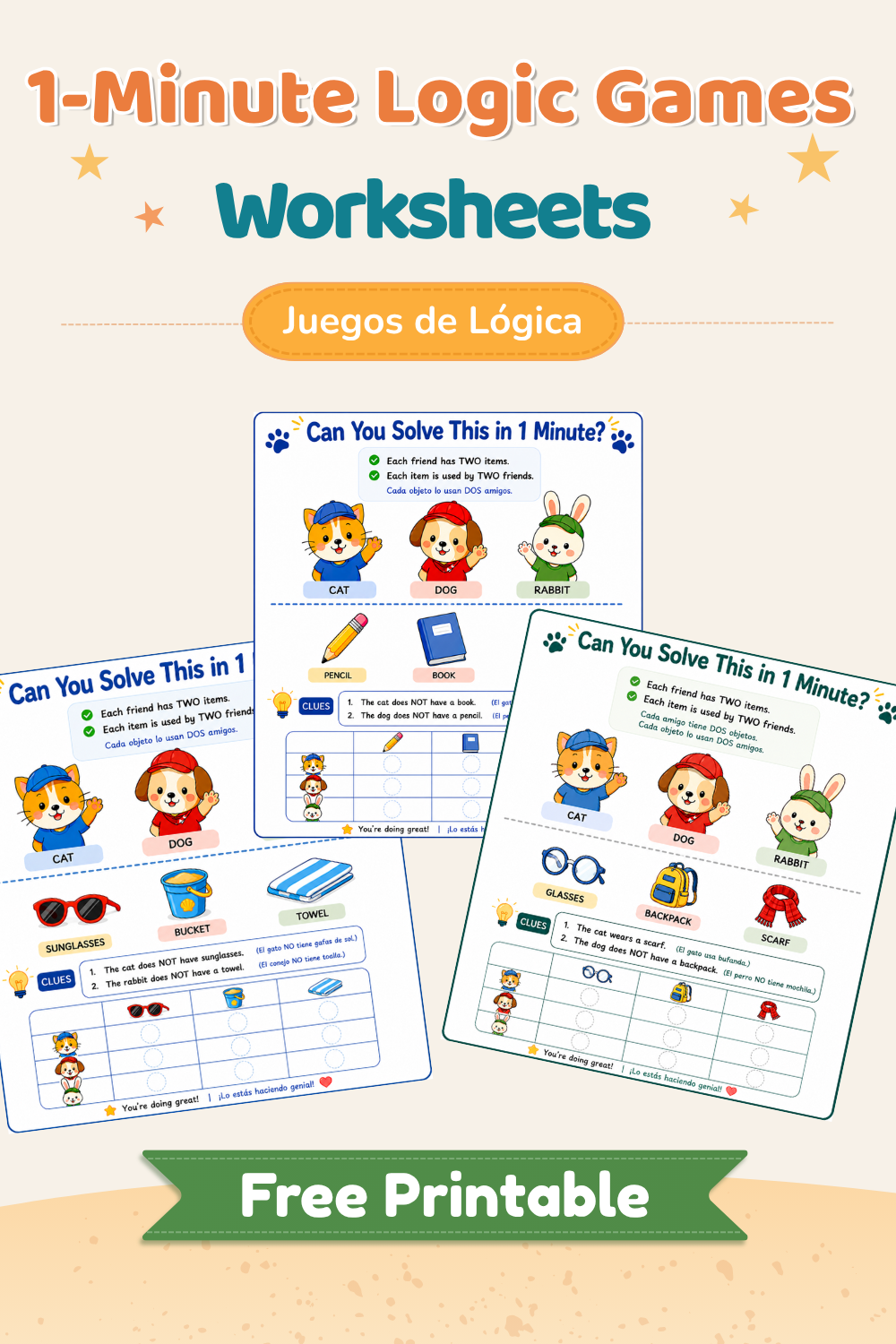
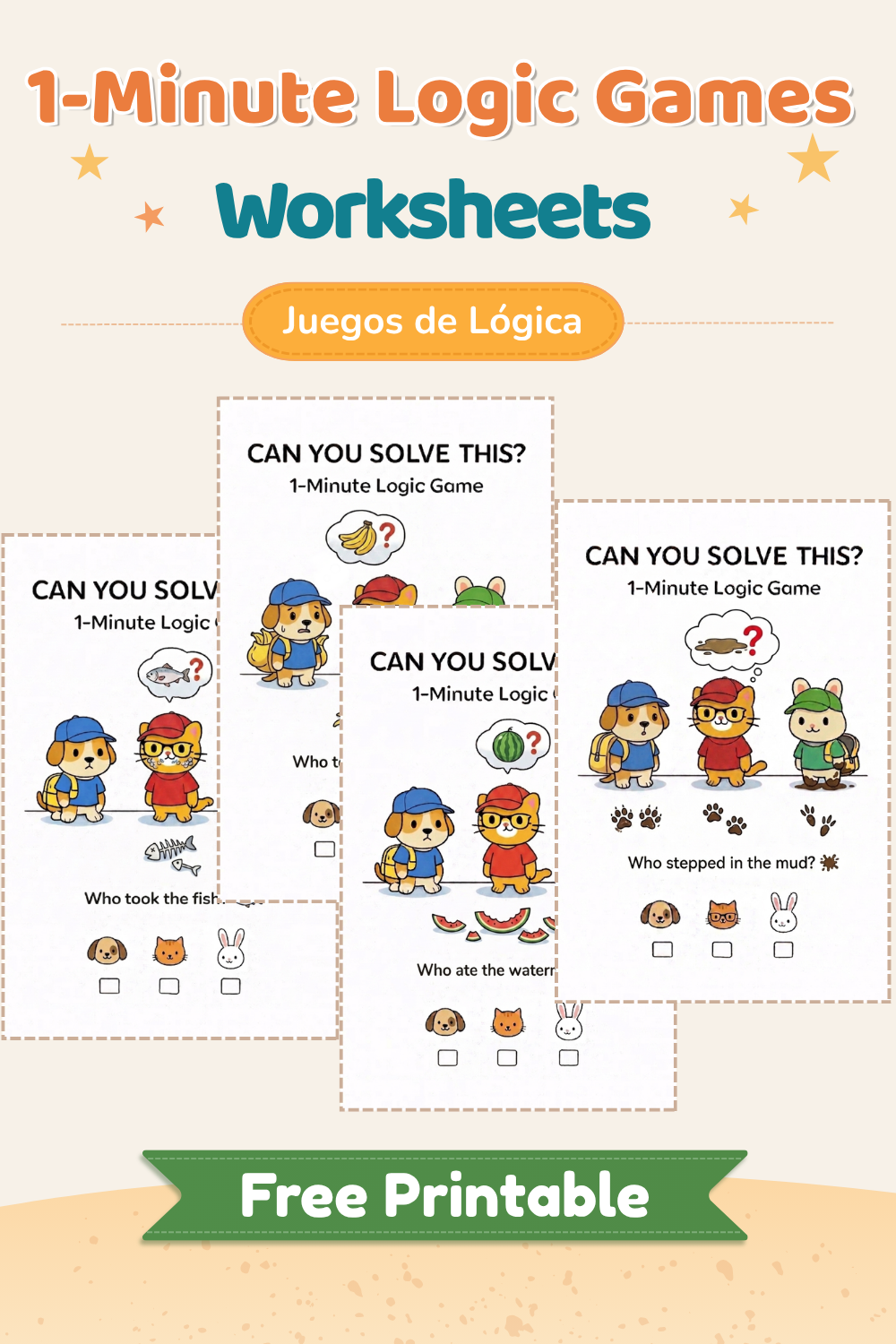
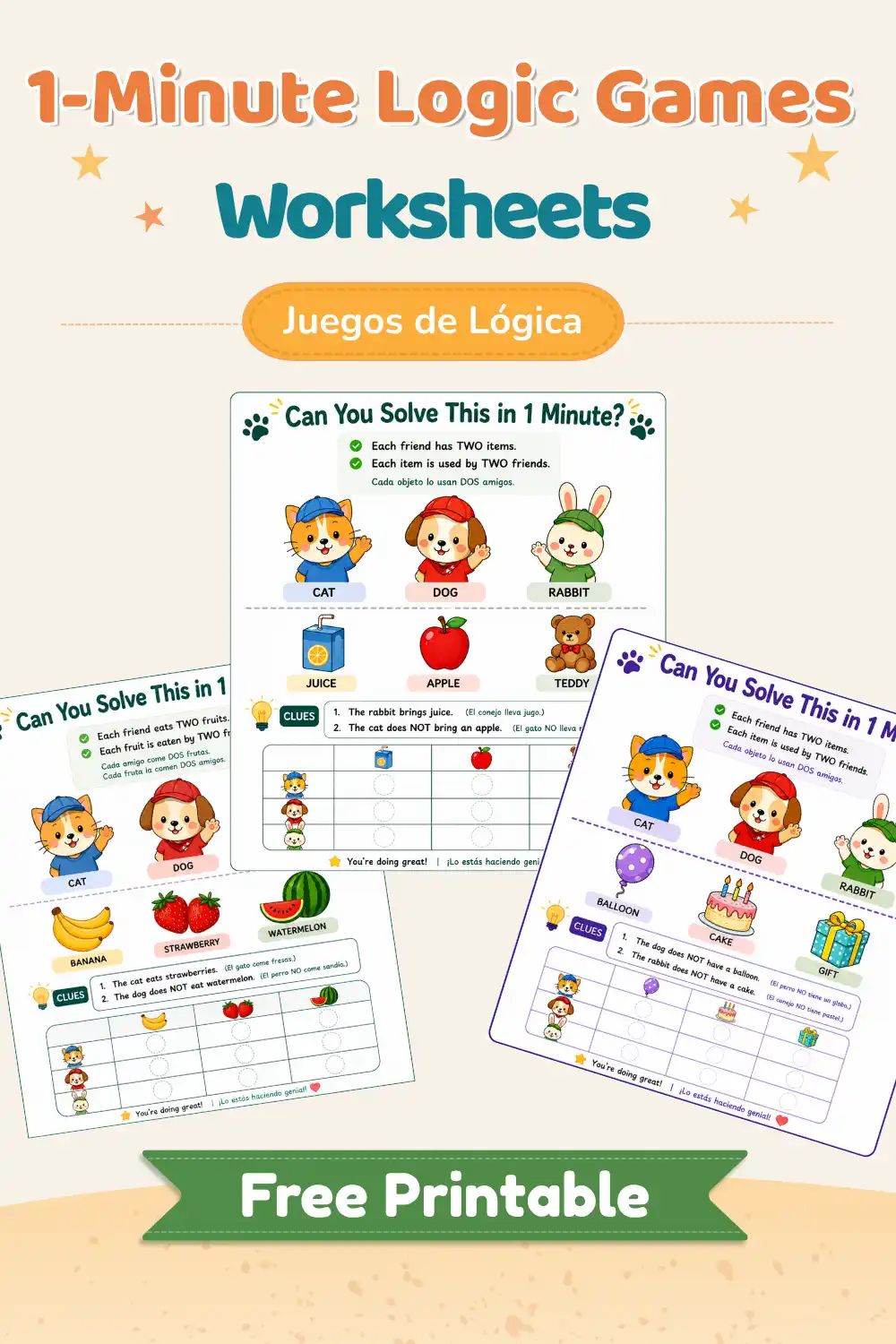
Pattern activities build working memory directly. Holding a rule (“red, blue, red, blue — what comes next?”) in mind while scanning and deciding is the same mental process as holding “shoes, then coat” in working memory while transitioning away from play.
👉 [Pattern Worksheets — free printables organized by level]
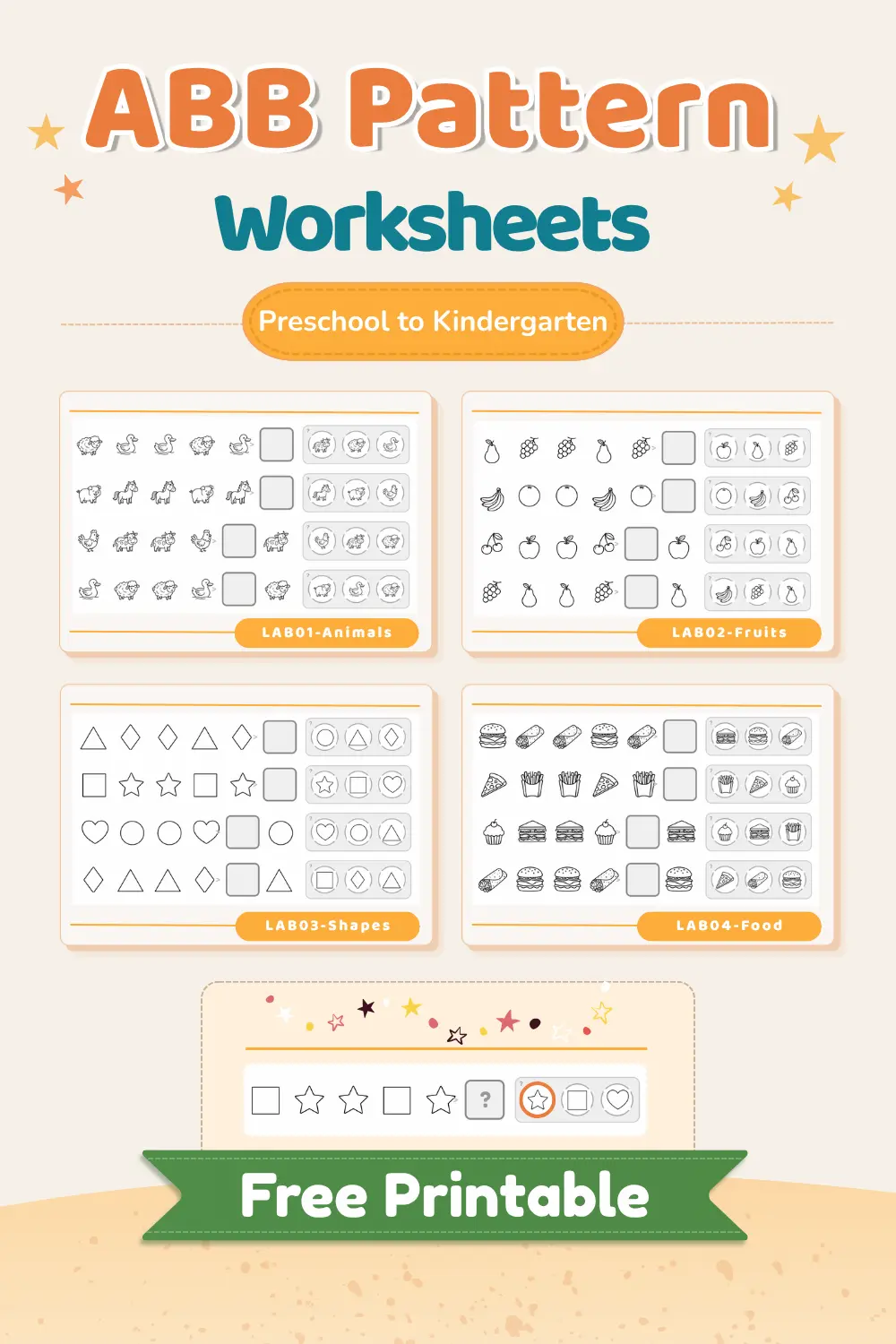
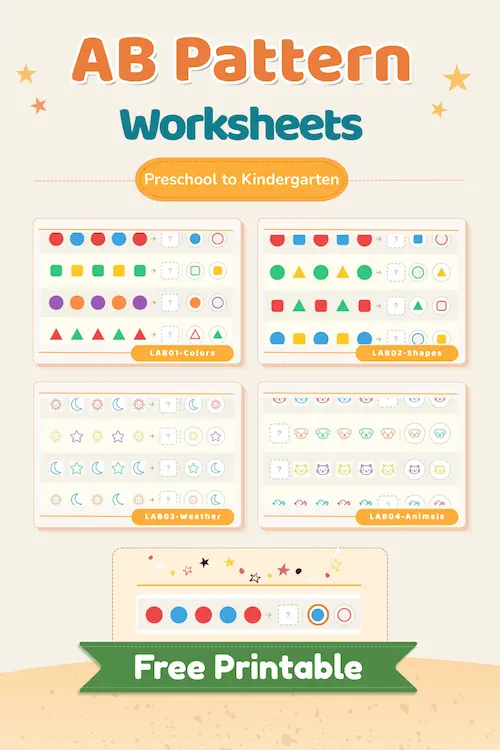
Spatial reasoning games — where children figure out where things go and in what order — build sequencing skills that transfer directly to following multi-step directions.
Building toys like magnetic tiles and wooden blocks are particularly good for children who struggle with verbal instructions because they offer immediate, visible feedback. The child acts, sees what happens, adjusts, and tries again — without any words needed. Over time, this builds the tolerance for not immediately succeeding that makes following difficult instructions easier.
👉 [Best Toys for Building Concentration in Children Ages 3 to 6]
None of this replaces the daily practice of using the strategies above. But it creates a foundation — so that over time, the skill of following instructions isn’t something you’re fighting for against the current. It’s something that’s already being built.
The Part That Matters Most
If there’s one thing worth holding onto from all of this, it’s that your child’s ability to follow instructions will improve — and the pace of that improvement is shaped less by how often you correct them and more by how safe it feels to try.
Children follow directions more readily when they trust the relationship, when instructions make sense in their world, and when doing what’s asked doesn’t feel like a battle they’re going to lose.
You don’t have to be a perfect parent with a perfect system. You just have to keep showing up — with one clear instruction at a time, a little more eye contact, and the occasional ridiculous shoe race that gets everyone out the door before the whole morning falls apart.
That’s enough. More than enough, actually.
LogicToy Lab | Bilingual early thinking activities for Spanish-speaking families in the United States. Free resources for children ages 3 to 6. No sign-up required.