
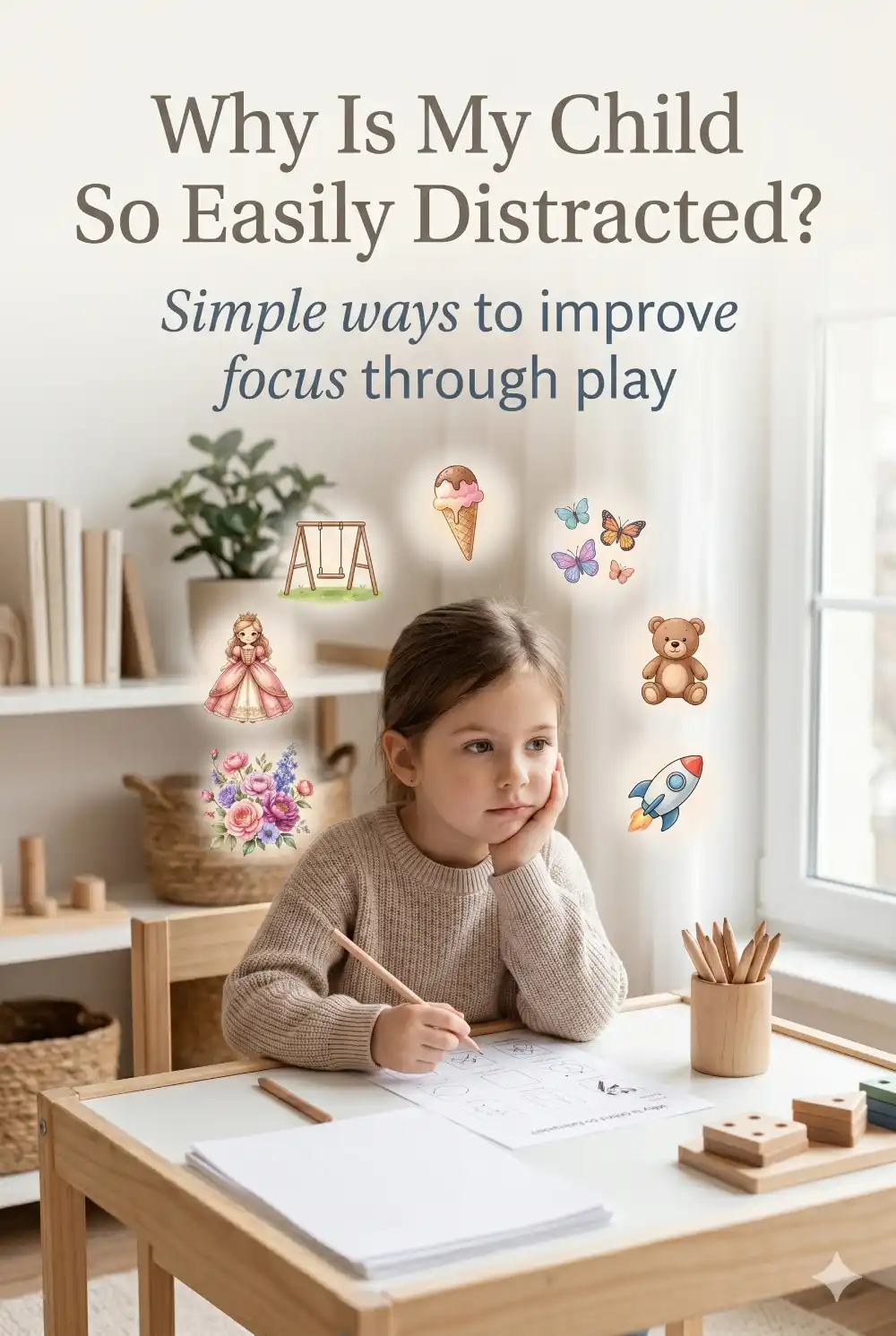
You set out a puzzle. They sit down, pick up two pieces, notice a shadow on the wall, wander over to investigate, see a book on the shelf, pull it out, drop it, remember the puzzle, come back, pick up one piece — and then announce that they’re hungry.
Four minutes, maybe five. Six things. Zero completions.
If you have a preschooler and this sounds familiar, you’ve probably wondered at some point whether something is actually wrong. Whether there’s something you should be doing differently. Whether they’re going to struggle when they get to school and need to sit still for more than a few minutes at a time.
Here’s what I want to tell you before anything else: what you’re describing is almost certainly a completely normal 4-year-old brain doing what 4-year-old brains do. That doesn’t mean there’s nothing to work with — but it does mean you can exhale a little.
What’s Actually Happening in That Busy Little Brain
A child’s ability to focus — to deliberately hold attention on one thing despite distractions — is one of the last executive functions to fully develop. We’re talking about a process that continues into the mid-20s. At age 4, your child is working with a very early version of that system.
What looks like distraction is often just attention moving the way it’s designed to move at this age: toward whatever is novel, sensory, or emotionally interesting. The shadow on the wall is genuinely more compelling to a 4-year-old brain than the puzzle piece, because the shadow is new and moving and the puzzle piece has already been seen.
This isn’t laziness or carelessness. It’s a brain that is highly responsive to its environment — which is actually a useful trait that will serve them well later when it’s more developed. Right now, it just means that completing things requires more external structure than they can provide internally.
There’s also a realistic baseline to understand here. The general guideline for preschool attention spans is roughly 2 to 5 minutes per year of age for structured activities. A 4-year-old sitting with a puzzle or a worksheet can reasonably be expected to stay engaged for 8 to 20 minutes — if the activity is matched well to their level. Less if it’s too hard or too easy. Less if they’re tired, hungry, or coming off a screen.
What It Looks Like at Home
Every child’s distraction patterns are a little different, but there are some things that come up again and again:
They start things without finishing them. There’s a trail of half-completed activities across the room — the coloring page with three scribbles, the block tower that got to four blocks, the puzzle that’s missing only two pieces but was abandoned anyway.
They respond to your voice with delay. You call their name and they don’t look up. You ask them to come to the table and they acknowledge it three instructions later. It’s not always defiance — sometimes they genuinely didn’t register you while they were mid-thought.
They need constant reorientation. You sit with them for five minutes, step away, and come back to find they’ve completely switched tracks. The activity didn’t hold without the anchor of your presence.
They’re much more focused during certain things. A show they love? Locked in for 20 minutes. A game that’s at exactly the right challenge level? Absorbed. The contrast can be confusing — if they can focus on that, why not on this? But the answer is in the question: engagement level and challenge match matter enormously.
Small Things That Actually Make a Difference
None of these require a major overhaul. They’re small shifts that tend to add up.
Reduce visual clutter before starting. A room full of toys and open bins is a distraction field. Before sitting down for an activity, clear the space. Even just moving unrelated toys out of sight reduces the number of things competing for their attention.
Match the activity to the level. An easily distracted child who is also slightly bored is almost impossible to keep on task. An easily distracted child who is just slightly challenged will often surprise you. The sweet spot is an activity that requires a little effort but is achievable — not frustrating, not effortless.
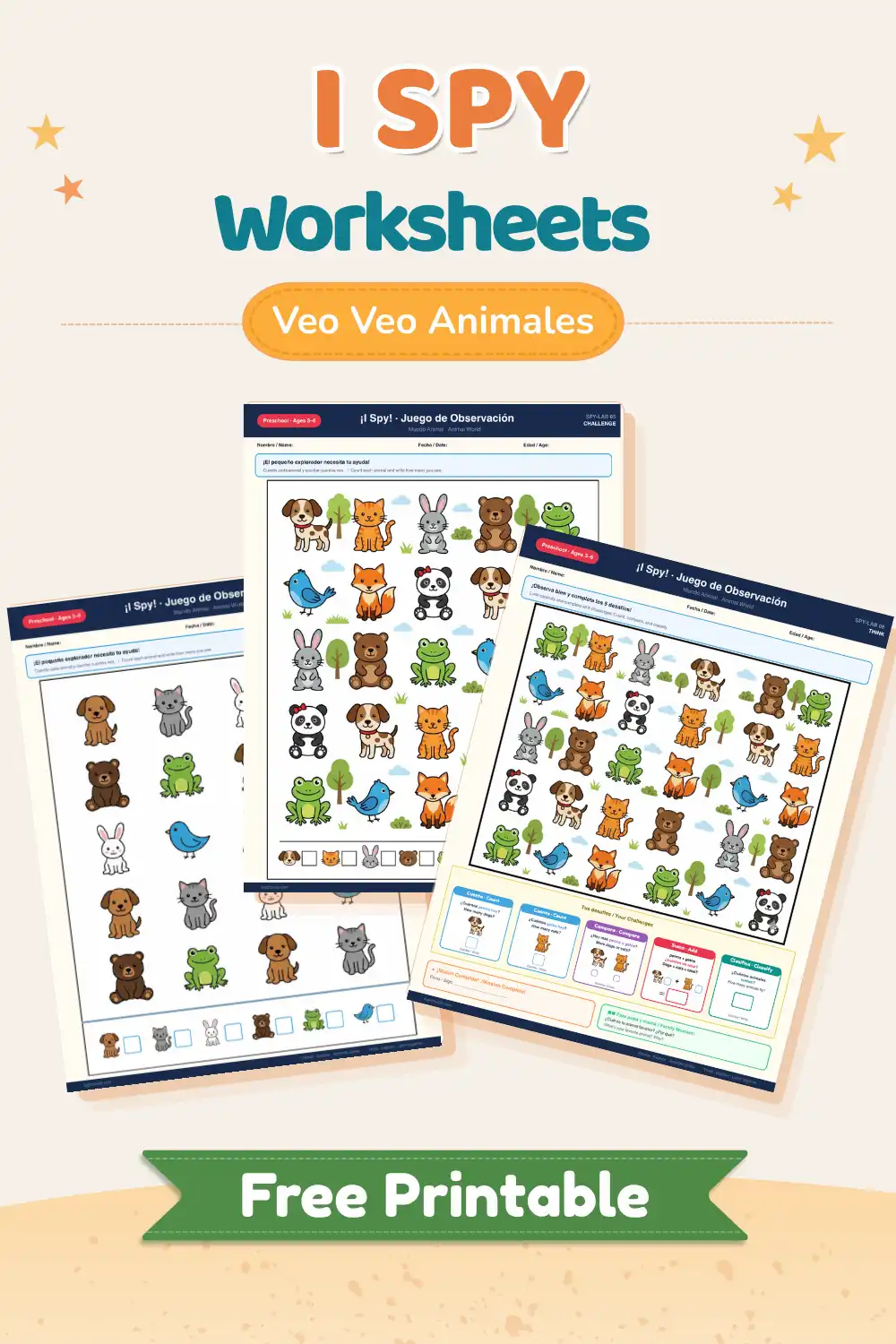
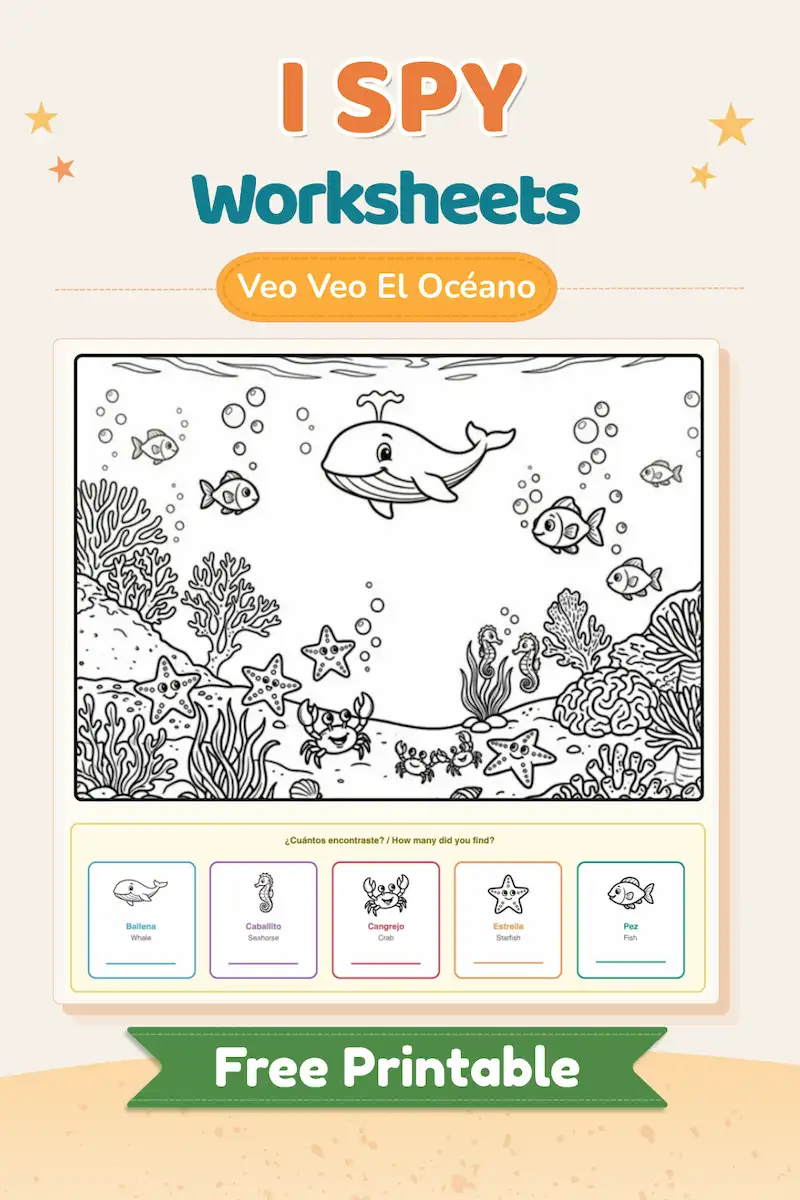
This is one of the reasons simple printable worksheets can work so well for distracted children when they’re chosen carefully. A child who gets overwhelmed by a crowded page might do beautifully with a clean, focused I Spy activity — searching for specific animals in a scene has a clear endpoint, visual variety to hold interest, and enough of a challenge to engage without frustrating.
👉 [I Spy Animal World — free printable worksheets for preschoolers, 3 levels]
Use a timer as a concrete anchor. Abstract time means nothing to a 4-year-old. But a visual timer — one where they can see the time decreasing — gives distraction something to work against. “Can you stay with the puzzle until the red runs out?” is more meaningful than “just try to focus for a few minutes.”
Stay nearby without hovering. Your physical presence regulates their attention more than you might realize. You don’t have to sit across from them directing the activity — just being in the same room, doing something of your own, often keeps them anchored far longer than if you’ve left entirely.
Give activities with built-in completion. Open-ended activities are beautiful for creativity, but they’re hard for a distracted child because there’s no natural endpoint. Activities with a clear “done” state — a pattern to complete, a set of animals to find and count, a sequence to finish — give the child something to work toward and a moment of satisfying completion to work for.
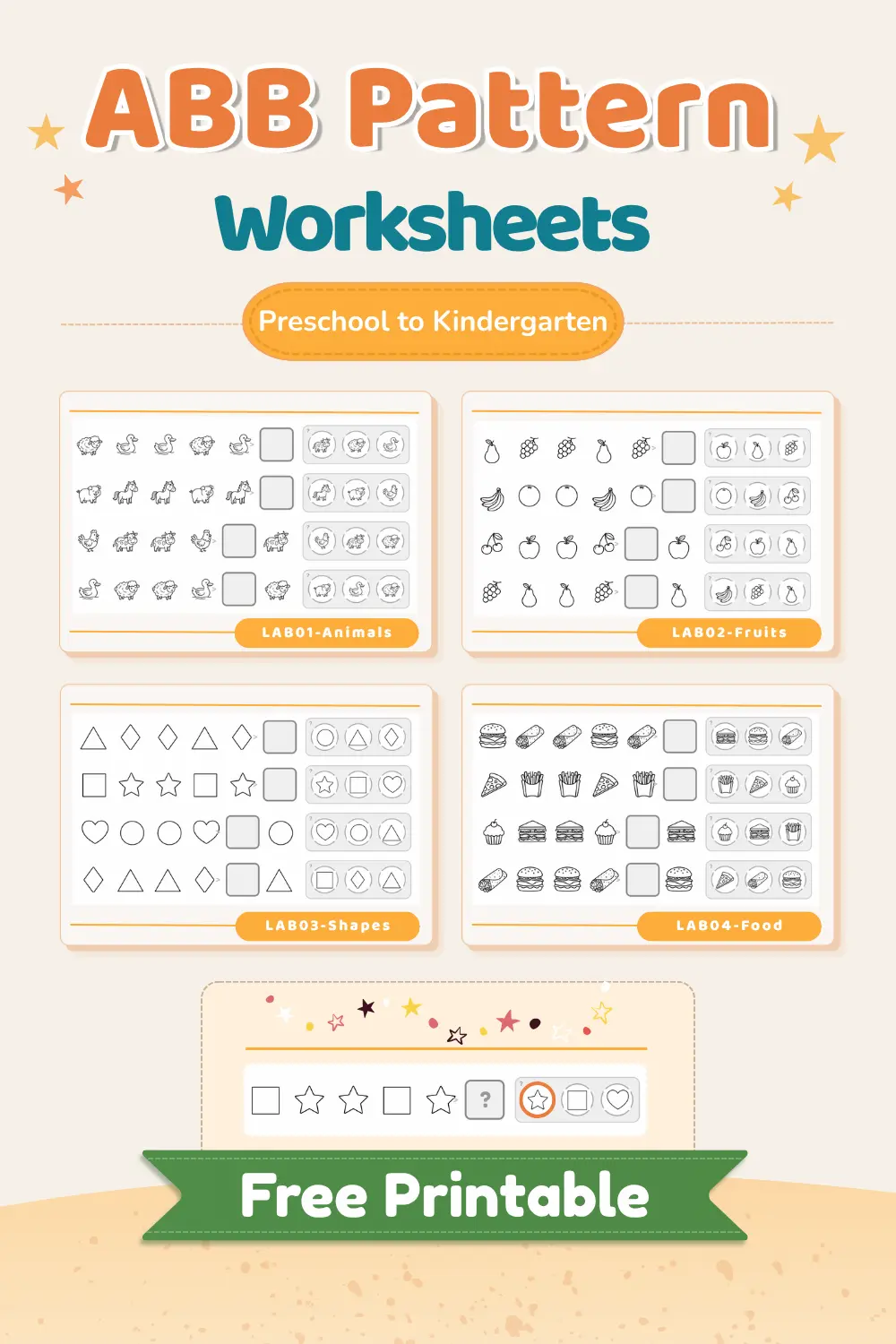
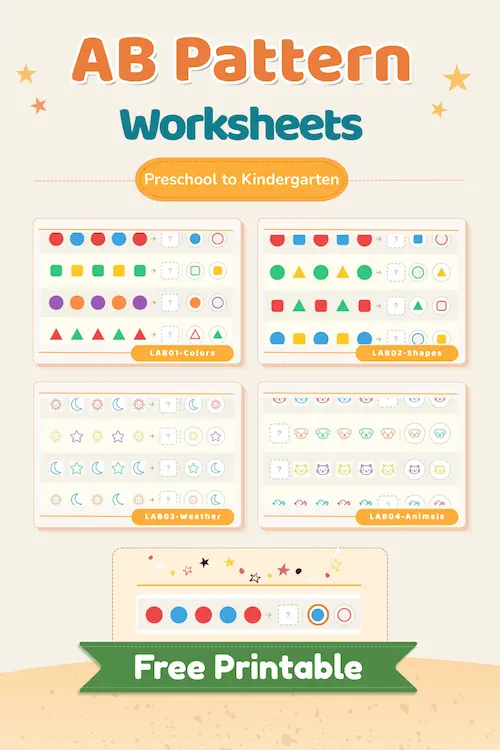
Pattern worksheets work particularly well here because each row has a clear endpoint. The child finishes the row, there’s a visual sense of completion, and the next row provides a fresh start. It’s structured in a way that works with a short attention span rather than against it.
👉 [Pattern Worksheets — free printables organized by difficulty level]
Play-Based Activities That Build Focus Over Time
The goal isn’t to eliminate a child’s natural tendency to move their attention around — it’s to gradually build the capacity to sustain focus when they choose to. And that capacity grows through play, not through drills.
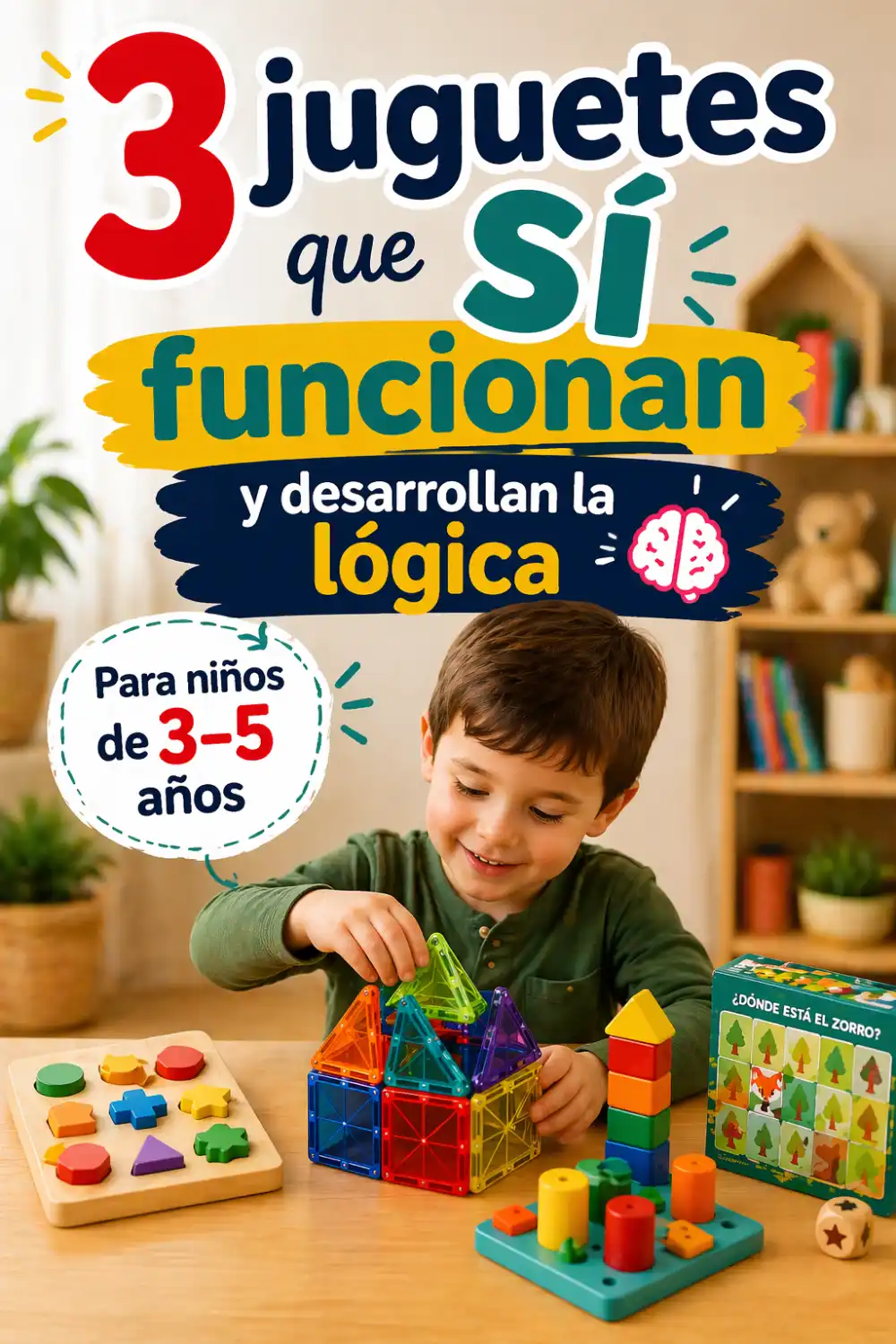
Hands-on building toys — magnetic tiles, wooden blocks, LEGO Duplo — are some of the best focus-builders for distracted children because they offer immediate physical feedback. The structure holds or it doesn’t. That real-time result pulls attention back to the task without anyone having to ask for it.
👉 [Best Toys for Building Concentration in Children Ages 3 to 6]
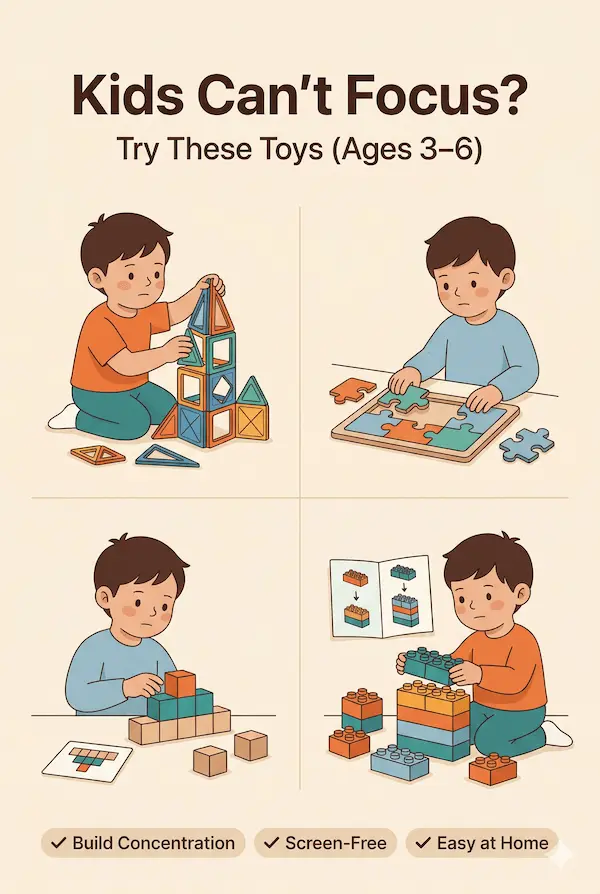
The key is introducing a specific small challenge before they start: “I wonder if you can build something taller than this.” A concrete goal, even a silly one, extends engagement significantly in children who would otherwise drift after two minutes.
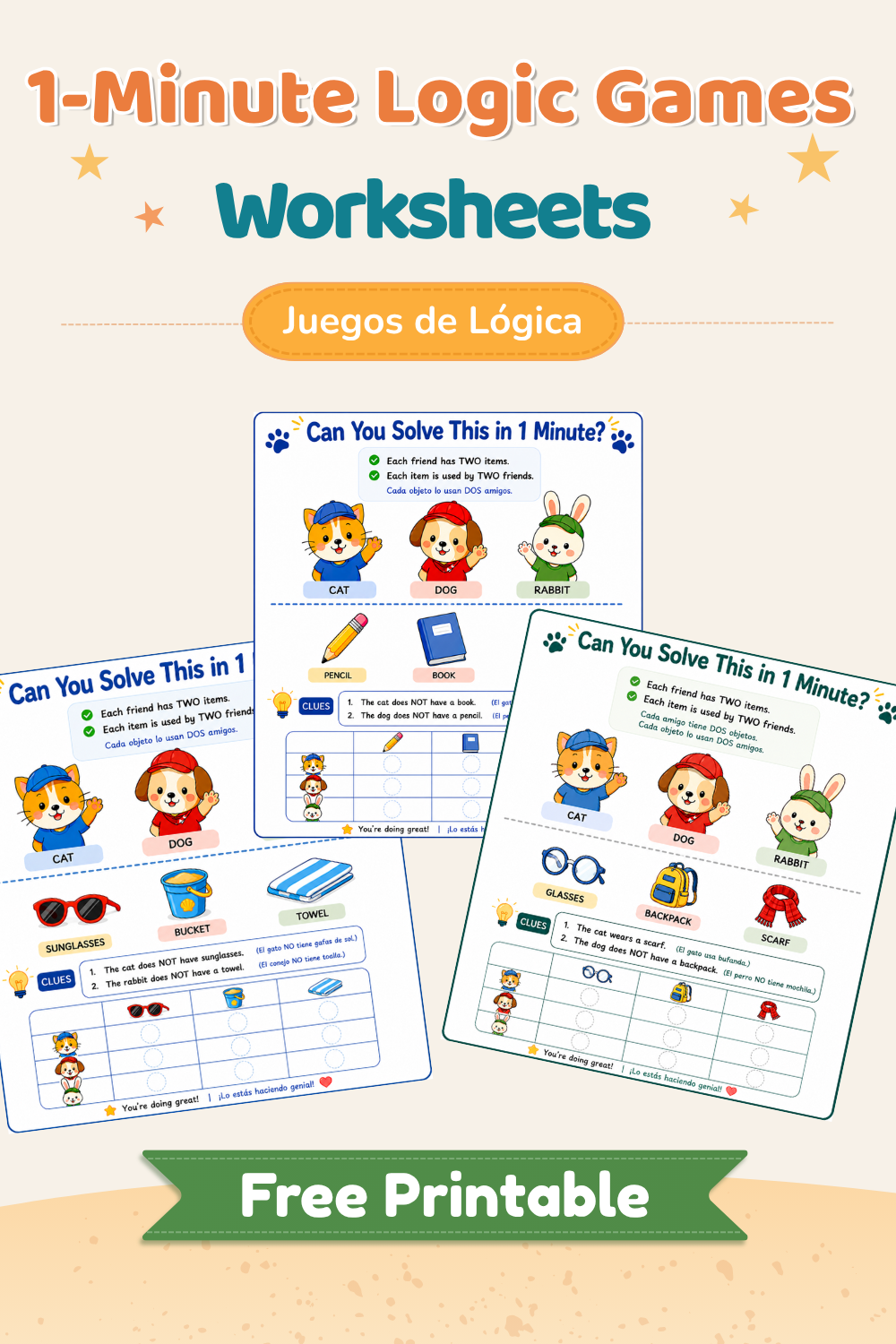
Simple logic games with visual clues are excellent for building the kind of deliberate, sequential attention that following instructions requires. Detective-style activities — where children look at picture clues and figure out who took the cookie or which animal belongs in which habitat — require sustained looking and step-by-step thinking. They’re engaging enough to hold interest and structured enough to build focus rather than scatter it.
👉 [Logic Detective Games — free printable for preschoolers]
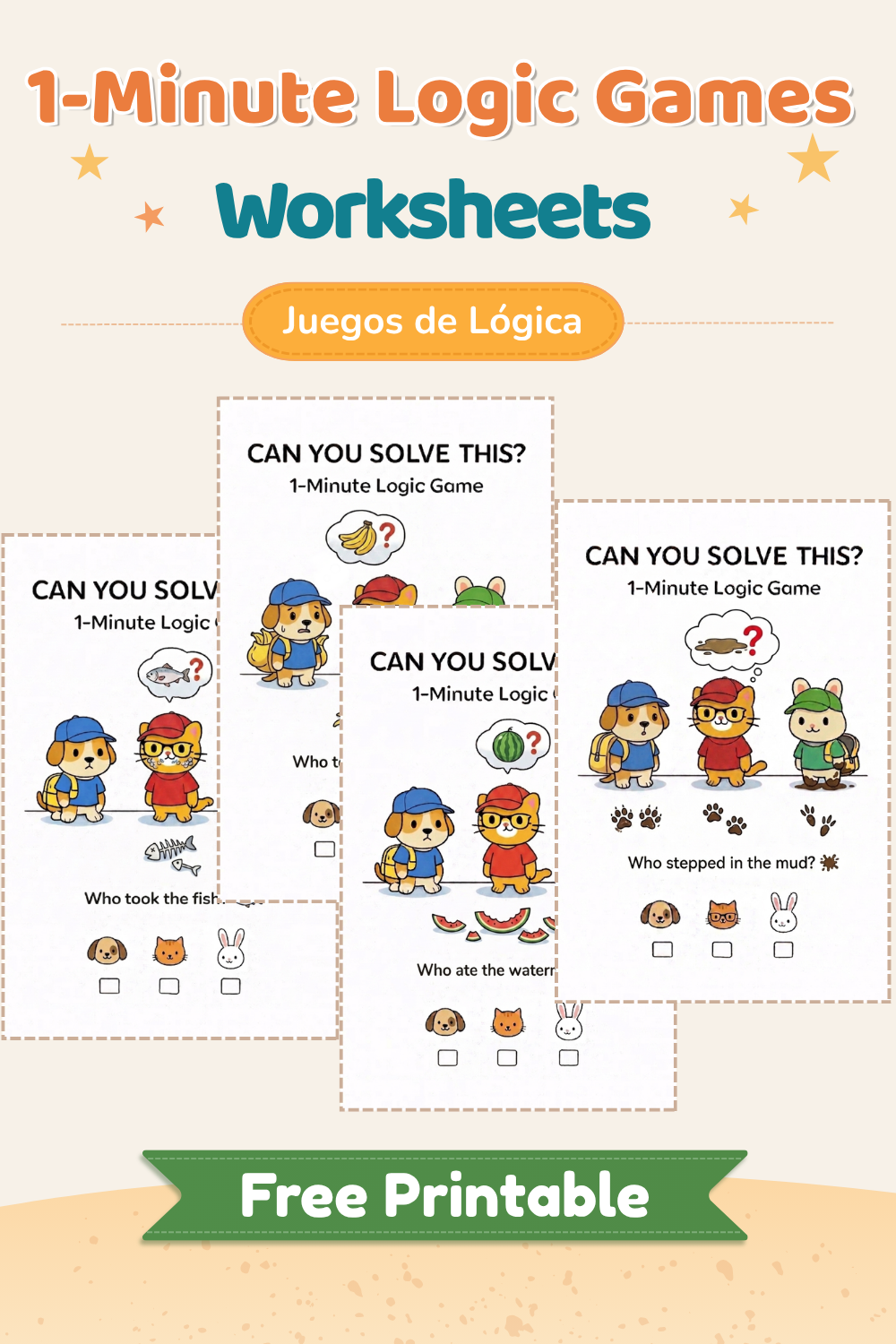
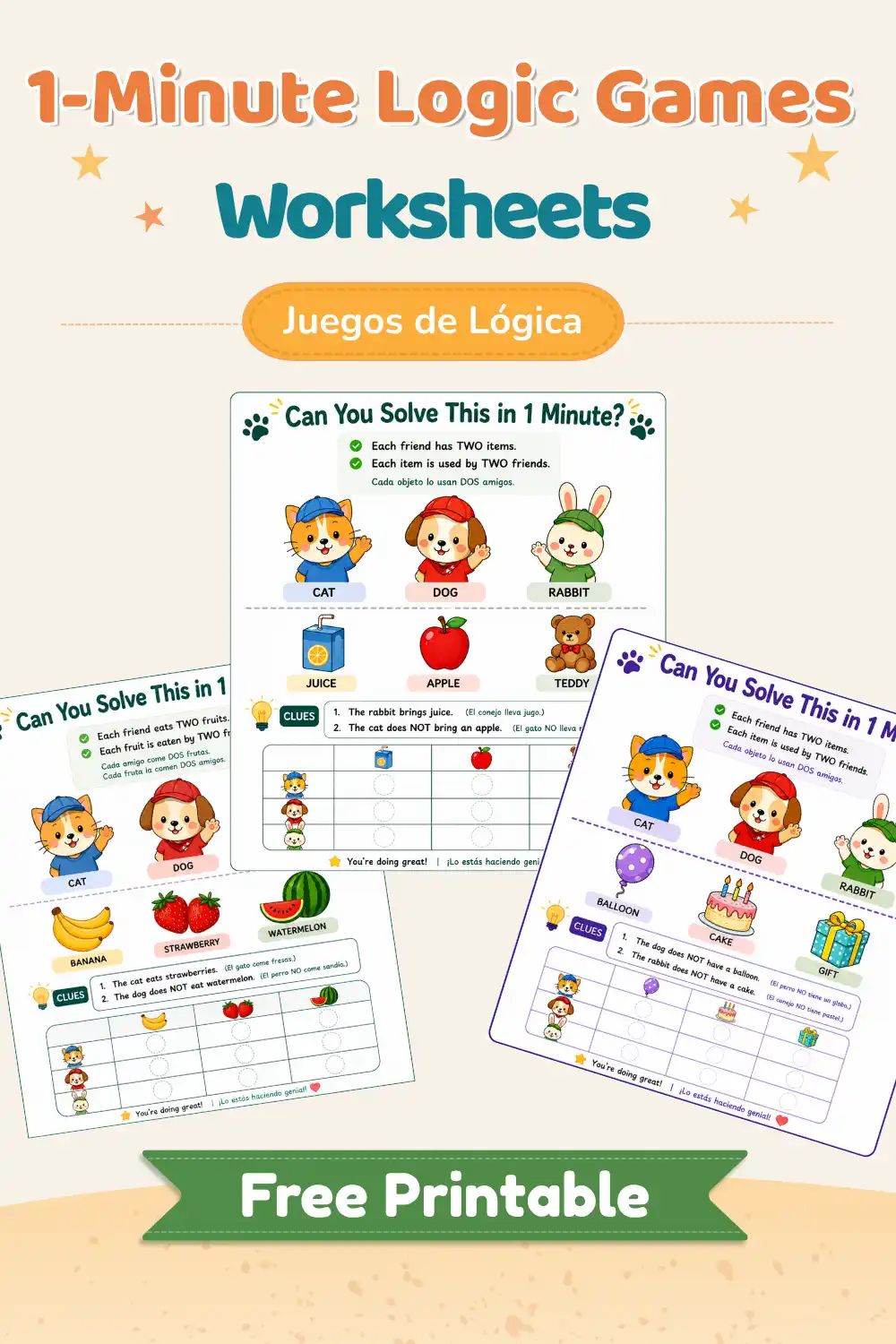
Matching and sorting activities ask a child to look carefully, compare, and decide before acting. That tiny pause — look, compare, then choose — is one of the earliest forms of deliberate attention, and it transfers broadly. Children who practice it in matching games start doing it in other areas too.
The pattern with all of these is the same: activities that have a clear goal, provide immediate feedback, and match the child’s ability level will hold a distracted child’s attention longer than activities that are open-ended, too simple, or too complex.
A Note on Screens
If your child’s attention is especially scattered, it’s worth thinking about what their screen time looks like — not because screens are categorically bad, but because fast-paced content specifically trains attention to expect very rapid novelty and stimulation. After 30 minutes of that kind of input, a puzzle or worksheet is going to feel slow in comparison.
This isn’t a judgment call. It’s just useful information for understanding why some days are harder than others.
You’re Building Something That Takes Time
Here’s the honest part: improving a young child’s focus is a months-long project, not a week-long one. You’re not going to find the right printable or the perfect toy and suddenly have a child who sits still and finishes things. That’s not how development works.
What does work is consistency — small daily moments where your child experiences the satisfaction of finishing something, where they practice sustained attention in a low-pressure context, where they build the internal sense that I can stick with something hard and come out the other side.
That’s what you’re building. Not perfect focus — just a little more capacity for it, a little more often.
And honestly? That’s one of the most worthwhile things you can work on together.
LogicToy Lab | Bilingual early thinking activities for Spanish-speaking families in the United States. Free resources for children ages 3 to 6. No sign-up required.