
He Just Stopped
It started on a Tuesday. I didn’t notice at first because Tuesdays are chaotic. My four-year-old son Leo was sitting on the floor of his room surrounded by toys. Not playing with them. Just sitting.
I said, “Hey buddy, want to build with your blocks?”
He shrugged.
I tried again. “How about a puzzle? You love the dinosaur one.”
Nothing. He just stared at the wall.
I felt that familiar knot in my stomach. The one that says something is wrong and I don’t know how to fix it.
Over the next few weeks, it got worse. Leo stopped wanting to go to the park. He stopped asking for snacks. He stopped caring about his favorite shows. Every time I suggested something, he said no. Not with anger. With emptiness.
My husband said, “Maybe he’s just tired.”
But I knew. This wasn’t tired. This was something else.
I started googling at 2 AM. That’s when you know you’re really worried. I typed in phrases like “child has given up on everything” and “my preschooler has no interests.” The results were all about depression in older kids or gifted burnout. Nothing about a four-year-old who just stopped wanting to be a kid.
I felt so alone.
The worst part was the criticism. My mother-in-law came over and said, “Maybe if you played with him more, he’d be more interested in things.” My sister said, “You’re coddling him. Just make him do something.” My husband didn’t say much, but I could feel his frustration. He wanted me to fix it.
I wanted to fix it too. But I didn’t know how.
I remember one afternoon I sat on the floor next to Leo. He was lying on his back, staring at the ceiling fan. I said, “What are you thinking about?”
“Nothing.”
“There has to be something.”
“No.”
I wanted to shake him. Not out of anger, but out of desperation. I wanted to say, Please just show me you’re still in there. Please just care about something.
But I didn’t. I just sat there with him.
And that’s when I started noticing small things.
What I Was Missing
He wasn’t doing nothing. He was watching.
When I put his toys away, he followed me with his eyes. When his little sister babbled, he turned his head. When the dog barked outside, he paused.
He wasn’t shutting down. He was observing.
I realized that every time I asked him to do something, I was adding pressure. Even gentle suggestions felt like demands to him. Want to build blocks? meant I want you to show me you’re okay. Want a snack? meant I need you to eat so I stop worrying.
He felt my anxiety. And it made him retreat further.
I think this is the part nobody talks about. When your child gives up on everything, it’s not always about them. Sometimes it’s about the energy around them. The unspoken pressure. The worry that fills the room.
Kids feel everything. They feel when we’re holding our breath.
Leo wasn’t unmotivated. He was overwhelmed by my need for him to be motivated.
That realization hit me hard. I had been so focused on fixing him that I didn’t see how my fixing was making things worse.
The Criticism Made It Harder
I have to be honest. The judgment from other people made everything ten times harder.
My mom said, “He’s just stubborn. You need to be firmer.”
My best friend said, “Have you tried rewards? Maybe a sticker chart?”
Even strangers at the grocery store would comment. Leo was sitting in the cart, not looking at anything, and an older woman said, “What’s wrong with him?”
I wanted to scream. Nothing is wrong with him. He’s just having a hard time. I’m having a hard time. We’re both trying.
But I didn’t say anything. I just smiled and walked away.
The criticism made me doubt myself. I started wondering if I was too soft. If I was creating the problem. If I should just force him to do things.
One night I tried. I said, “You have to pick a toy and play with it. I’m not letting you just sit there.”
He cried. Not a tantrum cry. A deep, sad cry. The kind that breaks your heart.
I held him and said, “I’m sorry. I’m sorry. I don’t know what you need.”
He whispered, “I need you to stop asking.”
That sentence changed everything.
What He Really Needed
He didn’t need me to fix anything. He needed me to stop treating him like a problem to be solved.
I started reading about what happens when young kids feel pressure. It turns out that for some children, especially sensitive ones, constant suggestions and questions feel like demands. They shut down to protect themselves.
Leo wasn’t giving up. He was saying no to the pressure.
Once I understood that, I changed my approach. I stopped asking him what he wanted to do. I stopped suggesting activities. I just made space.
I would sit near him and read my own book. I would hum. I would make a snack for myself and eat it without offering him any.
Slowly, he started to come back.
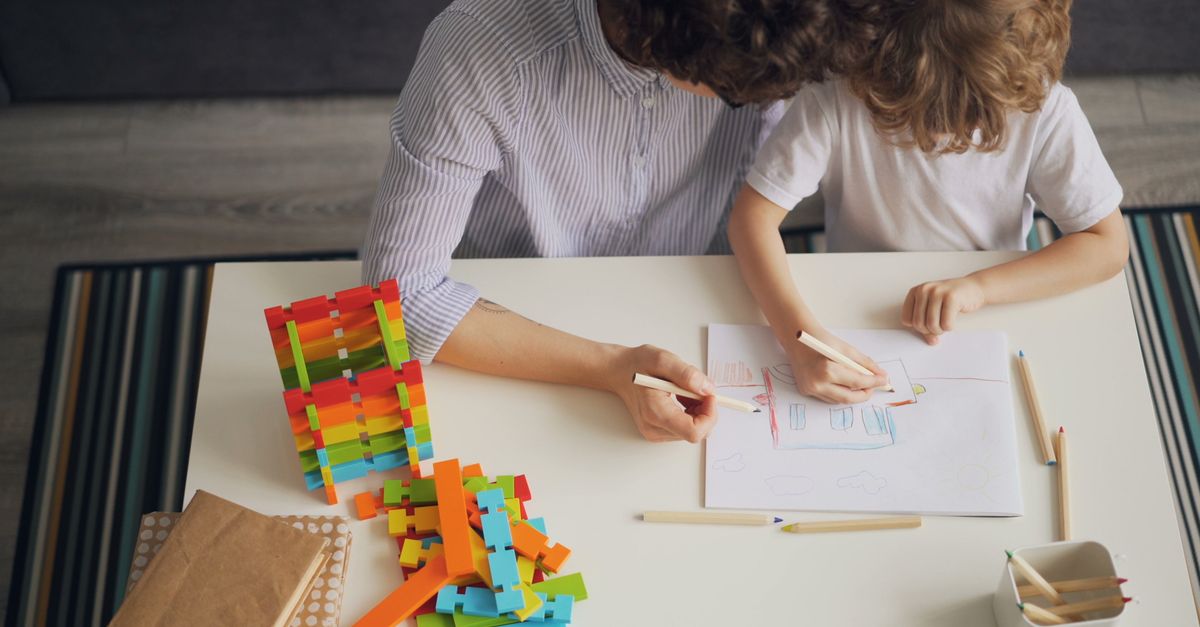
He would watch me for a while. Then he would inch closer. Then one day, he picked up a crayon and drew a line on a piece of paper.
I didn’t say anything. I just kept reading.
He drew another line. Then a circle. Then he said, “Look, Mama.”
I looked. “I see it.”
That was it. No praise. No celebration. Just acknowledgment.
He kept drawing.
Small Moments Matter More Than Big Fixes
I learned that when a child has given up on everything, the solution isn’t a big intervention. It’s a thousand tiny moments of being present without pressure.
Some days Leo would still sit and stare. And that was okay. I learned to sit with him.
Other days he would play for five minutes and then stop. I didn’t push for more.
I started to see that his “giving up” was actually a very smart strategy. He had figured out that when he tried things, someone would have an expectation. Someone would want him to do it longer, better, or differently. So he stopped trying.
That’s not laziness. That’s self-protection.
My job wasn’t to make him try. My job was to make trying feel safe again.
I remember one afternoon he picked up a truck and pushed it across the floor for about thirty seconds. Then he put it down and walked away. My old self would have said, “You’re not done yet! Let’s keep playing!”
My new self just said, “That looked fun.”
He looked back at me. Then he picked up the truck again.
Some Days Nothing Works
I don’t want to make this sound like a neat little story with a perfect ending. Because it’s not.
There are still days when Leo sits and stares. Days when nothing I do helps. Days when I feel that same helpless knot in my stomach.
There are days when I lose my patience. When I say, “Why can’t you just try something?” and I see his face close off again.
I’m not a perfect parent. I screw up all the time.
But I’ve learned that the progress isn’t linear. It’s two steps forward, one step back. Sometimes three steps back.
And that’s okay.
The goal isn’t to never have hard days. The goal is to have enough good days that the hard ones don’t break us.
What I Want Other Parents to Know
If you’re reading this because your child has given up on everything, I want you to know you’re not alone. I want you to know that it doesn’t mean you’re doing something wrong.
It might mean your child is sensitive. It might mean they feel pressure deeply. It might mean they need more space than other kids.
It doesn’t mean they’re broken.
And it doesn’t mean you’re failing.
The most helpful thing I did was stop trying to fix it. I stopped googling. I stopped asking for advice. I stopped comparing Leo to other kids.
I just started being with him.
And slowly, he started being with me.
I have a few sentences I hold onto now. Maybe they’ll help you too:
Some preschoolers don’t hate trying. They hate feeling watched.
What looked like giving up was sometimes just saying no to pressure.
My child wasn’t refusing to engage. He was protecting his peace.
I still don’t know exactly what the future holds. Maybe Leo will always be this way — a kid who needs a lot of space and very little pressure. Maybe he’ll grow out of it.
Either way, I’m learning to be okay with who he is right now.
And that might be the most important thing I’ve learned so far.