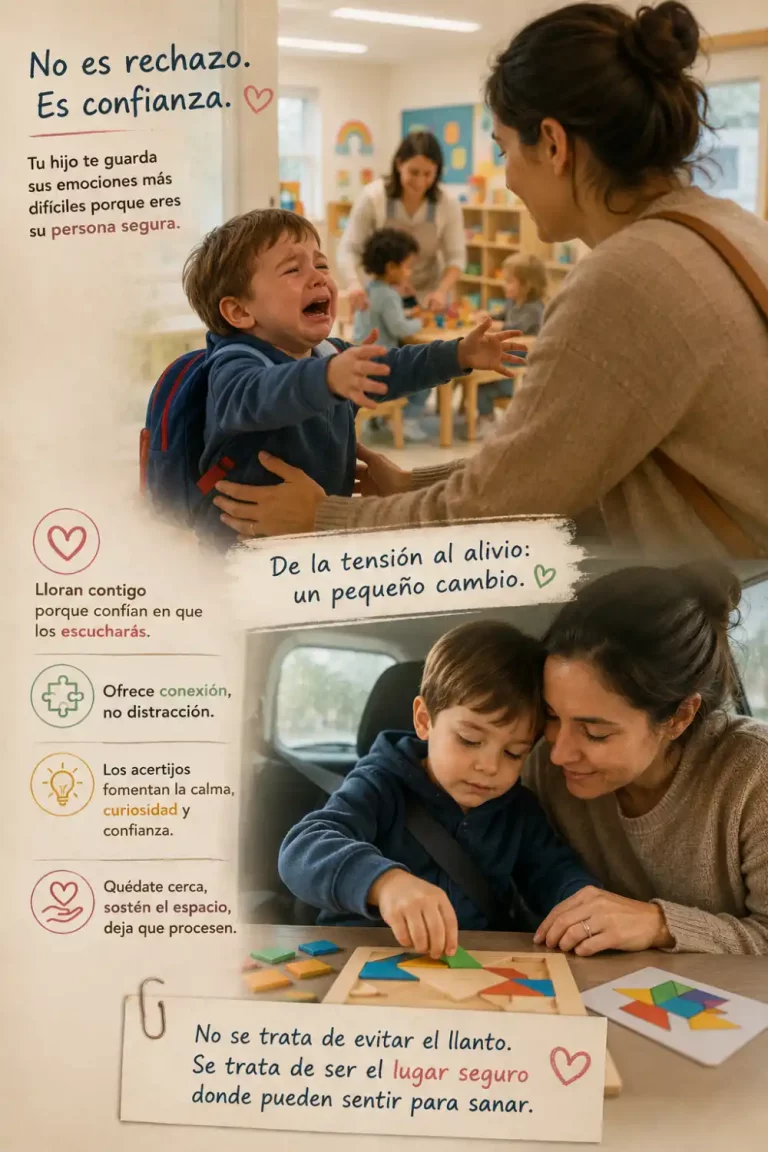
Baby Cries When Mom Picks Up from Daycare? It’s Not Rejection
Why your baby saves the meltdown for you, and what it really means about trust, attachment, and the emotions that surface when they finally feel safe.
Practical parenting guides to improve focus, logical thinking, and creativity in children. Screen-free activities and learning strategies for kids ages 2–8.

Why your baby saves the meltdown for you, and what it really means about trust, attachment, and the emotions that surface when they finally feel safe.

Worksheets made my son shut down. But a rainy afternoon spent matching patterns with wooden blocks turned everything around—and I finally understood what he needed.

Frustrated because your 4-year-old refuses worksheets? You're not alone! Discover why preschoolers resist structured learning and how screen-free logic games can turn resistance into independent play.

I don't have a Montessori shelf or a Pinterest playroom. But a few simple logic games genuinely changed what our evenings look like — and I'm still a little surprised it worked.

If your kid shuts down the moment anything looks educational, you're not alone. One mom shares what happened when she stopped forcing worksheets and tried something different.

If your preschooler can't seem to focus on anything for more than two minutes, you're not imagining it — and you're not alone. Here's what's actually going on and what you can do about it.

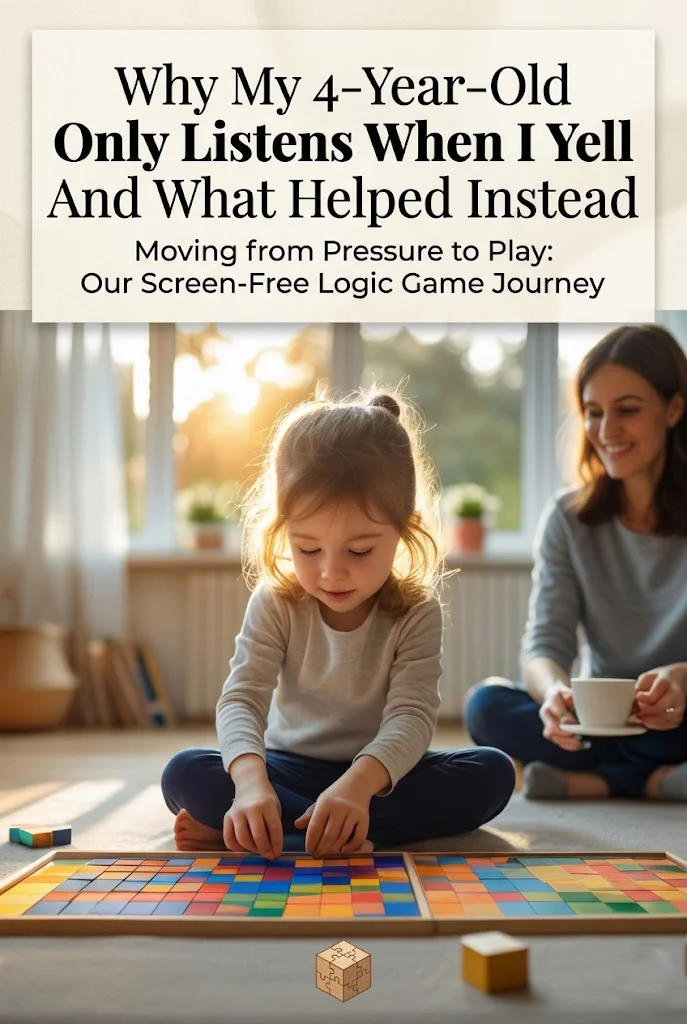
Does your child ignore directions, only listen after you've repeated yourself five times, or tune you out completely? Here's why it happens — and what actually helps.

If your preschooler gets frustrated easily, quits activities quickly, or says "I can't do it" — you're not alone. Here's why it happens and what you can do about it at home.

Does your child ignore instructions or struggle to listen? Learn why preschoolers have difficulty following directions and discover practical, gentle strategies that actually help children ages 3–6 improve focus, listening, and cooperation.

You put a puzzle in front of them and they start jamming pieces in at random without looking at the picture. You show them a red–blue–red–blue pattern and they stare at you like you’re speaking a foreign language. You ask…